Category: SEO

  • Best Tools to Track Your Brand’s Visibility in AI Search (6 Priced and Compared, 2026)

    Best Tools to Track Your Brand’s Visibility in AI Search (6 Priced and Compared, 2026)

    Best Tools to Track Your Brand’s Visibility in AI Search (6 Priced and Compared, 2026)

    Quick Answer

    Short answer: For most small businesses, start free with a 10-run manual test, then pay for a tracker only if you will act on the results. Of six tools whose own pages we read, Otterly.AI has the lowest listed entry price ($29 a month) and Scrunch the lowest cost per prompt at higher volume.

    Last updated: November 2026

    Magnifying glass resting beside a laptop on a marble desk, representing checking brand visibility in AI answers

    This list is for owners and marketing leads who want to know whether AI assistants name their brand, and who are deciding whether a paid tracker is worth it. It covers six tools, a free method that costs nothing, and a way to tell signal from noise. We sell AEO and GEO work ourselves through our services, but we do not sell a tracking tool, so GCL Marketing is not on this list.

    How we picked and ordered these tools

    We chose six tools that publish a pricing or trial page and read each one on its own website on November 5, 2026. Tools are ordered by lowest published entry price per month, because for a small business the first question is what it costs to start. Profound publishes no paid price, so it goes last.

    The order is editorial opinion from public information as of November 2026. It is not paid placement, we earn no affiliate fees, and no vendor was contacted. Tool names are plain text on purpose. Prices change often, so confirm on the vendor page before buying. Every figure we could not confirm on a vendor page is marked Not published.

    What the top lists agree on, and what they miss

    The three lists we read all say the same thing: track brand mentions, citations and share of voice across ChatGPT, Gemini, Perplexity and Google, and pick a tool by platform coverage and price. That is the baseline, and it is correct as far as it goes.

    What they leave out is more useful. Webflow’s guide was last updated September 23, 2025, so its prices are stale. AirOps ranks its own product first, and Passionfruit ranks itself first. None of the three shows a cost per prompt, a way to test whether tracking data is stable, or a reason to skip buying. This post covers those four gaps.

    The six tools at a glance

    The table below ranks nothing by quality; it shows what each tool costs to start and the one limit to check before you pay.

    Tool Best for Entry price listed Cost per tracked prompt (GCL calculation) One limit to check
    Otterly.AI Small business testing the water $29 a month (15 prompts) $1.93 Claude, Google AI Mode and Gemini are paid add-ons
    Ahrefs Brand Radar Teams already using Ahrefs $50 a month (5 prompts) $10.00 5 prompts on one platform uses all 150 monthly checks
    Peec AI Marketing teams tracking 50 to 350 prompts $95 a month (50 prompts) $1.90 Starter tracks 3 models, 1 country
    Semrush AI Visibility Toolkit Teams already using Semrush $99 a month (25 prompts) $3.96 Prompt tracking covers Google AI Mode and ChatGPT only
    Scrunch Agencies and larger prompt sets $300 monthly or $250 billed annually (350 prompts) $0.86 monthly or $0.71 annual Entry price is the highest of the published ones
    Profound Enterprise teams Paid price Not published (7-day trial) Not published Self-serve paid plan price not shown

    Cost per tracked prompt is monthly price divided by included prompts, our own calculation. Prompts tracked on more platforms use more checks, so treat it as a rough yardstick, not a like-for-like price.

    Step 0: the free baseline, a 10-run noise test

    Before you pay anyone, run this test: it takes about 10 minutes and tells you whether a tracker would show you anything useful. Open ChatGPT in a fresh chat, ask one buyer question such as the best provider of your service in your city, and note whether your brand appears. Repeat 10 times, each in a new chat, and count.

    Brand appears in What it means What to do
    0 of 10 A tracker will show zeros Fix pages, reviews and third-party mentions first; do not buy yet
    1 to 5 of 10 Noisy, results will swing Track weekly averages of at least 3 runs; ignore day-to-day moves
    6 to 10 of 10 Stable presence A tracker is useful for spotting drops and competitors

    The thresholds are a GCL Marketing rule of thumb, not an industry standard. We treat a change of less than 2 runs out of 10 as noise.

    The reason to test is real. A SparkToro and Gumshoe study reported by Search Engine Land had about 600 volunteers run 12 identical prompts nearly 3,000 times across ChatGPT, Claude and Google’s AI. The odds of getting the same list twice were under 1 in 100. Appearance rate held up better: some brands showed in 60% to 90% of responses, even as their positions moved.

    The second free tool is Search Console. Google’s AI features documentation, last updated December 10, 2025, says sites appearing in AI Overviews and AI Mode are counted in the Performance report under Web search. It does not split them out, so it shows total movement, not AI-only citations.

    1. Otterly.AI: lowest listed entry price

    Otterly.AI is the cheapest listed way to start, at $29 a month for 15 prompts.

    Its Lite plan tracks ChatGPT, Google AI Overviews, Perplexity and Microsoft Copilot. Claude, Google AI Mode and Gemini are paid add-ons: on Lite, AI Mode and Gemini are listed at $9 a month and Claude at $29. Standard is $189 for 100 prompts and Premium is $489 for 400. The page lists a second, lower set of prices ($25, $160, $422) that is probably annual billing, but it is not labelled, so we could not confirm it.

    Quick test: start the free trial (length not stated) and enter your 5 most important prompts. If your brand shows in fewer than 2 of 10 manual runs, the tool will mostly show zeros.

    Limit: 15 prompts covers about one service in one city.

    2. Ahrefs Brand Radar: best if you already pay for Ahrefs

    Ahrefs Brand Radar covers the widest platform list, but its custom prompt plans are small.

    Custom Prompts starts at $50 a month and tracks AI Overviews, AI Mode, ChatGPT, Perplexity, Gemini, Copilot and Claude. The Lite plan includes 150 checks a month and 5 prompts, because each prompt is checked daily on each selected platform: 5 prompts on 1 platform is 150 checks. Claude uses 8 checks per update. The AI Visibility Index starts at $199 a month, and an all-models tier is listed at $699.

    Quick test: multiply prompts by platforms by 30. If the answer is above your plan’s checks, you will run out mid-month.

    Limit: Standard and Advanced prices were not captured on the page we read, so we show only Lite.

    3. Peec AI: clearest published limits

    Peec AI publishes the most complete plan table of the six, starting at $95 a month.

    Starter is $95 for 50 prompts and 3 models in 1 country, Pro is $245 for 150 prompts and 3 countries, and Advanced is $495 for 350 prompts. Included monthly AI answers are 4,500, 13,500 and 31,500. Annual billing is 15% off. Enterprise is custom and adds API access and SSO.

    Quick test: check that 50 prompts times 3 models times 30 days equals the 4,500 answers on Starter. If your plan would need more, move up a tier.

    Limit: the page does not state trial length or which models each plan includes.

    4. Semrush AI Visibility Toolkit: add-on for Semrush users

    The Semrush AI Visibility Toolkit costs $99 a month and tracks 25 prompts.

    Semrush’s help page lists Prompt Tracking for Google AI Mode and ChatGPT, plus Visibility Overview, Competitor Research, Prompt Research and an AI Search Site Audit. Extra prompts are 50 for $60 a month, and extra domains or users are $99 each. No free trial is listed on that page.

    Quick test: if you do not already use Semrush, price the full stack, not just the $99 add-on.

    Limit: Google AI Overviews, Perplexity and Gemini are not listed for prompt tracking on the page we read.

    5. Scrunch: lowest cost per prompt at volume

    Scrunch is $300 a month ($250 billed annually) for 350 custom prompts.

    It tracks ChatGPT, Claude, Gemini, Perplexity, Google AI Mode, AI Overviews and Meta. Growth is $500 monthly ($417 annual) for 700 prompts. Extra seats are $25 a month. A 7-day Starter trial needs no credit card. Its own page conflicts with a third-party list (see the price conflicts section).

    Quick test: use the 7-day trial with all 350 prompts loaded and see how many are ones you would ever act on.

    Limit: the highest published starting price here, and likely more prompts than a small business needs.

    6. Profound: enterprise, trial only

    Profound publishes a free 7-day trial but no paid price.

    The trial includes 50 prompts run daily for 7 days, in one language and region, covering ChatGPT, Gemini and Google AI Overviews. Enterprise is custom and can cover up to 9 answer engines. An Agency Growth plan with 400 credits per client workspace is listed without a price.

    Quick test: use the trial to run the same 10 prompts you tested manually and compare the numbers.

    Limit: no published paid price, so you cannot budget before a sales conversation.

    Cost per tracked prompt, plan by plan

    Price per prompt falls as you buy more prompts on almost every plan, which matters if you need 100 or more.

    Plan Monthly price Prompts Cost per prompt
    Otterly.AI Lite $29 15 $1.93
    Otterly.AI Standard $189 100 $1.89
    Otterly.AI Premium $489 400 $1.22
    Peec AI Starter $95 50 $1.90
    Peec AI Pro $245 150 $1.63
    Peec AI Advanced $495 350 $1.41
    Semrush AI Visibility Toolkit $99 25 $3.96
    Scrunch Starter (monthly) $300 350 $0.86
    Scrunch Growth (monthly) $500 700 $0.71
    Ahrefs Brand Radar Custom Prompts Lite $50 5 $10.00

    GCL calculation from vendor pages read on November 5, 2026; rounded to the cent. Platform counts differ by plan, so a prompt is not the same unit across tools.

    Worked example: a hypothetical local service firm

    Hypothetically, a plumbing company wants 20 buyer prompts tracked on 3 platforms every day. That is 20 x 3 x 30 = 1,800 checks a month, and this example is not a client result.

    On Peec AI Starter, 50 prompts x 3 models x 30 days = 4,500 answers are included, so 1,800 fits at $95 a month. On Ahrefs Custom Prompts, 1,800 checks is above the 600 checks in the Advanced plan, and Enterprise starts from 2,500 checks, so the plan is oversized and its price was not stated on the page. On Otterly.AI Standard, 100 prompts at $189 includes four engines, but Google AI Mode and Gemini are listed as add-ons at $59 a month on Standard, and Claude at $109.

    The takeaway is to multiply before you compare. Two tools with similar sticker prices can differ several-fold once prompts, platforms and daily checks are counted.

    Why prices disagree across lists

    Published prices disagree because lists go stale and because vendors rename plans, so use the vendor page as the source.

    Item Third-party list says Vendor page says (Nov 5, 2026)
    Scrunch entry plan AirOps (Nov 3, 2026): Core at $250 a month, 125 prompts, 5,000 responses Starter $250 billed annually or $300 monthly, 350 custom prompts, 5 page audits
    Peec AI pricing Webflow (updated Sept 23, 2025): EUR 89, 199 and 499 $95, $245 and $495 in USD
    Profound entry plan Webflow (2025): Profound Lite at $499 a month No paid self-serve price shown, 7-day trial and Enterprise
    Semrush add-on Founder Reports (updated Sept 18, 2026): about $99 a month $99 a month, 25 prompts
    Otterly.AI entry price Founder Reports: from around $29 $29 Lite, with a second unlabelled price set at $25

    Third-party figures are quoted from the pages we read; we have not verified them beyond comparing them with the vendor pages. Check the vendor page and its date before you buy.

    Criteria matrix

    This matrix shows what we could confirm on each vendor page for the entry plan, and Not published where we could not.

    Tool Entry price Entry prompts Free trial ChatGPT AI Overviews AI Mode Perplexity Gemini Claude
    Otterly.AI $29 15 Yes (length not stated) Yes Yes Add-on Yes Add-on Add-on
    Ahrefs Brand Radar $50 5 Not published Yes Yes Yes Yes Yes Yes (8 checks per update)
    Peec AI $95 50 Yes (length not stated) Listed (pick 3 models) Listed (pick 3 models) Listed (pick 3 models) Listed (pick 3 models) Listed (pick 3 models) API model listed
    Semrush Toolkit $99 25 No Yes Not published Yes Not published Not published Not published
    Scrunch $300 ($250 annual) 350 Yes (7 days) Yes Yes Yes Yes Yes Yes
    Profound Not published 50 (trial) Yes (7 days) Yes (trial) Yes (trial) Enterprise only Enterprise only Yes (trial) Enterprise only

    Choose X if

    Match the tool to your situation using the rules below, which are our judgment from the pages above.

    Choose this If
    Manual 10-run test only You have fewer than 5 buyer prompts or your brand appears in 0 of 10 runs
    Otterly.AI You want the lowest monthly commitment and 15 prompts is enough
    Peec AI You need 50 to 350 prompts and want published limits
    Ahrefs Brand Radar or Semrush Toolkit You already pay for that suite and want one login
    Scrunch You track hundreds of prompts or report for clients
    Profound You are an enterprise team ready for a sales process

    What trackers cannot tell you

    Our view differs from most vendor pitches: do not track AI rank position, because the evidence says it is not stable. The SparkToro study called position tracking effectively meaningless, and a list repeated in the same order about 1 time in 1,000. Track appearance rate over many runs instead, and tie it to leads in Search Console and your CRM.

    A tracker also does not fix anything. Google says AI Overviews and AI Mode have no additional requirements and need no special schema, so the work is still good pages, clear answers and trusted mentions elsewhere. For what that looks like in practice, see our case study, which reports AI Overview citations rising from about 26 in April 2026 to 302 in October 2026 across 134 pages. It is a single self-reported result, not a promise.

    When not to buy a tracker

    Skip paid tracking when you cannot name the page you would change if your brand dropped out of an answer. Skip it if your site is not yet indexed or your pages do not convert, because the tool will measure a problem you already know about. In that case, start with the agencies compared in our hub list or the basics in SEO vs AEO vs GEO, and revisit tracking once the pages work.

    If you want a person to turn the data into page changes, our best AEO and GEO agencies list and the 12 questions to ask before you sign help you check a proposal, and our services page lists what we do.

    FAQ

    What is the best tool to track brand visibility in AI search?

    No single tool wins for everyone. Otterly.AI has the lowest listed entry price at $29 a month, Peec AI and Semrush start near $95 to $99, and Scrunch suits larger prompt sets. Run the free 10-run test first, then match the tool to your prompt count.

    Can I track AI visibility for free?

    Partly. Google says AI Overviews and AI Mode are counted in the Search Console Performance report under Web search, though not split out. Add a manual test: ask a buyer prompt 10 times in fresh chats and log how often your brand appears. Scrunch and Profound offer seven-day free trials.

    How accurate are AI visibility trackers?

    Accuracy is limited by randomness. A SparkToro and Gumshoe study of nearly 3,000 runs found the same list appeared fewer than 1 time in 100, so rank positions are unreliable. Appearance rate across many runs held up better, at 60% to 90% for some brands. Trust averages, not single checks.

    How many prompts should I track?

    Start with 10 to 20 buyer-intent prompts, which Webflow’s guide also suggests. Fewer than 10 gives too little signal, and hundreds cost more than most small businesses will act on. Cover each service and city once, then add prompts only when a result would change a decision.

    Do I need a tracking tool or an AEO agency?

    A tool measures; it does not fix pages. If you can edit your own site, a $29 to $99 tracker plus a monthly review may be enough. If you lack time to turn results into page changes, an agency or in-house writer does the fixing, so compare agencies before you buy more software.

    Run the 10-run test this week, price one tool with the multiplication above, and decide whether you will act on the numbers. If you want to see how tracking fits with technical and on-page work, visit us at GCL Marketing.


  • Best AEO and GEO (AI Search Optimization) Agencies in the United States (2026)

    Best AEO and GEO (AI Search Optimization) Agencies in the United States (2026)

    Best AEO and GEO (AI Search Optimization) Agencies in the United States (2026)

    Quick Answer

    Short answer: Of nine US firms checked on their own sites, Ignite Visibility scored highest on our 5-point disclosure scorecard (5 of 5), followed by Victorious (4). Scores measure what a buyer can verify, not who earns better AI citations. Google says AI features need no special optimization, so pay for measurement and proof.

    Last updated: November 2026

    White humanoid robot with human features, representing agencies that optimize brands for AI search answers

    This list is for owners and marketing leads comparing agencies that sell answer engine optimization (AEO) and generative engine optimization (GEO). It is the AI search companion to our hub list of the best SEO agencies in the United States. If you are still deciding between the disciplines, read SEO vs AEO vs GEO first. We sell AEO and GEO ourselves through our services, so we list GCL Marketing too and say how below.

    How we picked these agencies

    We shortlisted US agencies that name AEO, GEO or AI search as a service and checked each one on its own website between November 1 and 4, 2026.

    The ranking is editorial opinion from public information as of November 2026. It is not paid placement, and no agency paid or was asked to pay. We did not use the agencies’ own marketing copy; the descriptions are ours. The score below measures how much a buyer can verify before a sales call. It does not measure whose AI citations are better, which no public source lets us compare fairly.

    GCL Marketing (our agency) is listed because our services page names AEO and GEO and our case study reports AI citation counts. It was scored with the same five questions, and ties are ordered alphabetically, which is why we sit fifth. We considered and left out Directive Consulting (no named AEO or GEO service on the page read), Coalition Technologies (AI visibility folded into SEO, not named) and Intero Digital (no AI search service on the page read).

    The AI Visibility Disclosure Scorecard: five questions, one point each

    An agency scores one point for each of five things a buyer can check without talking to sales.

    Question What earns the point
    A. Named service AEO, GEO or AI search is a named service on its own site
    B. Price signal A price or range for the AEO or GEO work is published
    C. AI-specific proof A result with a number tied to AI answers, citations or AI referrals on its own site
    D. Term stated Contract length or exit terms are published
    E. Third-party rating Listed with a rating on the Clutch US GEO list (ratings updated Nov 1, 2026)

    Each point is pass or fail on pages we read. A missing point means we did not find it, not that the agency lacks it. Agencies can send corrections via our contact page.

    Best AEO and GEO agencies at a glance

    Ignite Visibility tops the list with 5 of 5, and it is the only one of the nine that publishes a price range for its AI work.

    Agency Score Clutch GEO list (Nov 1, 2026) AEO/GEO price signal
    Ignite Visibility 5 of 5 4.8, 175 reviews $2,000 to $10,000+ a month
    Victorious 4 of 5 4.8, 119 reviews SEO program only: at least $6,000 a month
    Siege Media 3 of 5 4.9, 48 reviews Not published
    WebFX 3 of 5 4.9, 454 reviews Not published
    GCL Marketing (our agency) 2 of 5 Not found Not published
    Searchbloom 2 of 5 Not found Not published
    SEO Brand 2 of 5 4.9, 109 reviews Not published
    Go Fish Digital 1 of 5 Not found Not published
    uSERP 1 of 5 Not found Not published

    Ratings from the Clutch US GEO list, ratings updated November 1, 2026. We read the pages we could load, so Not found means not seen, not not listed.

    1. Ignite Visibility: scored 5 of 5 on the scorecard

    Ignite Visibility earns 5 of 5 because it names the service, publishes a price range and contract terms, shows an AI-specific result and has a Clutch GEO rating.

    Best for: Franchise, multi-location, B2B and e-commerce brands whose buyers research in AI tools.

    What they do: Sells AI SEO (its menu tooltip reads GEO Services). Scope on its AI SEO page covers AI visibility audits, retrievability fixes, answer-first content, entity work, reviews and AI share-of-voice reporting.

    Proof from their own site: Its page reports +458% AI Overview visibility for a home services franchise group across 5,000+ blogs, with web leads up 20%, and 15 AI Overview placements in 3 months for a home services franchise. Self-reported.

    Limitation: Does not name AEO as a separate service on the pages read, and the headline AI results come from franchise and home services work.

    Pricing: Typically $2,000 to $10,000+ per month, custom-scoped, no long-term contract required, and you keep ownership of ad accounts, site and data.

    2. Victorious: scored 4 of 5 on the scorecard

    Victorious earns 4 of 5 because it names AEO, states a 12-month start, shows an AI citation figure and has a Clutch GEO rating, but its only price signal is for its SEO program, not AEO or GEO.

    Best for: Companies that want a named AEO program with platform-specific pages for ChatGPT, Perplexity, Google AI Overviews, Gemini, Copilot and Claude.

    What they do: Sells answer engine optimization and says on its FAQ it is also known as generative engine optimization. Separate AI SEO and GEO pages exist. Based in San Francisco.

    Proof from their own site: Its site cites +84 AI Overview citations for Unionbay alongside 200% year-over-year organic revenue growth. Self-reported.

    Limitation: AI-specific proof on the pages read is one figure, and the site recommends budgeting at least $6,000 a month with a 12-month campaign to start. Clutch lists a $50,000+ minimum project.

    Pricing: No rate card. The FAQ recommends at least $6,000 a month for SEO optimization services.

    3. Siege Media: scored 3 of 5 on the scorecard

    Siege Media earns 3 of 5 because it names GEO, shows LLM citation figures and has a Clutch GEO rating, but publishes no price or terms.

    Best for: SaaS, fintech and e-commerce brands that want content and digital PR built into GEO.

    What they do: Sells GEO as a full-service program combining consulting, content, affiliate and digital PR. AEO is not mentioned on the page read. Clutch lists it in Austin, TX.

    Proof from their own site: Its GEO page lists Instacart at 46.5k LLM citations and Zendesk at 98% LLM visibility. Self-reported, with no method shown.

    Limitation: The service is bundled with content production, so it is not a standalone audit or tracking engagement. No contract terms are published.

    Pricing: Pricing not published. Clutch lists a $5,000+ minimum project (that Clutch page labels Siege as Sponsored).

    4. WebFX: scored 3 of 5 on the scorecard

    WebFX earns 3 of 5 because it names GEO, shows a generative AI traffic figure and has a Clutch GEO rating, but publishes no price or terms on the page read.

    Best for: Businesses of any size that want a large team, plus enterprise GEO, ChatGPT optimization and AI brand perception pages.

    What they do: Sells a GEO approach, ChatGPT optimization, enterprise GEO and AI brand perception services. AEO is not mentioned on the page read. Offices include Harrisburg, PA, which Clutch lists.

    Proof from their own site: Its site reports a 586% increase in traffic from generative AI sources for Thompson Tractor and 116% higher LLM visibility than the closest competitor in one case. Self-reported.

    Limitation: Prices are not on the page; it links to pricing guides and a free proposal form. Results come with no baselines or time frames.

    Pricing: Pricing not published on the page read.

    5. GCL Marketing (our agency): scored 2 of 5 on the scorecard

    GCL Marketing (our agency) earns 2 of 5 because it names both AEO and GEO and shows an AI citation result, but publishes no price or terms and we found no Clutch GEO listing.

    Best for: Small and mid-size sites that need AEO and GEO built on technical SEO, on-page SEO and content strategy.

    What they do: Lists AEO and GEO as two of its five service layers on /services/, covering answer formatting, FAQ and HowTo schema, source and citation readiness, entity signals and monitoring of AI mentions. It serves US clients and also lists Singapore, Australia and the Philippines.

    Proof from their own site: Its only published case study is a home services marketing agency: organic clicks up 367% in six months and AI Overview citations from about 26 in April 2026 to 302 in October 2026 across 134 pages. The page notes the AI counts come from a sample of prompts.

    Limitation: One case study, no Clutch listing found on the GEO list pages read, and no published contract terms.

    Pricing: Pricing not published. A free visibility audit is offered.

    6. Searchbloom: scored 2 of 5 on the scorecard

    Searchbloom earns 2 of 5 because it names both AEO and GEO and lists an AI-related result, but publishes no AEO or GEO price or terms and was not on the Clutch pages read.

    Best for: Local service, e-commerce, legal and software brands that want separate AEO and GEO pages and a named framework.

    What they do: Sells separate AEO and GEO services with a framework it calls MERIT (Mentions, Evidence, Relevance, Inclusion, Transformation) and measurement using Peec AI and Ahrefs Brand Radar. Based in South Jordan, Utah.

    Proof from their own site: Its navigation lists a closet company case study at 122% more leads from organic and AI search by month four, though the GEO page gives no detail behind it.

    Limitation: No AEO or GEO price is published; SEO is listed from $3,000 a month, and the GEO page offers a free Action Plan only after a meeting.

    Pricing: AEO and GEO pricing not published. SEO starts at $3,000 a month per the home page.

    7. SEO Brand: scored 2 of 5 on the scorecard

    SEO Brand earns 2 of 5 because it names AI SEO/GEO and has a Clutch GEO rating, but we found no AI-specific result, price or terms.

    Best for: Brands that want AI SEO and GEO inside a wider SEO and PPC program.

    What they do: Lists AI SEO/GEO as a service described as getting cited by ChatGPT, Claude, Gemini and AI Overviews. Clutch lists it in Boca Raton, FL.

    Proof from their own site: Its published case results (for example Mont Blanc at 730% organic traffic growth) are not AI-specific, so AI citation proof was not found on the pages read.

    Limitation: The AI SEO/GEO service page itself was not read, and no AI-specific result was found on the site pages read.

    Pricing: Pricing not published. It offers a free proposal.

    8. Go Fish Digital: scored 1 of 5 on the scorecard

    Go Fish Digital earns 1 of 5 because it names GEO, but we found no price, terms, AI-specific result or Clutch GEO rating on the pages read.

    Best for: Enterprise and e-commerce teams that want tools and digital PR around GEO.

    What they do: Sells GEO and an AI audit. Its GEO page describes semantic content audits, passage-level optimization, technical fixes and digital PR, with proprietary tools such as an AI Overview Analyzer. Raleigh, NC address in the footer.

    Proof from their own site: Its home page case numbers (for example MoneyGeek at +74.8% clicks) are standard search metrics, not AI citations.

    Limitation: No pricing, no GEO client results on the GEO page, and the stats on that page are unsourced.

    Pricing: Pricing not published. It offers a custom proposal and a free GEO audit.

    9. uSERP: scored 1 of 5 on the scorecard

    uSERP earns 1 of 5 because it names GEO and AEO, but we found no GEO price, terms, AI-specific result or Clutch GEO rating on the pages read.

    Best for: B2B SaaS and growth-stage companies that want link building and digital PR to carry AI visibility.

    What they do: Lists GEO, AEO and AI search services on its home page. Denver, CO address on the site. Most published proof is for link building.

    Proof from their own site: Its site claims 575+ clients and 42 published case studies; none of the figures read were GEO-specific.

    Limitation: Only a one-line GEO summary was read, with no GEO case study or citation metrics. Its FAQ gives link building prices of $5,000 to $25,000+ per month, which is not a GEO price.

    Pricing: GEO pricing not published.

    Criteria matrix: what each agency publishes

    Only one agency in nine publishes both an AI price range and contract terms, and every other cell is Yes, No or Not published from the pages we read.

    Agency Named AEO Named GEO Price range Term stated AI proof on site
    Ignite Visibility No Yes Yes Yes Yes
    Victorious Yes Yes No (SEO only) Yes Yes
    Siege Media No Yes Not published Not published Yes
    WebFX No Yes Not published Not published Yes
    GCL Marketing (our agency) Yes Yes Not published Not published Yes
    Searchbloom Yes Yes Not published Not published Yes
    SEO Brand No Yes Not published Not published No
    Go Fish Digital No Yes Not published Not published No
    uSERP Yes Yes Not published Not published No

    Named AEO or GEO means the word appears as a service on a page we read. Searchbloom’s AI proof is one case study headline with no detail on the GEO page.

    Why published prices and ratings disagree

    Published AI search pricing runs from $2,000 to $20,000+ a month depending on the page, because each source scopes the work differently.

    Source Figure What it covers
    Ignite Visibility AI SEO page $2,000 to $10,000+ a month Its own AI SEO program, custom-scoped
    Promodo list FAQ $2,000 to $10,000 a month GEO engagements in general
    uSERP list intro vs FAQ $3,500 to $10,000+ vs $3,000 to $20,000+ a month Two ranges on the same page
    Victorious FAQ At least $6,000 a month, 12-month campaign SEO optimization services
    Clutch minimum project $1,000+ for most; $50,000+ for Victorious Smallest engagement, not monthly

    Sources read November 2026: agency pages above, Promodo and uSERP roundup pages, and Clutch.

    The Clutch minimums are not comparable with monthly retainers, and the uSERP page quotes two different ranges. Treat every figure as a starting point for a written scope, not a quote.

    Choose X if: a decision table

    Pick the agency type that matches your constraint, not the highest score.

    Choose this if Look at Why
    You want prices and exit terms before a call Ignite Visibility Only agency here with a range and no-long-term-contract wording on its AI page
    You want a named AEO program with platform pages Victorious Separate pages for six AI platforms, with a 12-month start
    Content and digital PR are the bottleneck Siege Media GEO is delivered with content, affiliate and PR
    You want a large team and several AI service pages WebFX GEO, ChatGPT, enterprise GEO and brand perception pages
    You are a small site and want AEO and GEO on top of technical and on-page SEO GCL Marketing (our agency) AEO and GEO are layers built on the SEO foundation
    You want a named framework and AI share-of-voice tools Searchbloom MERIT framework with Peec AI and Ahrefs Brand Radar

    What Google says about paying for AEO and GEO

    Google states there are no additional requirements to appear in AI Overviews or AI Mode, and that no special schema or AI text files are needed.

    That comes from Google’s AI features documentation, last updated December 10, 2025 on the page we read. Our view at GCL Marketing: that makes the useful part of an AEO or GEO proposal three things, which are sound SEO fundamentals, content that answers buyer questions clearly, and measurement of mentions across AI tools. If a proposal bills heavily for a new file or markup, ask what Google or a tool documents it as changing. Some tools that track AI mentions are third-party, and Google’s own guidance notes they lack Google ranking data, so treat them as samples.

    The 10-minute AI visibility baseline test

    Run ten buyer questions through three AI tools and count how many name your brand, which takes about ten minutes and gives you a pass or fail before you hire anyone.

    1. Write ten questions a buyer would ask when choosing what you sell, with no brand names.
    2. Run each in ChatGPT, Google AI Mode and Perplexity, three times each, because answers vary run to run.
    3. Record whether your brand is named, cited with a link, or absent, and which competitors appear.
    4. Score: 0 of 10 named is no baseline, 1 to 3 is weak, 4 or more is established.
    5. Ask each agency to rerun the same ten questions after 90 days and show you the raw answers.

    This is a sample, not a measurement. Our own case study notes the same limit on its AI counts. Use it to compare before and after, never as a ranking.

    Worked example: what $2,000 to $10,000 a month has to earn

    A six-month AI search retainer at $2,000 to $10,000 a month costs $12,000 to $60,000, so the break-even is the number of customers it must win.

    Hypothetical, not a client result: a software company earns $3,000 gross profit per won customer. At $2,000 a month for six months ($12,000), it needs 4 customers to break even. At $10,000 a month for six months ($60,000), it needs 20. Use your own gross profit per customer and ask the agency how many AI-referred leads it expects, and how that is counted, before you sign.

    When NOT to hire an AEO or GEO agency

    Skip it if your basic SEO is not working, because the fundamentals still decide what Google shows.

    1. Your site has indexing or crawl problems. Fix those first with technical SEO.
    2. You cannot measure leads from organic today. You will not be able to judge AI results either.
    3. Your budget is under about $2,000 a month. Only one agency here publishes a range, and it starts there. Consider fixing content in-house first.
    4. Your buyers do not use AI tools to research. Run the baseline test and ask your last ten customers how they found you.

    Red flags and 10 questions to ask any AEO or GEO agency

    Treat guaranteed citations, unsourced statistics and unnamed tools as red flags, because no one controls what an AI tool answers.

    1. Which exact prompts will you track, and who chose them?
    2. Will you rerun the same prompts monthly and share the raw answers?
    3. What do you change on my site in month one?
    4. What do you do that Google’s AI features page says is not required?
    5. How do you count an AI citation versus a mention?
    6. Which tools do you use, and do I keep access to the data?
    7. What results can you show with baselines and dates?
    8. What is the contract length and how do I exit?
    9. Who owns the content, accounts and data at the end?
    10. Which work is SEO fundamentals and which is AI-specific?

    For more on buying questions, see 12 questions to ask an SEO agency before you sign. If you also need local visibility, see the best local SEO agencies, and for link-led AI visibility see the best link building agencies.

    If you run one of the agencies listed here and a detail is out of date, contact us at our contact page and we will correct it.

    FAQ

    What is the difference between AEO and GEO?

    AEO aims to get your content chosen as a direct answer, such as an AI Overview or featured answer. GEO aims to get your brand mentioned or cited inside generated answers from tools like ChatGPT and Perplexity. Agencies often blur the two, and several here name only one, so ask for the deliverables.

    How much does an AEO or GEO agency cost?

    Published figures vary. Ignite Visibility lists $2,000 to $10,000+ a month on its AI SEO page, and Victorious recommends at least $6,000 a month for SEO with a 12-month start. Most agencies here publish no AEO or GEO price, so request a written scope.

    Does Google require special optimization for AI Overviews?

    No. Google’s AI features documentation, last updated December 10, 2025, says there are no additional requirements to appear in AI Overviews or AI Mode and no special schema is needed. Standard SEO best practices still apply, so judge proposals by what they change.

    How long does AI search optimization take to show results?

    No source we read gives a reliable fixed timeline. Ignite Visibility cites 15 AI Overview placements in 3 months for one franchise, and GCL Marketing’s case study spans six months. Run the baseline test now and again at 90 days to see your own movement.

    Should a small business hire an AEO and GEO agency?

    Usually only after the SEO basics work. If your pages are indexed, convert, and you track organic leads, AEO and GEO work can add on top. Otherwise start with technical SEO, on-page fixes and content. Run the 10-minute test first to see where you stand.

    Pick two agencies, run the baseline test, and compare their written scopes against the scorecard. If you want to see how AEO and GEO fit with technical and on-page work, visit us at GCL Marketing.

  • Local SEO vs National SEO: Which Does Your Business Need?

    Local SEO vs National SEO: Which Does Your Business Need?

    Local SEO vs National SEO: Which Does Your Business Need?

    Quick Answer

    Short answer: Choose local SEO if Google shows a map pack for your main searches and most customers live inside your service radius. Choose national SEO if results are plain listings and buyers are anywhere. Run the 3-search test and the radius test below; most businesses with a showroom or branches need a weighted mix of both.

    Last updated: November 2026

    Red map pins pressed into a city street map, representing the choice between local SEO and national SEO

    This guide is for owners deciding where to point an SEO budget. If you are still deciding whether to hire at all, start with 10 signs you need an SEO agency. We sell technical SEO, on-page SEO, content strategy, AEO and GEO at GCL Marketing, and we say below exactly where that does and does not cover local work.

    What actually differs: the type of results page, not the size of your business

    Local SEO competes for the map pack and local listings, while national SEO competes for the standard organic results, and each rewards different signals. Google says local ranking is based mainly on relevance, distance and prominence, and that there is no way to request or pay for a better local ranking (Google Business Profile Help). Distance is the one factor you cannot optimise.

    The Whitespark 2026 survey of local search experts shows how differently the two result types are weighted. Higher scores mean more influence.

    Ranking factor Map pack score Local organic score
    Address in the city of search 213 135
    Dedicated page for each service 132 210
    Quality of inbound links to the domain 122 187
    Primary Google Business Profile category 227 (top factor) Not in the top 10

    Source: Whitespark, Local Search Ranking Factors 2026, published November 6, 2025. These are expert survey scores, not measured ranking data.

    The practical reading is that map visibility is a profile and proximity game, while organic visibility is a website and links game. National terms usually show no map at all, so they lean further toward the second group. That last step is our reading of the data, not a Whitespark finding.

    The 3-search test: let the results page decide in 10 minutes

    Search your three most valuable services in a private window and count how many show a map pack. Use the phrase a buyer would type with no city name, and do it from a location inside your service area, because a private window does not hide where you are.

    1. Write the three services that earn you the most gross profit, in buyer wording.
    2. Search each one with no city. Note whether a map pack appears above or among the listings.
    3. Search each again with your city added. Note whether the results change to local businesses.
    4. Count the searches from step 2 that showed a pack.
    Packs found (no city) Reading Pass or fail
    3 of 3 Local-led market. Maps decide who gets the call. Local SEO is required
    1 or 2 of 3 Mixed market. Some services are local, some are not. Split the work by service
    0 of 3, but a pack appears once the city is added Buyers add the city themselves. Local phrasing matters, but the pack is not automatic. Local pages, light profile work
    0 of 3, and no pack with the city National or online market. National SEO is the main job

    The radius test: check where your last 20 customers actually are

    Count how many of your last 20 paying customers live or work inside the area you can serve in person. The result tells you whether your demand is local even when Google’s results page is mixed. Twenty customers is a rough gauge, not a statistic, so repeat it with 40 if the result lands on a boundary.

    • 16 or more of 20 inside your area: local-first.
    • 8 to 15: hybrid.
    • 7 or fewer: national-first.

    The Two-Test Verdict Grid: combine both results into one split

    Read your pack count against your radius count to get a suggested split of effort between local work and national-style organic work. The percentages below are the share of effort that goes to local work. They are GCL Marketing’s rule of thumb for planning a first quarter, not a studied ratio.

    Radius: 16 or more Radius: 8 to 15 Radius: 7 or fewer
    Packs: 3 of 3 Local-first (80 / 20) Local-led hybrid (60 / 40) Mismatch: you rank in a local market but sell far away. Re-check the radius and your service pages.
    Packs: 1 or 2 Local-led hybrid (60 / 40) Even hybrid (50 / 50) National-led hybrid (30 / 70)
    Packs: 0 Mismatch: customers are local but searches are not. Target city phrases and check the pack again with the city added. National-led hybrid (30 / 70) National-first (10 / 90)

    Read each cell as local share / national share of the SEO effort. Where the tests disagree, trust the radius test for who buys and the pack test for where they search.

    Local SEO vs national SEO side by side

    Local SEO is usually cheaper and has a lower entry price, while national SEO costs more and takes longer to prove. The cost rows below are published ranges, and the speed row is the least reliable because almost no source shows its method.

    Criteria Local SEO National SEO
    Where you appear Map pack, local listings, city-phrase results Standard organic results, AI answers, no map
    Main signals Primary category, proximity, reviews, profile completeness Dedicated pages, topical depth, inbound links, technical health
    Cost per month (SEO.com, Oct 2026) $500 to $2,500 $1,500 to $5,000 for traditional SEO (page does not label it national)
    Cost per month (W3era) $750 to $3,500 $2,500 to $10,000+
    Speed to results W3era claims 4 to 8 weeks for first pack results, no method shown W3era claims 6 to 18 months; Ahrefs found 1.74% of new pages reached the top 10 within a year in one sample
    Control Limited. Distance is fixed, and Google says rank cannot be bought Higher. Pages and links are yours to build, but rivals are larger
    Best for Clinics, trades, restaurants, single-area services Online stores, SaaS, content businesses, brands that ship or serve remotely

    Sources: SEO.com (updated October 29, 2026), W3era, Ahrefs (May 15, 2025).

    Why the cost and speed numbers disagree

    The published numbers disagree because each source defines “national” and the scope of work differently, and most do not show a method. Treat them as a ceiling for proposals, not a forecast.

    Source What it says What is missing
    SEO.com (Oct 2026) Local $500 to $2,500; traditional $1,500 to $5,000; international $3,000 to $20,000 No separate national price
    W3era Local $750 to $3,500; national $2,500 to $10,000+; a $3,000 local plan “would likely” bring a dentist 10 to 20 new patient calls in six months No method for costs, timelines or the call estimate
    BrightLocal agency survey 61% of national agencies were paid over $1,000 per client per month; over half of local agencies under $1,000 Survey was end of 2017, so use it for the gap, not the dollars
    Ahrefs (2025) 1.74% of new pages reached the top 10 in a year; 6.11% on a filtered sample; 40.82% of those that made it did so within a month Measures new pages, not whole campaigns

    The only pattern all four support is the direction: local costs less and national needs more time. For a wider look at what retainers cost, see how much SEO costs in 2026, and for the contract side see 12 questions to ask an SEO agency before you sign.

    Choose local, national or both: the decision rules

    Pick the row that matches your situation and follow the rule in the right-hand column. If two rows fit, use the verdict grid above.

    If this is true Choose Why
    Customers must visit you or you must visit them Local The service is tied to distance, and Google ranks local results by distance
    Two or more of your three searches show a map pack Local The pack takes the top of the page before organic listings
    You ship anywhere or sell software National A map pack does not help a buyer in another state
    Buyers compare you with brands in other states National Your rivals are decided by pages and links, not proximity
    You have branches and an online offer Both Branch pages and profiles for local, service and content pages for national
    Budget is about $1,000 a month with one location Local SEO.com’s local range starts at $500, below its $1,500 traditional start
    Tests disagree Use the grid Trust the radius test for who buys and the pack test for where they search

    Worked example (hypothetical): $3,000 a month for a showroom store that also ships

    This is a hypothetical example, not a client result. A store with one showroom and nationwide shipping runs both tests and splits a $3,000 monthly budget by the grid.

    • 3-search test: a pack appears on 2 of 3 searches, so the pack column is “1 or 2”.
    • Radius test: 6 of the last 20 customers are local, so the radius column is “7 or fewer”.
    • Grid result: national-led hybrid, 30 / 70.
    • Split: 30% of $3,000 = $900 local, and 70% = $2,100 national. Total $3,000.
    • Range check: $900 sits inside SEO.com’s $500 to $2,500 local range, and $2,100 sits inside its $1,500 to $5,000 traditional range.
    • Break-even: if each order earns $60 gross profit (assumed), $3,000 needs 50 extra orders a month. Six months of spend is $18,000, which needs 300 orders to recover.

    Because only a small share of new pages reach the top 10 within a year in the Ahrefs data, the national $2,100 should be planned as a 12-month investment, and the $900 local share is the part most likely to show early. That is a planning stance, not a promise of results.

    Three common business types and what each should do

    A local service business should run local-first, an online store should run national-led, and a SaaS company should run national with no map work. The reasons differ in each case.

    Local service business. Plumbers, dentists and similar firms usually pass the pack test 3 of 3. Profile, reviews and one dedicated page per service matter most. If you are hiring, see the best local SEO agencies in the United States.

    E-commerce store. Buyers search products, not cities, so product and category pages with links carry the load. Add local work only for a physical showroom or pickup point, as in the worked example.

    SaaS company. A map pack is irrelevant to software buyers. Spend on product, comparison and use-case pages, and on being cited in AI answers. Add city pages only if a sales team visits clients in person. For how links fit in, read link building vs digital PR.

    AI answers add a layer to both. Whitespark reports that three of the top five AI search visibility factors in its 2026 local survey are citation factors, so consistent business mentions across the web help local AI visibility. The broader picture is in SEO vs AEO vs GEO.

    Where GCL Marketing disagrees with common advice

    We disagree with the advice to start local and go national later, because the results page, not your ambition, decides which type of SEO you need. A site with thin pages does not become a national site by adding blog posts later. Whitespark ranks a dedicated page for each service first for local organic results (210), and that same page structure serves national search, so build it once.

    We also disagree that more locations improve national rankings. W3era itself lists that assumption as a common mistake. Branch pages help branch searches. National rankings come from the quality of your pages and links.

    One disclosure: our services page lists technical SEO, on-page SEO, content strategy, AEO and GEO. We do not run a dedicated local SEO or Google Business Profile service, so if your verdict is local-first, a local specialist is the better fit. Our case study covers a home services marketing agency where organic clicks rose 367% in six months. It is a single self-reported result and should not be read as a forecast for your business. You can see what we do at our SEO, AEO and GEO services.

    When not to invest in each

    Do not buy national SEO when your tests say local-first, and do not buy local SEO when buyers are everywhere.

    • Skip national SEO when you pass the pack test 3 of 3 and 16 or more of 20 customers are inside your area, or when your budget is below the roughly $1,500 where SEO.com’s traditional range starts.
    • Skip local SEO when no pack appears even with the city added and most customers are outside your area.
    • Pause either when you cannot track calls, forms or sales. Without tracking you cannot tell which half of a split is working.

    For the hub of agency options see our best SEO agencies in the United States roundup.

    Can a small business do both local and national SEO?

    Yes, but split the effort using the pack test and the radius test instead of dividing it evenly. Dedicated service pages help both, because Whitespark ranks them first for local organic results. Start with the larger share, prove it in Search Console, then fund the smaller share.

    Is local SEO cheaper than national SEO?

    Usually, in published ranges. SEO.com lists $500 to $2,500 a month for local and $1,500 to $5,000 for traditional SEO as of October 29, 2026. W3era lists $750 to $3,500 for local and $2,500 to $10,000 or more for national. Ranges differ, so ask for a written scope.

    Do Google Business Profile and reviews help national rankings?

    They mainly affect local results. Google says local ranking draws on relevance, distance and prominence, and prominence includes reviews and links. National searches usually show no map, so website pages and inbound links do most of the work there instead of your profile.

    How long does local SEO or national SEO take to work?

    No source gives a reliable fixed number. W3era claims 4 to 8 weeks for local and 6 to 18 months for national without showing a method. Ahrefs found 1.74% of new pages reached the top 10 within a year in one sample, and 6.11% in a filtered one. Measure your own pages.

    Does AI search change whether I need local or national SEO?

    It adds a layer instead of replacing the choice. Whitespark reports that three of the top five AI search visibility factors in its 2026 local survey are citation factors, so consistent mentions help local AI visibility. Run the same two tests first, then add AEO and GEO work on top.

    Run both tests, write down your verdict, and compare it with any proposal you receive. If you want to see how the work fits together, visit us at GCL Marketing.

  • 12 Questions to Ask an SEO Agency Before You Sign (With a Scoring Key)

    12 Questions to Ask an SEO Agency Before You Sign (With a Scoring Key)

    12 Questions to Ask an SEO Agency Before You Sign (With a Scoring Key)

    Quick Answer

    Short answer: Ask these 12 questions before you sign: who owns the accounts, what access is needed, what is guaranteed, what changes in 30 days, and how to leave. Score each answer 0, 1 or 2. Twenty or more of 24 is a safe signing range, and a 0 on questions 1 to 3 is a stop.

    Last updated: November 2026

    Interviewer shaking hands with a candidate across a desk, representing questions to ask an SEO agency before signing a contract

    What these 12 questions are and how the scoring works

    The 12 questions below each get 0, 1 or 2 points, for 24 in total, and the order is by how much a bad answer can cost you, not by topic. If you want to confirm you need an agency first, run the tests in 10 signs you need an SEO agency, and if you are comparing firms, start from the best SEO agencies in the United States hub. We sell SEO, AEO and GEO at GCL Marketing, so use these questions on us too.

    # Ask this Rule
    1 Who will own our Search Console, Analytics, Business Profile and hosting accounts, and our content? Stop if 0
    2 What access do you need on day one, and at what level? Stop if 0
    3 Do you guarantee any ranking, traffic or AI result? Stop if 0
    4 What will you change in the first 30 days, in order? Score 0 to 2
    5 Show me the Search Console data behind one past result for a business like mine. Score 0 to 2
    6 Which Google documents does your advice rely on, and where do you disagree with them? Score 0 to 2
    7 How will you measure our visibility in AI answers, and what can you not measure? Score 0 to 2
    8 If we cancel, what is the notice period, what do we keep, and what happens to the pages and links? Score 0 to 2
    9 Who does the work, and is any of it outsourced or done by AI without review? Score 0 to 2
    10 What does the first report look like, and which number should move by day 90? Score 0 to 2
    11 What would you say no to, and what kind of clients do you turn down? Score 0 to 2
    12 Who is my day-to-day contact, and how many accounts do they carry? Score 0 to 2

    Twelve questions, 0 to 2 points each, 24 maximum. Order is by cost of a bad answer, highest first.

    What every question list says, and what it misses

    The top lists agree on a short set of basics: ask about process, reporting, case studies, pricing and contract terms, and avoid anyone who guarantees rankings. We read SEO.com’s 38 questions, That! Company’s list and Search Engine Journal’s 32 questions on November 2, 2026. They give you questions but not a way to score the answers, they disagree on counts and contract advice (table below), and none mention what Google changed in its own hiring guidance in June 2026.

    Source (read Nov 2, 2026) Question count Contract advice Price or timeline claim
    SEO.com 38, grouped by theme Contracts of six to twelve months are typical in the author’s experience No prices; results in 3 to 6 months, sometimes 12, unsourced
    That! Company Headline says 10, headings list 13 Month-to-month, from a vendor that sells it $500 to $7,500 a month, unsourced
    Search Engine Journal 32, page dated May 2017 Warns against long contracts sold on potential No figures

    None of the three cites a study for its numbers, and none of the versions read mention Google’s June 2026 hiring-page changes. Treat the counts as brainstorming, not benchmarks.

    The Signing Key: how to score each answer

    Score 0 for an evasive or red-flag answer, 1 for an acceptable but generic answer, and 2 for a specific answer you can verify in under ten minutes. Total the 12 scores, then read the result against this key.

    Total score Meaning What to do
    20 to 24 Specific answers on most questions Sign, with the exit clause you were promised in writing
    14 to 19 Mixed: some answers are generic Re-ask every 1-point question by email and re-score; negotiate a 90-day exit
    0 to 13 Mostly evasive or templated Do not sign; take the shortlist to the next agency
    Any 0 on questions 1 to 3 Ownership, access or guarantee problem Stop, whatever the total

    Thresholds are GCL Marketing’s own rubric, not an industry standard.

    What changed in Google’s hiring guidance in 2026

    Google updated its Do you need an SEO? page in June 2026 and added a separate page on third-party SEO tools, services and advice. As reported by PPC Land and Search Engine Journal, the update does four things that matter in a sales call. It tells owners to grant only read access to Search Console at the audit stage. It addresses AEO and GEO services directly and says Google does not evaluate third-party services. It notes that third-party tools lack Google’s internal ranking data. And it adds a section on reporting deceptive SEOs to the FTC. Questions 2, 6 and 7 below are built on those points.

    The 12 questions, in order of cost

    Each question has a strong answer, a weak answer, a check you can run in ten minutes or less, and the reason it is ranked where it is. Ownership and access come first because they cannot be undone after signing.

    1. Who will own our Search Console, Analytics, Business Profile and hosting accounts, and our content?

    Strong answer: Every account sits under your own login, the agency is added as a user, and written terms say the content and reports are yours if you leave.

    Weak answer: Accounts are created under the agency’s login, or the answer is that it is standard practice for them to hold the property.

    10-minute check: Open each account and confirm your own login is listed as owner or administrator. Five accounts, five passes.

    Why it matters: Anything the agency owns, you must rent back or rebuild when you leave, and that is the most expensive mistake on this list.

    2. What access do you need on day one, and at what level?

    Strong answer: Read access to Search Console for the audit, with write access added later and only for a stated task. Google’s guidance says not to grant write access at the audit stage.

    Weak answer: Asks for owner access to everything before any audit, or cannot say what each permission is used for.

    10-minute check: Ask for a one-line reason for each permission. A strong answer takes under a minute and names the task.

    Why it matters: Write access can submit sitemaps, request indexing, set crawl rates and disavow links, so it should follow a plan, not precede it.

    3. Do you guarantee any ranking, traffic or AI result?

    Strong answer: No guarantee of a position. Commitments are about process: audit, deliverables, reporting dates. Any refund or exit term is written down.

    Weak answer: A promised number one position, a promised date, or a claim of a special relationship with Google. Google says no one can guarantee a number one ranking.

    10-minute check: Ask them to put the guarantee in the contract. Evasion on paper is your answer.

    Why it matters: A guarantee usually means easy keywords with little qualified traffic, or tactics that put the site at risk.

    4. What will you change in the first 30 days, in order?

    Strong answer: A named list tied to your own data: for example fix indexing on key pages, rewrite titles on the top ten landing pages, add one missing service page.

    Weak answer: An audit PDF, a keyword list, or the phrase foundation work with no pages, dates or owners.

    10-minute check: Count the items that name a specific URL or template. Fewer than three is a generic plan.

    Why it matters: The first month shows whether the plan comes from your site or from a template.

    5. Show me the Search Console data behind one past result for a business like mine.

    Strong answer: A date range, the queries or pages that moved, clicks and conversions, and what was changed. The agency says which numbers are self-reported.

    Weak answer: A rankings screenshot, a percentage with no base number, or the answer that client data is confidential with no redacted example offered.

    10-minute check: Ask for the starting and ending clicks, not only the percent. If they cannot give both, score 0.

    Why it matters: A percentage without a base can describe 4 clicks becoming 12, which is a 200 percent gain and no business result.

    6. Which Google documents does your advice rely on, and where do you disagree with them?

    Strong answer: Cites Google Search Essentials or the relevant Search Central page by name, and labels anything else as opinion from experience.

    Weak answer: Says Google prefers something with no source, or claims a tool or service is Google-approved. Google says it does not evaluate third-party services.

    10-minute check: Pick one recommendation and ask where Google says it. A strong team finds the page or says it is judgment.

    Why it matters: Google’s June 2026 update to its hiring page asks exactly this about SEO, AEO and GEO advice.

    7. How will you measure our visibility in AI answers, and what can you not measure?

    Strong answer: Names the method (tracked prompt set, citations, referral data), the sample size, and admits results vary run to run and are not Google data.

    Weak answer: A single AI visibility score with no method, or a guarantee of citations. Google notes third-party tools lack access to its internal ranking data.

    10-minute check: Ask how many prompts are tracked and how often. If the answer is not a number, score 0.

    Why it matters: AEO and GEO are the newest line items on proposals and the easiest to oversell.

    8. If we cancel, what is the notice period, what do we keep, and what happens to the pages and links?

    Strong answer: A stated notice period, ownership of all content and documents on exit, and a handover of working files within a set number of days.

    Weak answer: A long lock-in with no exit clause, fees for handover, or content that the agency keeps.

    10-minute check: Ask for the exit clause in writing before the call ends. Then run the exit math below.

    Why it matters: Contract length is the number that turns a mistake into a bill.

    9. Who does the work, and is any of it outsourced or done by AI without review?

    Strong answer: Names the roles, says which tasks are outsourced, and says who reviews every deliverable before it reaches your site.

    Weak answer: Only a senior person is named in the sale, and the answer on outsourcing is that the team handles everything.

    10-minute check: Ask to meet the person doing the weekly work. If that is refused, score 0.

    Why it matters: Quality drifts when the seller and the doer are different people.

    10. What does the first report look like, and which number should move by day 90?

    Strong answer: Shows a sample report with leads, calls or revenue next to Search Console clicks, and names one leading indicator for day 90 such as indexed pages or impressions.

    Weak answer: A rankings list, a traffic total only, or the answer that SEO takes time with no checkpoint.

    10-minute check: Ask what number would make them tell you the plan is not working. A strong team has one.

    Why it matters: A report that cannot show a miss cannot show a win.

    11. What would you say no to, and what kind of clients do you turn down?

    Strong answer: Gives a real example: a client with no budget for content, a site that needs a rebuild first, a request for link buying.

    Weak answer: Says yes to everything, including tactics that break Google’s spam policies or requests to link to them.

    10-minute check: Ask for one task they would refuse on your site. Hesitation is data.

    Why it matters: An agency that never says no will sell you something you do not need.

    12. Who is my day-to-day contact, and how many accounts do they carry?

    Strong answer: A named person, a number of accounts, and a stated response time.

    Weak answer: No number, or a contact who changes after signing.

    10-minute check: Ask for the number out loud. Compare it with what a single person can review in a week.

    Why it matters: Attention is the real deliverable on a retainer.

    Run the ownership check before the first call

    Do this ten-minute test before you talk to any agency: open Search Console, Analytics, your Business Profile, your domain registrar and your hosting, and confirm your own login is the owner or administrator in each. Five of five is a pass. Anything less means a prior vendor or developer holds a key, and you should fix that first so no new agency can inherit it by default.

    The exit math most lists skip

    A contract length is a dollar figure, and you can calculate it before you sign. This worked example is hypothetical, with round numbers, and shows why question 8 matters.

    Hypothetical contract at $2,000 a month You cancel after month 3 Total paid
    12-month term, no exit clause Still owe months 4 to 12 $24,000
    90-day exit, 30 days notice Pay through month 4 $8,000
    Difference $16,000

    Hypothetical numbers for illustration, not a quote and not a client result. A shorter term may carry a higher monthly rate, so ask for both prices.

    See how much SEO costs in 2026 for published price ranges to plug into the same math.

    Where we disagree with the common advice

    Two popular tips are weaker than they look. First, asking how many years an agency has operated or which tools it uses tells you little, because both are easy to answer well and neither predicts whether your site gets fixed. Second, treating month-to-month as always safer ignores that SEO often needs a quarter to show movement, so a monthly term can end a working plan early. We would rather you ask for a 90-day exit with full handover than demand no commitment at all. Our case study is a single home services marketing agency result, self-reported, so ask us the same twelve questions.

    When this list is the wrong tool

    Skip the full list if you cannot state a goal such as qualified leads or booked jobs, because no answer can be scored against nothing. Skip it too if you only need a one-time fix: use questions 1, 2, 3, 4, 5 and 8 and buy a project, such as the audit and fixes listed under our services. If the shortlist is not set, the local SEO agency scorecard and our guide to link building agencies show the same disclosure approach applied to named firms.

    FAQ: questions to ask an SEO agency

    How many questions should I ask an SEO agency?

    Ask all 12 in one structured call, then score the answers. The first three decide whether to continue: ownership, access and guarantees. For a one-time audit, those three plus questions 4, 5 and 8 are enough. More than 20 questions usually produces notes, not decisions.

    What is the biggest red flag when hiring an SEO agency?

    A guaranteed ranking. Google states that no one can guarantee a number one position and says to find someone else if an SEO promises it. Close behind are claims of a special relationship with Google and any request that you link to the agency.

    Should I give an SEO agency access to Google Search Console?

    Yes, but start with read access. Google says to grant only read access to Search Console for an audit and not write access at that stage. Write access can submit sitemaps, request indexing and disavow links, so add it later for a named task.

    Is a month-to-month SEO contract always safer?

    Not always. A month-to-month term lowers your exit cost, but SEO takes months to show, so cancelling early can end a plan before it works. A 90-day minimum with a 30-day notice and full handover is a fair middle for many buyers.

    Where can I report a deceptive SEO company?

    In the United States, Google points to the Federal Trade Commission, which takes complaints online or at 1-877-FTC-HELP. Outside the US, Google points to econsumer.gov. Google added this reporting section to its hiring guidance in 2026, so it is a recent option.

    Print the 12 questions, score each agency on the same page, and keep the written answers with the contract. If you want to see how the work fits together, visit us at GCL Marketing.

  • Best Local SEO Agencies in the United States (2026)

    Best Local SEO Agencies in the United States (2026)

    Best Local SEO Agencies in the United States (2026)

    Quick Answer

    Short answer: For local SEO in the United States, Searchbloom scores highest on what agencies publish (5 of 5), then Victorious (4 of 5), then Fannit, Thrive, Ignite Visibility and WebFX (3 of 5 each). The score measures disclosure, not results. Use the choose-X-if table to match your size, then run the 10-minute map test before you sign.

    Last updated: November 2026

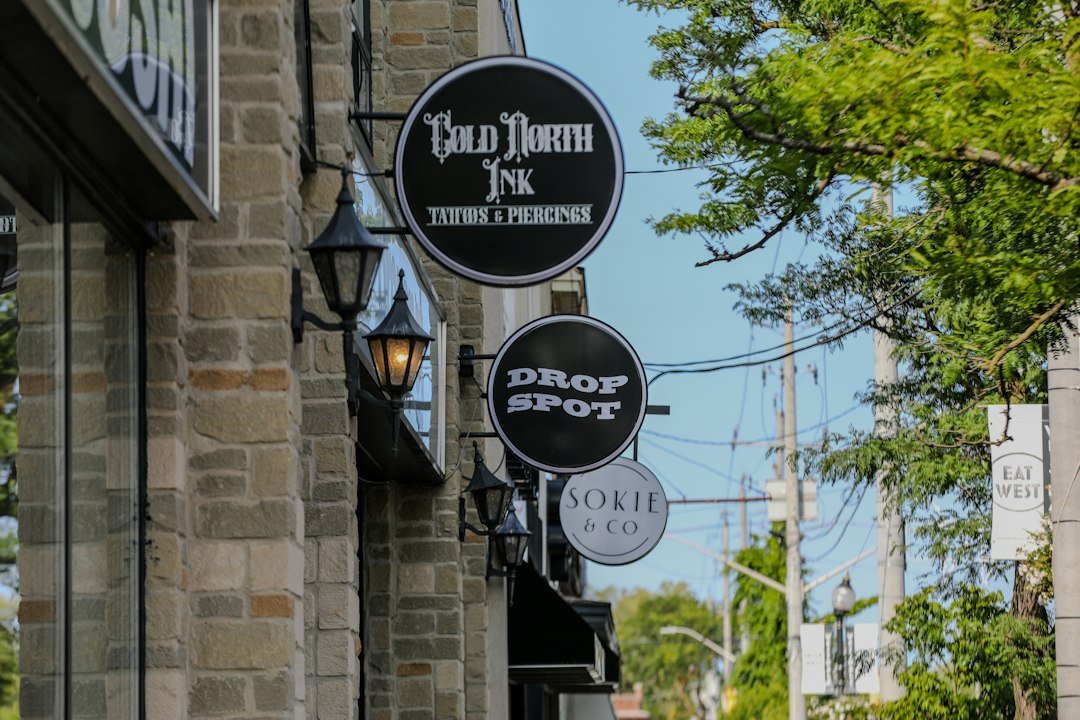
    Several local business signs hanging from a stone building facade on a city street, representing local SEO agencies for storefront and service businesses

    The eight local SEO agencies at a glance

    Eight US agencies with a verified local SEO offering are ranked below by a five-point disclosure scorecard, and the order is editorial opinion from public information as of November 2026, not paid placement. If you would rather fix the basics first, our services cover the technical and on-page work that local rankings sit on.

    Rank Agency HQ or offices Best for Published price Score (of 5)
    1 Searchbloom South Jordan, UT Owners who want a published price and local-labeled results SEO from $3,000 a month 5
    2 Victorious San Francisco, CA Multi-location and franchise brands with larger budgets $6,000 a month minimum for SEO 4
    3 Fannit Seattle, WA and Phoenix, AZ Home service contractors at $3M to $20M+ revenue Not published on page reviewed 3
    4 Thrive Arlington, TX Month-to-month terms plus local listings software Not published 3
    5 Ignite Visibility San Diego, CA and 3 other offices Multi-location, franchise and mid-market brands Not published 3
    6 WebFX Harrisburg, PA Smaller budgets that want a software-backed program Local SEO from $575 a month 3
    7 SEO Brand Boca Raton, FL and 5 other offices Local SEO bundled with web design and paid ads Not published 2
    8 SmartSites Paramus, NJ Local SEO bundled with a website build Not published 2

    Scores are GCL Marketing’s disclosure scorecard (defined below). Offices from each agency’s site; HQ cities for Searchbloom, Victorious, WebFX, SmartSites and Thrive as stated on their sites or the Clutch list. Pricing as published on pages read Nov 1, 2026.

    How we picked these agencies

    We scored only what an agency publishes, because published facts can be checked and ratings alone cannot. Each agency had its own website fetched on November 1, 2026 and was checked against the Clutch local SEO list (ratings and review counts as of November 2026; Clutch says it may earn fees for some placements).

    The Local Disclosure Scorecard (1 point each, 5 maximum)

    A. Local SEO is a named service on the agency’s own site. B. A price or minimum is published. C. A local-service client result with a number appears on the agency’s own site. D. Contract terms are stated. E. The agency appears on the Clutch local SEO list with a rating. Ties are broken by criterion C first, then alphabetically.

    Limits. The score does not measure quality. Every case study figure on an agency site is self-reported with no independent check, and a 2-point agency may be excellent but quiet. Disclosure is the cheapest signal to verify, so it comes first.

    Disclosure about GCL Marketing. We are not listed. Our services cover technical SEO, on-page SEO, content strategy, AEO and GEO, not a dedicated local SEO program, and our case study is a home services marketing agency result, not a local pack result. Considered and left out: Rankings.io (law firm focus; local SEO not a separate service on the page read), Straight North (local SEO page could not be fetched to verify) and Funnel Boost Media (site was a placeholder when checked). Agency names below are plain text on purpose. Any listed agency can contact us at our contact page to correct outdated information.

    What local SEO changes in 2026, in short

    Local rankings come from relevance, distance and prominence, and you cannot buy a better position. Google’s Business Profile help says exactly that. The Whitespark 2026 Local Search Ranking Factors survey (47 experts, published November 2025) puts primary Google Business Profile category first for the map pack (score 227), proximity second (225), and a dedicated page for each service first for local organic results (210). It also says review and behavioral signals gained importance, and that citations drive AI search visibility. Read the agency pages below with those factors in mind.

    1. Searchbloom

    Searchbloom, South Jordan, UT. Scorecard: 5 of 5. Best for: Owners who want a published price, stated contract terms and local-labeled results.

    What they do: Local SEO with a framework it calls ART (authority, relevancy, technology), starting from a technical audit, plus Google Business Profile optimization, link building, AEO and GEO. Clients work with a dedicated analyst.

    Proof from their own site: Its site reports a custom closet company with 122% more leads from organic and AI search by month four, and a kitchen and bath remodeler with $4,445 returned per $100 spent on SEO. Self-reported. Clutch list: 4.9 from 102 reviews. It says long-term contracts are not required.

    One limitation: A $3,000 a month starting price sits above the $500 to $3,000 retainer ranges that SEO.com and WebFX publish for typical agencies, so very small budgets will not fit.

    Pricing: SEO from $3,000 a month; Google Ads management from $2,000 a month.

    2. Victorious

    Victorious, San Francisco, CA. Scorecard: 4 of 5. Best for: Multi-location and franchise brands with budgets of $6,000 a month or more.

    What they do: Local SEO for single-location, multi-location and franchise brands, covering Google Business Profile optimization, citation management and location-level strategy.

    Proof from their own site: Clutch list: 4.8 from 119 reviews with a $50,000+ minimum project, which is consistent with its FAQ guideline of at least $6,000 a month and a recommended 12-month start. The case studies shown on the page read (GE Digital, SoFi, Unionbay, Agora) are national or enterprise accounts, not local-service businesses.

    One limitation: The highest published entry point in this list, and no local-service result was visible on the page read.

    Pricing: Minimum $6,000 a month for SEO; no rate card.

    3. Fannit

    Fannit, Seattle, WA and Phoenix, AZ. Scorecard: 3 of 5. Best for: Home service contractors with roughly $3M to $20M+ in revenue.

    What they do: Local SEO (Search and Maps visibility, Google Business Profile, citations, backlinks, on-page and content), website design, paid ads, reputation management and lead systems for trades such as roofing, HVAC, plumbing and landscaping.

    Proof from their own site: Its site lists Clean Crawls ($8.5M revenue growth), On the Go Moving and Storage (823% ROI) and Aegis Roofing (1,900+ leads), with no methodology or time frames, plus company-wide claims of 200+ clients and 40,000+ leads. Clutch list: 4.8 from 21 reviews.

    One limitation: Its stated niche is contractors above about $3M in revenue, so smaller or non-trade businesses sit outside the stated fit.

    Pricing: Not published on the page reviewed (the site links to a separate pricing page that was not read).

    4. Thrive

    Thrive, Arlington, TX. Scorecard: 3 of 5. Best for: Businesses that want month-to-month terms and local listings and review software.

    What they do: Local internet marketing as part of SEO, plus Thrive Local, software for managing local listings and reviews. The company says it has operated since 2005 with 160+ marketing experts.

    Proof from their own site: Its site reports Qualis in Dallas-Fort Worth with a 427% year-over-year increase in top 10 organic keywords and 68% more organic conversions over six months. It states month-to-month contracts. It was not among the first 28 agencies of the Clutch local list that we read.

    One limitation: The site claims #1 in Google Maps search with no supporting detail, and pricing is not published.

    Pricing: Pricing not published.

    5. Ignite Visibility

    Ignite Visibility, San Diego, CA (offices also in Irvine, Orlando and New York). Scorecard: 3 of 5. Best for: Multi-location, franchise and mid-market brands.

    What they do: Local SEO sits under its earned media group with SEO and digital PR, alongside paid and owned media. It names multi-location businesses and franchises among its client types.

    Proof from their own site: Clutch list: 4.8 from 175 reviews. The site says it does not tie clients to long-term contracts, hidden fees or asset ownership, without specific notice terms. It claims 340+ employees and 13 years in business.

    One limitation: The page read links to a local SEO service but gives no local-specific detail, and no local case study figures appeared.

    Pricing: Pricing not published.

    6. WebFX

    WebFX, Harrisburg, PA. Scorecard: 3 of 5. Best for: Smaller budgets that want a software-backed program with a published starting price.

    What they do: Strategy, keyword research, content, link building, citation management including Google Business Profile, review management and reporting, plus its LocalFX software and a client-managed option.

    Proof from their own site: Its local SEO pricing page (modified September 28, 2026) states services start at $575 a month and retainers run $500 to $3,000. Clutch list: 4.9 from 454 reviews. Its stats are company-wide, not local-specific.

    One limitation: No local-labeled case study and no contract terms appeared on the page read.

    Pricing: Local SEO from $575 a month.

    7. SEO Brand

    SEO Brand, Boca Raton, FL (offices also in Philadelphia, New York, Los Angeles, Miami and Boston). Scorecard: 2 of 5. Best for: Owners who want local SEO bundled with web design and paid advertising.

    What they do: SEO, AI search optimization, Google Ads, Meta Ads, web design and development and social media, with local SEO listed as a service with its own page.

    Proof from their own site: Clutch list: 4.9 from 109 reviews. Its homepage case studies (Mont Blanc 730% organic traffic, Wills Eye Hospital 50,000 patients booked over nine years) are not local-service results, and all are self-reported.

    One limitation: No pricing, contract terms or local-service case study on the homepage.

    Pricing: Pricing not published; free proposals.

    8. SmartSites

    SmartSites, Paramus, NJ. Scorecard: 2 of 5. Best for: Owners who want local SEO and a new website from one vendor.

    What they do: Local SEO as a sub-service of organic SEO, next to AI search optimization, technical audits and link building. It reports clients in all 50 states and 900+ websites built.

    Proof from their own site: Clutch list: 4.9 from 370 reviews. Its local SEO page links to 411 organic SEO case studies, but the featured examples (Recon Recovery, Essential Electric Supply) are not labeled as local SEO.

    One limitation: No pricing or contract terms on the page read, and no local-labeled result.

    Pricing: Pricing not published; free proposal.

    Criteria matrix: what each agency publishes

    Only Searchbloom publishes a price, a contract stance, a local-labeled result and a Clutch rating together. Each cell below was read on the agency’s own site or the Clutch local list on November 1, 2026; “Not published” means we did not find it on the pages read.

    Agency A: Local SEO service B: Price C: Local result D: Contract terms E: Clutch local list Score
    Searchbloom Yes Yes ($3,000+) Yes Yes (no long-term required) Yes, 4.9 (102) 5
    Victorious Yes Yes ($6,000+) No Yes (12 months recommended) Yes, 4.8 (119) 4
    Fannit Yes Not published Yes Not published Yes, 4.8 (21) 3
    Thrive Yes Not published Yes Yes (month-to-month) Not found 3
    Ignite Visibility Yes Not published No Yes (no long-term contracts) Yes, 4.8 (175) 3
    WebFX Yes Yes ($575+) No Not published Yes, 4.9 (454) 3
    SEO Brand Yes Not published No Not published Yes, 4.9 (109) 2
    SmartSites Yes Not published No Not published Yes, 4.9 (370) 2

    Clutch figures as of November 2026. “Not found” for Thrive means it was not in the first 28 listings read, not that it has no listing.

    Why published local SEO prices disagree

    Published local SEO prices range from $575 to $6,000 a month because the sources sell different things. The table lines up what each source states, and one source’s own example does not match its own percentages.

    Source Stated range What it likely reflects
    SEO.com (updated Sept 14, 2026) $500 to $2,000 a month (table: $501 to $3,000); projects $500 to $5,000 Survey-based averages; survey not named
    WebFX pricing page (Sept 28, 2026) $500 to $3,000 a month; about $1,000 for small businesses; from $575 A vendor selling the entry tier
    Searchbloom SEO from $3,000 a month Competitive-market, analyst-led scope
    Victorious Minimum $6,000 a month Enterprise and multi-location scope

    Sources: SEO.com, WebFX, Searchbloom and Victorious sites, read Nov 1, 2026.

    The math problem. WebFX advises spending 1% to 10% of the total marketing budget on local SEO and gives a $100,000 budget as an example worth $500 to $1,250 a month. If $100,000 is annual, 1% to 10% is $83 to $833 a month. The example only works if you read it as a monthly figure for a much larger budget. Check which one an agency means before comparing quotes.

    Hypothetical worked example (not a client result)

    A single-location plumber has a $120,000 annual marketing budget and earns $450 gross profit per booked job (both numbers are assumptions). Applying the 1% to 10% rule gives $1,200 to $12,000 a year, or $100 to $1,000 a month. A $1,000 retainer sits at the top of that range and needs 3 extra jobs a month to break even ($1,000 divided by $450 is 2.2, rounded up). A $3,000 retainer is $36,000 a year, 30% of the budget, and needs 7 extra jobs a month. Use your own numbers.

    Choose X if: matching an agency to your business

    Match on size, budget and terms first, because those facts decide fit faster than ratings do.

    Choose this agency If
    Searchbloom You can spend $3,000 or more a month and want published terms plus local-labeled results
    Victorious You run multiple locations or a franchise and can commit $6,000 a month for 12 months
    Fannit You are a home service contractor above roughly $3M in revenue
    Thrive You want month-to-month terms and listings and review software
    Ignite Visibility You are multi-location or franchise, mid-market, and want no long-term contract
    WebFX Your budget is closer to $575 to $1,000 a month and you want a published starting price
    SEO Brand or SmartSites You also need a new website or paid ads from the same vendor

    Run the 10-minute map test before you hire

    Do not pay a retainer until you know whether your problem is category, pages or distance. Open your Google Business Profile and note the primary category. Then, in a private window, search your main service plus your city from three places: your own address, about 3 miles away and about 8 miles away (a free rank grid tool or a phone at each spot works). Write down your map pack position each time and the primary category of the top three competitors.

    Pass: you are in the top 3 at your own address and at least one other spot. Fail at your address: fix category, profile completeness and a dedicated page per service first, which Whitespark ranks as the top factors and which cost far less than a retainer. Pass at home, vanish at 8 miles: that is distance, which Google lists as a ranking factor, and no budget changes it. Next, ask each agency to name your primary category and your missing service pages within 24 hours. Pass if they are specific.

    Our view at GCL Marketing

    We disagree with proposals that lead with citation volume or review counts. In the 2026 Whitespark survey, the top map pack factor is primary category and the top local organic factor is a dedicated page for each service, so month one should fix those. Reviews gained importance, so they follow in month two, not first. We do not sell a full local SEO program: our technical, on-page, AEO and GEO services support it, and you can compare options in our best SEO agencies roundup.

    When NOT to hire a local SEO agency

    Skip the retainer if your profile is unverified, because Google says verification makes you more likely to appear. Skip it if you already rank top 3 at your address and only lose at distance. And skip it under about $500 a month: SEO.com and WebFX both list one-time projects at $500 to $5,000 for audits, profile setup or location pages, which cost less than a year of retainers. The trade-off is slower compounding, but you keep control of the scope.

    Red flags and 10 questions to ask

    Walk away from any agency that guarantees a map position, since Google says you cannot pay for a better local ranking, or that cannot say how reviews are obtained. Then ask these ten questions:

    1. What is my primary category today, and what should it be?
    2. Which service and city pages are missing from my site?
    3. How do you get reviews, and what do you never do?
    4. Who is my day-to-day analyst?
    5. What is the contract length and the notice to cancel?
    6. What exactly is in the monthly price, and what costs extra?
    7. Show a local-service client result with dates and what changed.
    8. How do you report calls, forms and booked jobs, not just rankings?
    9. How do you handle multi-location or service-area profiles?
    10. Who owns the profile, site and reports if we leave?

    FAQ: best local SEO agencies

    How much do local SEO agencies cost?

    Published ranges differ by source. SEO.com lists $500 to $2,000 a month for agencies and WebFX lists $500 to $3,000, with small businesses often near $1,000. Searchbloom starts SEO at $3,000 and Victorious at $6,000 a month. Scope, competition and number of locations explain most of the gap.

    How long does local SEO take to work?

    Plan for a full quarter before judging results. Searchbloom reports a closet company reached 122% more leads by month four, and Thrive reports a Dallas-Fort Worth client over six months. Both are self-reported. Fixing a wrong primary category or a missing service page can move faster than link or citation work.

    Is a local SEO agency different from a regular SEO agency?

    Yes. Local work centers on the Google Business Profile, primary category, reviews, citations and location pages, and ranking depends on distance as well as relevance. National SEO focuses on pages and links without a physical point of search. Several agencies here sell both, so ask which team does yours.

    Can I pay Google to rank higher in the map pack?

    No. Google Business Profile help states there is no way to request or pay for a better local ranking. Ads are separate. Any agency promising a guaranteed map pack position is selling something Google says cannot be bought, so treat that promise as a red flag.

    Should a small local business hire an agency or do it in-house?

    Run the 10-minute map test first. If you fail at your own address, a one-time project of $500 to $5,000 for category, profile and service pages often costs less than a retainer. Hire monthly help once the basics are right and you need reviews, content and reporting.

    Run the map test, score your shortlist with the matrix, then compare quotes against the cost math above. For wider pricing context read how much SEO costs in 2026, and see 10 signs you need an SEO agency and link building vs digital PR if links are your next question. You can see how it all fits at GCL Marketing.

  • Link Building vs Digital PR: Which Earns Better Links?

    Link Building vs Digital PR: Which Earns Better Links?

    Link Building vs Digital PR: Which Earns Better Links?

    Quick Answer

    Short answer: Link building earns links to specific pages through direct outreach. Digital PR earns coverage by pitching a newsworthy story. Choose link building to lift a service or product page within weeks. Choose digital PR if you have original data and $5,000 or more per campaign. Score the five questions below to decide.

    Last updated: October 2026

    Walking trail splitting into a narrow path and a wide path through a green forest, illustrating the choice between link building and digital PR

    Link building vs digital PR: the difference in one table

    The difference comes down to what you ask for: link building asks a site owner to link to a page, and digital PR gives a journalist a story and hopes for coverage. The table compares the two on the criteria that change a buying decision. Prices are published figures from named sources, not quotes, and they move with niche and competition.

    Criterion Link building Digital PR
    Unit of work A link request to a specific page A story, study or expert comment pitched to media
    Typical published price Starter retainers $2,500 to $3,500 a month for about 4 to 10 links; local or low-competition $500 to $1,500 for 2 to 5 links (BuzzStream) $5,000 to $10,000 per campaign for about 6 to 7 unique linking domains (BuzzStream); $5,000 to $20,000 per campaign (NEWMEDIA.COM)
    Speed to first link Weeks, once outreach starts Coverage often within a week, but 51.4% of practitioners say results take 3 to 6 months
    Control over target page and anchor High Low, links often point to the campaign asset or home page
    Main side benefit Page-level ranking lift Brand mentions, branded search and possible AI citations
    Biggest risk Paid or low-quality placements Spending $5,000 or more on a story nobody covers
    Best for Service, product and location pages Brands with original data and a spokesperson

    Sources: BuzzStream pricing guide (updated October 2026), NEWMEDIA.COM (updated August 2026), BuzzStream State of Digital PR 2026. “Control” and “risk” rows are GCL Marketing judgment.

    If you are still deciding whether to buy any outside help, our guide to signs you need an SEO agency gives a scored test, and our services page shows what we cover in-house.

    What the top guides agree on, and what they skip

    The three top guides agree that both tactics build authority and that the best answer is a mix. Search Engine Journal stresses audience and revenue over link counts, Page One Power separates ranking-led link building from reputation-led PR, and Wytlabs recommends balancing both. That is the baseline, and it is not wrong. What they skip is a way to decide for your own budget: none gives a cost-per-link comparison, a pass or fail test, or a score. Page One Power also asserts that Google favors naturally built links without citing data, so we do not rely on that claim.

    Cost per link: why the published numbers disagree

    Digital PR cost per link ranges from $300 to $1,667 depending on the source, because each source counts a different thing. The table lines up four figures and shows the reason for each gap.

    Source Figure What it measures Why it differs
    BuzzStream pricing guide $1,250 to $1,500 per unique digital PR link Price per unique digital PR link Priced per unique link; the page does not state its sample
    BuzzStream State of Digital PR 2026 $300 to $500 per link is the most common answer (19.6%); 10.2% report $750 or more; 39.2% do not know their cost Self-reported by about 150 practitioners Self-reported, so many respondents are estimating; sample is about 150
    BuzzStream pricing guide (campaign) $5,000 to $10,000 for about 6 to 7 unique linking domains, so $714 to $1,667 per domain (our division) Campaign fee divided by domains Fixed fee divided by domains, so cost per link falls if more domains are earned
    NEWMEDIA.COM $5,000 to $20,000 per campaign, no per-link price Agency price list Pay-on-performance pricing is listed as “varies”

    Sources read October 31, 2026. The two BuzzStream pages and NEWMEDIA.COM each contain internal inconsistencies in ranges, so treat all figures as indicative.

    The practical lesson is to ask any vendor what a “link” means in their quote. A unique referring domain, a syndicated copy of the same story and a nofollow mention are three different deliverables with three different values.

    Worked example: one $10,000 quarter (hypothetical)

    Spending $10,000 on a link-building retainer buys more links, and spending it on one digital PR campaign buys fewer links with a wider upside. This example is hypothetical and uses the BuzzStream price points above; it is not a client result.

    Option Spend over 3 months Links expected Cost per link Catch
    A. Link-building retainer $3,000 a month x 3 = $9,000 4 to 10 a month = 12 to 30 $300 to $750 Links point where you choose; quality depends on vendor vetting
    B. One digital PR campaign $10,000 once 6 to 7 unique domains $1,429 to $1,667 3 to 6 months to results; a flop yields near zero

    Math: $9,000 / 30 = $300 and $9,000 / 12 = $750. $10,000 / 7 = $1,429 and $10,000 / 6 = $1,667.

    Option A wins on pure link count and speed. Option B only wins if the coverage lifts branded search or AI citations enough to matter beyond the links, which neither the price guides nor this example can prove for your business.

    The 5-question Fit Score: which one to buy first

    Score one point for each yes: 4 to 5 points means start with digital PR, 2 to 3 means run both at small scale, and 0 to 1 means start with targeted link building. The cutoffs are GCL Marketing rules of thumb built from the price floors and timelines above, not an industry standard.

    # Question Why it matters
    1 Do you own original data, a study or a spokesperson with a real opinion? Journalists cover stories, not service pages
    2 Can you spend $5,000 or more on one campaign without cutting content or technical SEO? Published campaign floors start at $5,000
    3 Do you want brand mentions and AI citations as much as rankings? 55.4% of practitioners now track AI citation mentions as a success metric
    4 Can you wait 3 to 6 months for a verdict? 51.4% say measurable results take 3 to 6 months
    5 Is the page you need to rank informational or a resource rather than a service page? PR links rarely land on a transactional page

    Score: 4 to 5 = digital PR first. 2 to 3 = both, small scale. 0 to 1 = link building first.

    Two 10-minute tests with pass or fail lines

    Run these before you sign anything; each takes under ten minutes with free tools.

    Test 1: the journalist test (is digital PR viable in your niche?)

    Open Google News and search the three topics you want to be known for. Open the five most recent articles that quote a source and count how many cite a company’s data or a named outside expert. Pass: 3 or more of 5. Fail: 0 to 2, meaning the beat rarely quotes outside sources and a campaign will be hard to land. This is a GCL Marketing diagnostic, not a published benchmark.

    Test 2: the money-page test (will links reach the page that earns revenue?)

    In Google Search Console, open Links, then Top linked pages. Check whether your five revenue pages appear in the top ten. Pass: at least 2 of 5 appear. Fail: none appear, which means your existing links already sit on the home page or on blog posts, and more PR coverage will likely repeat that pattern. Fix internal linking or choose targeted link building first.

    Choose link building if, choose digital PR if

    Pick by the page you need to move and the story you can tell, not by which tactic is fashionable. The rules below turn the Fit Score and the two tests into a decision.

    Choose link building if Choose digital PR if
    You need a service, product or location page to rank You need brand visibility and branded search, not one page
    Monthly budget is $500 to $3,500 You can fund $5,000 or more per campaign
    You want results in weeks You can wait 3 to 6 months
    You have no original data or spokesperson You have proprietary data, a study or a credible expert
    The journalist test fails The journalist test passes
    Competitors win on page-level links Competitors win on press and mentions

    Scenario recommendations and when to use both

    The right choice differs by business type, so here is a rule for each of the three types we serve.

    Local service business: choose link building at the $500 to $1,500 a month tier, plus local sponsorships and unlinked-mention requests. A $5,000 campaign is rarely justified before service pages and your Google Business Profile are in order. E-commerce store: use both once product pages rank, because a data study from your own sales can earn coverage while targeted links lift category pages. SaaS company: start with digital PR only if you hold product usage data journalists want; otherwise buy targeted links to comparison and integration pages at the $3,000 to $10,000 competitive-niche tier.

    Use both when one campaign asset can feed outreach for months. Build the study once, pitch it to journalists, then use the same data to request links from niche sites. Wytlabs makes the same point about reusing assets.

    Risk: what Google’s spam policies say

    Both tactics are safe when links are earned and risky when they are bought to manipulate rankings. The Google spam policies treat paid links as link spam unless marked with nofollow or sponsored, and call out large-scale article, guest post and press release campaigns that pass ranking credit with keyword-rich anchors. Ask every vendor how each link is obtained, and refuse any plan built on volume.

    When NOT to buy either

    Do not buy links or PR before your pages can use them. If the money-page test shows your revenue pages are not indexed, thin or missing, extra links raise the ceiling on a page that cannot rank. Do not buy digital PR if a campaign would consume more than a quarter of your marketing budget, since a miss costs the full fee. Do not buy link building if the vendor cannot show where each link appeared before you pay. Trade-off: waiting costs time, but fixing the page first is cheaper than rebuying links.

    Our view at GCL Marketing

    We disagree with the common claim that digital PR is simply better because it builds brand. Brand coverage helps, but it is slow, hard to attribute and rarely points at the page that sells. We also do not sell link building: our services cover technical SEO, on-page SEO, content strategy, AEO and GEO. Our advice is to fix the page, then choose the tactic with this score. You can see our case study for how we measure SEO work, and the best link building agencies and best SEO agencies roundups if you want to hire one.

    FAQ: link building vs digital PR

    Is digital PR just link building with a new name?

    Partly. Both aim to earn links, but the unit of work differs. Link building asks a site to link to a page. Digital PR pitches a story to journalists and accepts links as an outcome. Search Engine Journal contributor Adam Riemer calls digital PR a repackaged form of link building, while Page One Power treats links as secondary.

    Which is cheaper per link?

    Targeted link building usually has the lower sticker price. BuzzStream lists starter retainers of $2,500 to $3,500 a month for roughly 4 to 10 links, or $250 to $875 per link by our math. Its digital PR figure is $1,250 to $1,500 per unique link. Prices vary widely by niche and by what counts as a link.

    How long does digital PR take to produce links?

    Coverage can arrive fast, but results take longer. BuzzStream’s 2026 survey of about 150 practitioners found 81% secure first coverage within a week, yet 51.4% say measurable results take 3 to 6 months. Plan for a full quarter before judging a campaign, and do not pay for a campaign you cannot wait on.

    Can a small local business use digital PR?

    Usually not as a first move. A single campaign is quoted at $5,000 or more, which can exceed a local service budget for a quarter. A local business is often better served by a small monthly link program, local sponsorships and unlinked-mention requests, and by fixing its service pages first.

    Do digital PR links carry any risk?

    Yes, if links are paid or manipulative. Google’s spam policies treat buying links for ranking as link spam unless marked nofollow or sponsored, and flag large-scale article or press release campaigns that pass ranking credit with keyword-rich anchors. Earned editorial coverage is fine. Ask any vendor how each link is obtained.

    Run the Fit Score and the two tests, then compare quotes using the cost math above. For how pricing fits the wider budget, read how much SEO costs in 2026. You can see how it all fits at GCL Marketing.

  • 10 Signs You Need an SEO Agency (and 3 Signs You Don’t)

    10 Signs You Need an SEO Agency (and 3 Signs You Don’t)

    10 Signs You Need an SEO Agency (and 3 Signs You Don’t)

    Quick Answer

    Short answer: You likely need an SEO agency when Search Console clicks have fallen for two quarters, money pages are missing or unindexed, a redesign is coming, or nobody owns SEO. Score the 10 signs below from 0 to 20: 12 or more justifies a retainer, 6 to 11 a fixed-scope project.

    Last updated: October 2026

    Person writing on a clipboard at a desk with a laptop, reviewing a checklist of signs a business needs an SEO agency

    How to use this list: score each sign from 0 to 20

    Each sign below has a ten-minute test you can run yourself, and each test scores 0, 1 or 2 points, so the ten signs give a readiness score out of 20. Most guides on this topic list reasons to hire an agency without a threshold. The three top-ranking guides we read list between 8 and 11 signs, and none gives a pass or fail number. The cutoffs here are GCL Marketing rules of thumb, not industry standards, so treat them as a way to decide, not as proof.

    The signs are ordered by the cost of waiting. Signs that leak revenue now come first, and signs that only slow growth come last. If you already know you want help, see our SEO, AEO and GEO services first and come back to the score later.

    The 10 signs at a glance

    The table shows the test and the 2-point fail line for each sign, so you can score yourself in one pass.

    # Sign 10-minute test Fail line (2 points)
    1 Organic clicks are flat or falling Compare the last 3 months with the previous 3 in Search Console Clicks down 10% or more
    2 Impressions are falling Same report, Impressions line Impressions down 15% or more
    3 Money pages are missing List 5 buyer queries; look for a dedicated page for each 3 or more of 5 have no page
    4 Key pages are not indexed Page indexing report; inspect your 5 revenue URLs Any revenue page not indexed
    5 A redesign or migration is coming Check your launch calendar Launch within 90 days, no SEO review
    6 AI answers never name you Ask 10 buyer questions in the AI tool your customers use 0 of 10 mention or cite you
    7 Competitors have far more linking sites Compare referring domains for the top 3 competitors Under one third of the lowest competitor
    8 New content earns no clicks Check pages published 6 to 12 months ago Fewer than 1 in 5 earns any click
    9 Nobody owns SEO Name the person with 3 hours a week in their calendar Nobody
    10 Your provider cannot show data Ask for a report tied to Search Console clicks and leads No report, or only rank screenshots

    1 point is a borderline result between pass and fail. 0 points is a clean pass. Thresholds are GCL Marketing rules of thumb as of October 2026.

    Signs 1 to 5: the signs that cost you revenue now

    These five signs mean you are already losing leads or about to, so they carry the most urgency.

    1. Organic clicks are flat or falling for two quarters

    If your organic clicks have not grown in six months, you are paying for standing still.

    10-minute test: Open the Search Console Performance report, set the date filter to the last 3 months, and compare with the previous 3 months. Score 2 if clicks are down 10% or more, 1 if they sit within 10% either way, 0 if they are up more than 10%.

    Why it happens: Competitors publish and earn links while your pages age, and Ahrefs found that the average number one result is about five years old, so established pages decay slowly and new ones take time to catch up.

    Fix: Find the five pages that lost the most clicks and refresh or consolidate them before buying anything. Agency needed? Not for a single declining page. Yes if the decline is sitewide and you do not know why.

    2. Impressions are falling, not just clicks

    Falling impressions mean Google is showing you for fewer searches, which is a visibility problem an audit can diagnose.

    10-minute test: In the same report, switch to Impressions. Score 2 if impressions are down 15% or more, 1 if down 5% to 15%, 0 otherwise.

    Why it happens: Lost rankings, deindexed pages, a migration that dropped redirects, or a competitor taking the queries you used to hold.

    Fix: Check the Pages tab for the URLs that lost impressions, then inspect them for noindex tags, redirects and canonical errors. Agency needed? Yes if the cause is not obvious after the page check.

    3. Your money pages do not exist

    If a buyer query has no dedicated page on your site, no amount of blog traffic will win it.

    10-minute test: Write down five queries a buyer types before hiring you, such as a service plus a city or a product plus a use case. Search your site for a page built around each. Score 2 if three or more have no page, 1 if one or two, 0 if none are missing.

    Why it happens: Sites grow around what the owner finds interesting, not around what buyers search to buy.

    Fix: Build one page per commercial query before writing more articles. Agency needed? Not if you can write the pages. Yes if you cannot judge which queries deserve a page.

    4. Key pages are not indexed

    A page that Google has not indexed cannot rank, and many owners never check.

    10-minute test: Open the page indexing report in Search Console and inspect your five most valuable URLs one by one. Score 2 if any revenue page is not indexed or is blocked, 1 if many sitemap URLs are excluded for reasons you cannot explain, 0 if everything is accounted for.

    Why it happens: Noindex tags left from staging, robots rules, duplicate canonicals or thin pages Google chooses to skip.

    Fix: Fix the blocking tag or rule, request indexing, and re-check in a week. Agency needed? A technical specialist, yes. A full retainer, not necessarily.

    5. A redesign or migration is coming

    A redesign is the cheapest moment to involve an SEO and the most expensive moment to skip one.

    10-minute test: Check your launch calendar. Score 2 if a redesign, replatform or domain change launches within 90 days without an SEO review, 1 if within six months, 0 if none is planned.

    Why it happens: Designers change URLs, templates and navigation without knowing which pages carry the traffic. Google itself says a redesign is a great time to hire an SEO.

    Fix: Export your top URLs from Search Console before the build and agree a redirect map. Agency needed? Yes for a fixed-scope migration project, then reassess.

    Signs 6 to 10: the signs that slow your growth

    These five signs rarely cause a sudden drop, but they decide whether SEO compounds or stalls.

    6. AI answers never name your business

    If AI search tools answer your buyers’ questions without naming you, you are missing a growing share of discovery.

    10-minute test: Ask 10 real buyer questions in the AI search tool your customers use, and count how many answers name or cite your brand. Repeat on a second day because answers vary. Score 2 if 0 of 10, 1 if 1 to 3, 0 if 4 or more.

    Why it happens: AI answers draw on pages that state clear, citable facts and on brands mentioned across the web. Thin service pages give them nothing to quote. See SEO vs AEO vs GEO for how the three differ.

    Fix: Add direct answers, specifics and proof to your main pages and earn mentions on third-party sites. Agency needed? Yes if you want AEO or GEO done as a system, since few freelancers cover it end to end.

    7. Competitors have far more linking sites

    A large authority gap explains why good pages still sit on page two.

    10-minute test: Pick the top three organic competitors for your main term and compare referring domains using one backlink tool. Score 2 if you have under a third of the lowest competitor, 1 if between a third and equal, 0 if at or above.

    Why it happens: Competitors earned links through press, partnerships and data, while you published only on your own site.

    Fix: Start with relevant, earned links and avoid purchased links that pass ranking credit, which Google treats as spam. Agency needed? GCL Marketing does not sell link building, so if this is your only gap, buy it separately. Our link building agency ranking shows how to vet vendors.

    8. New content earns no clicks

    If most articles you published last year earn zero clicks, your content has no strategy behind it.

    10-minute test: List pages published 6 to 12 months ago and check clicks for each. We use any clicks rather than a top 10 rank because Ahrefs found that only 1.74% of newly seen pages reached the top 10 within a year. Score 2 if fewer than 1 in 5 earn any click, 1 if 1 in 5 to 1 in 2, 0 if more than half.

    Why it happens: Topics were chosen by keyword volume alone, with no match to buyer intent or to pages Google already trusts.

    Fix: Stop publishing new posts, update the ones with impressions, and connect them to money pages with internal links. Agency needed? Yes if you lack someone who can plan topics from search data.

    9. Nobody owns SEO

    SEO work that belongs to nobody does not get done, whatever you spend.

    10-minute test: Name the one person with three protected hours a week for SEO tasks. Score 2 if nobody, 1 if someone has it on top of a full job, 0 if there is a named owner with time.

    Why it happens: SEO sits between marketing, development and content, so every team assumes another one handles it.

    Fix: Assign an internal owner, even with an agency, to approve changes and unblock developers. Agency needed? Yes, but an agency still needs an owner on your side to approve changes.

    10. Your current provider cannot show data

    If you already pay for SEO and cannot link the spend to clicks and leads, the fix is a new reporting standard, not more spend.

    10-minute test: Ask for a report that ties Search Console clicks to leads or sales. Score 2 if you get no report or only rank screenshots, 1 if you get traffic without leads, 0 if clicks tie to leads. Google lists secrecy and guaranteed number one rankings as red flags.

    Why it happens: Vanity reports are easier to produce than outcome reports.

    Fix: Require a monthly report built on Search Console and your lead source, and request read-only access during any audit, never write access. Agency needed? A better provider, yes. More of the same, no.

    What your score means: a decision table

    A score of 12 or more points to a retainer, 6 to 11 to a fixed-scope project, and 5 or less to doing little or nothing yet.

    Total score Buy this Why Next step
    0 to 5 Nothing yet, or a freelancer for one task Few leaks to fix Do the quick fixes yourself and re-score in 90 days
    6 to 11 A fixed-scope audit plus fixes You have specific problems, not a broad gap Ask for a written scope and price; see agency vs freelancer vs in-house
    12 to 20 A monthly retainer with a 90-day checkpoint The gaps are broad and need ongoing work Compare 3 agencies from our US agency ranking
    Any score with sign 4 or 5 at 2 points A project first These are urgent and finite Fix indexing or migration before starting a retainer

    Can you afford it? A hypothetical break-even example

    A retainer pays for itself only if the extra leads cover its cost, and you can check that with three numbers.

    Ahrefs surveyed 439 SEO service providers and reported an average agency retainer of $3,209 per month, with $500 to $1,000 per month the most common range (published December 2023, updated August 2024). This example is hypothetical and not a client result. Assume a service business with a $1,800 average job, a 20% lead-to-customer close rate and a 40% gross margin.

    Step At $3,209 per month At $1,000 per month
    Gross profit per lead ($1,800 x 20% x 40%) $144 $144
    Break-even leads per month 3,209 / 144 = 22.3, so 23 1,000 / 144 = 6.9, so 7
    Annual retainer cost $38,508 $12,000
    Break-even on revenue only ($360 per lead) 9 leads per month 3 leads per month

    Hypothetical numbers for illustration. Replace the job value, close rate and margin with your own.

    If your site cannot plausibly produce 23 extra qualified leads a month, the higher retainer is the wrong purchase, and the score table above should point you to a project.

    Why the numbers you read conflict

    The figures behind this decision come from different samples and dates, so they disagree.

    Topic Source A Source B Why they differ
    Retainer price Ahrefs average: $3,209 per month Ahrefs most common range: $500 to $1,000 A minority of high-priced providers pull the average up; budget from the range that matches your provider type
    Time to rank 1.74% of newly seen pages reach the top 10 within a year 6.11% on a filtered set of non-empty English pages Ahrefs says the filtered set is the fairer view; both show most new pages do not rank in a year
    Number of signs Reboot Online lists 11 Marcel Digital lists 8 Each publisher chooses its own list, and none gives a score

    Sources: Ahrefs SEO pricing study and Ahrefs time-to-rank study, read October 30, 2026; publisher pages read the same day.

    Where we disagree with common advice

    Two popular signs are weaker than they look, and we left them out of the score.

    First, “your rankings dropped” is not always a ranking problem. Ahrefs reported that AI Overviews were associated with a 58% lower average click-through rate for the number one result in December 2025, measured on 300,000 keywords. If impressions are steady and clicks are down, you may be facing a click problem, which more rank work will not fix. Check the Ahrefs study and your own impressions line before blaming rankings.

    Second, “you do not understand SEO terms” is a knowledge gap, not a business problem. You do not need to know what topical authority means to hire well. You need to read a Search Console report, which sign 10 tests.

    3 signs you do not need an SEO agency

    You can skip the retainer if your score is low, your market is small, or you need leads faster than SEO can deliver.

    A. You are a small local business with simple gaps

    Google says small local businesses can often do much of the work themselves, starting with its SEO Starter Guide. Test: if your score is 5 or less and you can work through the guide. Trade-off: you pay with your own hours, so a one-time audit is a cheaper middle path. Read Google’s guidance on whether you need an SEO.

    B. Your problem is conversion, not traffic

    If clicks and impressions are healthy (signs 1 and 2 score 0) but leads are flat, an agency will bring more of the same visitors. Test: compare form or call rates against traffic. Trade-off: you fix the offer, forms and page copy first. Our guide on 7 leaks between SEO traffic and leads covers this.

    C. You need leads within 90 days

    SEO is a slow channel: Ahrefs found only 1.74% of newly seen pages reached the top 10 within a year, and the average number one page is about five years old. Test: if the business fails without leads this quarter, SEO is the wrong first spend. Trade-off: paid search and referrals cost more per lead but arrive sooner, and you can start SEO in parallel. Our SEO cost guide shows the budget ranges.

    When NOT to hire, even with a high score

    Do not sign a retainer if the provider guarantees a number one ranking, will not explain its plan, or asks for write access during an audit, because Google lists these as red flags. Also pause if you cannot fund at least a six-month test, since a shorter trial can end before the first checkpoint. A high score on signs 4 and 5 should start with a project, not a retainer.

    Frequently Asked Questions

    How much does an SEO agency cost?

    Ahrefs surveyed 439 providers and reported an average agency retainer of $3,209 per month, with $500 to $1,000 the most common range. The data was published in December 2023 and updated in August 2024, so treat it as a guide and get written quotes. Our SEO cost guide breaks prices down by business type.

    How long before I see results from an SEO agency?

    Expect months, not weeks. Ahrefs found only 1.74% of newly seen pages reached the top 10 within a year, and 6.11% on a filtered set. Plan a six-month test with checkpoints at 90 days, and judge early progress by impressions, indexed pages and rankings for target queries before leads.

    Can a small business do SEO without an agency?

    Often yes. Google says small local businesses can do much of the work themselves, starting with its SEO Starter Guide. If your readiness score is 5 or less, spend your hours on money pages and indexing. If it reaches 6 to 11, buy a one-time audit rather than a monthly retainer.

    What should I check before hiring an SEO agency?

    Check that it will not guarantee a number one ranking, explains its plan clearly and reports on Search Console clicks tied to your leads. Google warns against secrecy and against giving write access during an audit. Ask for read-only access, a written scope and a 90-day checkpoint in the contract.

    What if my score is between 6 and 11?

    Buy a fixed-scope project, not a retainer. A written audit with a prioritized fix list shows whether your gaps are narrow or broad, and a freelancer or agency can deliver it. Re-score after 90 days, and move to a retainer only if the score rises above 12.

    Score yourself on the ten signs, then decide between a project and a retainer using the table above. See our case study for an example of an SEO, AEO and GEO engagement, and explore our services for how we work. You can see how it all fits at GCL Marketing.

  • Best Link Building Agencies in the United States (2026)

    Best Link Building Agencies in the United States (2026)

    Best Link Building Agencies in the United States (2026)

    Quick Answer

    Short answer: Stellar SEO and uSERP score highest because they publish the most on their own sites: prices, link proof and terms. Fractl and Siege Media suit content and digital PR programs. This ranking scores nine US agencies on what each discloses, as of October 2026. It is editorial opinion, not paid placement.

    Last updated: October 2026

    Close-up of a grey metal chain, a visual metaphor for links connecting websites in a link building campaign

    How we picked these agencies

    We ranked nine US link building providers with a five-part disclosure scorecard built only from what each agency publishes on its own website. Every agency below was checked by reading its own site on October 29, 2026, and ratings come from the Clutch link building listing as read on October 28, 2026.

    Criterion 2 points 1 point 0 points
    Link method stated Earned or editorial outreach clearly described Method mentioned but mixed or vague Not stated
    Pricing Price or range on its own site Budget guidance only None
    Link proof Link or referring-domain counts on its own site Organic or lead results only None
    Specialization Link building is a core service One service among several, or an outcome of PR Not offered
    Terms Link replacement, contract exit or no-contract terms stated Not scored Not stated

    Maximum score: 10. Ties are broken by specialization, then alphabetically.

    The score measures disclosure, not results. A high score means more of an agency’s claims can be checked before you sign, not that its links perform better. This ranking is editorial opinion based on public information as of the date above. No agency paid for a place, and we did not accept any request to pay. GCL Marketing is not listed because our services cover technical SEO, on-page SEO, content strategy, AEO and GEO rather than link building. Pricing or terms may exist on pages we did not review, so treat Not published as not found.

    At a glance: nine US link building agencies ranked

    Stellar SEO and uSERP tie at 9 out of 10, and the remaining seven agencies score between 2 and 5.

    Rank Agency Base (per its site) Best for Score Pricing (own site)
    1 Stellar SEO US-based, city not listed Fixed monthly link plans, white label 9 $2,500 to $5,000 per month plans
    2 uSERP Denver, CO B2B and SaaS editorial links with clear terms 9 $5,000 to $25,000+ per month
    3 Fractl Delray Beach, FL Data-led digital PR 5 Not published
    4 Siege Media Austin, TX (also NYC, Chicago, SF) Content-led link earning 5 Not published
    5 Page One Power Boise, ID Manual outreach by a specialist 4 Not published
    6 Victorious San Francisco, CA Links inside a full SEO program 4 Budget guidance: at least $6,000 per month
    7 Firestarter SEO Denver, CO Local and small business search-only programs 3 Not published
    8 The HOTH St. Petersburg, FL White-label and reseller fulfillment 3 Not published
    9 Sure Oak No address on site (Clutch lists Brooklyn, NY) Strategist-led long-term partnerships 2 Not published

    Sources: each agency’s own website, read October 29, 2026. Location for Sure Oak from Clutch, October 28, 2026.

    What the top ranking guides say, and what they skip

    The top results mostly rank agencies by location, size, review score and generic service lists, and none explains how it chose them. An Enrich Labs directory groups ten agencies by state with ratings but no ranking method, and it promotes the publisher’s own AI tool. A Cutting Edge PR roundup puts one vendor first without evidence and states per-link prices from about $55 to $1,500 or more. An OfficeChai list gives general descriptions with no pricing or results. They agree that link quality beats volume and that relevance matters. A Superframeworks guide is closer to useful because it sorts agencies by link model and penalty risk. What all of them skip is a way to test a vendor’s links yourself, the math of retainers versus per-link plans, and an honest account of where figures disagree. The rest of this page covers those gaps.

    1. Stellar SEO: best for fixed monthly link plans

    Stellar SEO ranks first on disclosure because it publishes monthly link plans, case study numbers and its no-long-term-contract terms. Stellar SEO scores 9 of 10.

    Best for: businesses and agencies that want a defined number of links per month, including white label.

    What they do: custom outreach link building billed hourly, pay-per-link guest posts and niche edits, white-label link building and link building consulting. Its site describes a five-step manual process and says it does not use private blog networks.

    Proof from their site: a personal injury law firm grew from 3,047 to 14,670 monthly organic visitors in five months, and a hard money lender grew from 800 to over 10,000 monthly visitors. The site also cites 25K+ backlinks built since 2012. These are self-reported.

    Limitation: plans are sold by domain rating tier, and Clutch lists a $10,000+ minimum project that differs from the entry plan (see the conflicts section below).

    Pricing: Foundation Builder is $2,500 per month for 8 links (6 at DR 30+, 2 at DR 40+). Growth Accelerator is $5,000 per month for 16 links (10 at DR 30+, 5 at DR 40+, 1 at DR 50+). Clutch shows 5.0 from 18 reviews as of October 28, 2026.

    2. uSERP: best for B2B and SaaS teams that want clear terms

    uSERP ties for the top score because it states a price range, a six-month term with a 60-day opt-out and a lost-link replacement policy. uSERP scores 9 of 10.

    Best for: B2B and SaaS companies with content to build links around and a budget of $5,000 or more per month.

    What they do: editorial link building through outreach and content-led pitches, link audits, weekly reporting, a client portal, replacement of lost links within six months, plus GEO, digital PR and fractional SEO leadership. It also runs a Backlink Marketplace for buying individual links.

    Proof from their site: 42 published case studies. Examples include Glassbox with 783 backlinks from 194 referring domains in three months and Hightouch with 13,215 new keywords in 18 months. All are self-reported.

    Limitation: the price floor is high for small businesses, and marketplace links need your own check on how each link is labeled.

    Pricing: its site says white-hat services typically run $5,000 to $25,000+ per month, with leading agencies from about $10,000. Engagements run six months with a 60-day opt-out. Clutch shows 4.9 from 21 reviews as of October 28, 2026.

    3. Fractl: best for data-led digital PR

    Fractl is the strongest fit here for brands that want links earned through data journalism and digital PR rather than bought placements. Fractl scores 5 of 10.

    Best for: mid-size and large brands in fintech, SaaS, e-commerce, health and travel with budget for campaigns.

    What they do: data journalism and digital PR campaigns, reactive PR, expert quote placement, content libraries, interactive tools and managed SEO consulting.

    Proof from their site: client testimonials cite over 500 links for HeliosX and 390 referring domains for Payless Power. Recovery Brands is reported at a 1,100% organic traffic increase over 36 months.

    Limitation: its site does not list link building as a standalone service, and its client logos skew toward large brands.

    Pricing: Pricing not published.

    4. Siege Media: best for content-led link earning

    Siege Media is best when you want links to come from content that ranks, and you can wait about four months for the first ones. Siege Media scores 5 of 10.

    Best for: SaaS, fintech and other businesses ready to invest in high content volume over many months.

    What they do: content built for terms with high link intent, stacked month over month, plus digital PR for finance verticals and SEO consulting.

    Proof from their site: The Zebra at 1,580+ links and Vena Solutions at a 2,300% increase in links. Its page says initial links typically arrive around month four.

    Limitation: links are not guaranteed, and it treats sitewide SEO best practices as a prerequisite. It describes 100+ monthly links, with hundreds possible only for clients with significant content output.

    Pricing: Pricing not published. Its page cites an effective cost per link under $250 in some cases.

    5. Page One Power: best for manual outreach by a specialist

    Page One Power is the most specialized pure link building firm on this list, working only on links since 2010 by its own account. Page One Power scores 4 of 10.

    Best for: brands that want manual, relationship-based outreach from senior strategists and accept custom quotes.

    What they do: six link types (foundational and industry links, community mentions, earned media, editorial links, expert links and unique high-authority links), digital PR, audits and technical SEO. Its site says it avoids link networks and PBNs.

    Proof from their site: it claims 1000+ partners served and shows client logos including Healthline, Hyatt and QuickBooks. Case study figures were not on the page we reviewed.

    Limitation: it publishes no pricing, timelines or guarantees, and calls itself not the cheapest option.

    Pricing: Pricing not published.

    6. Victorious: best for links inside a full SEO program

    Victorious fits companies that want link building inside a coordinated SEO program rather than as a standalone buy. Victorious scores 4 of 10.

    Best for: mid-size and enterprise SaaS, e-commerce, finance, healthcare and higher education brands.

    What they do: SEO, content, technical and web services run as one system, with link building described as ethical strategies to build entity associations, plus AI search experiments.

    Proof from their site: GE Digital (ServiceMax) at +104% organic traffic, UNIONBAY at +200% organic revenue year over year, and SoFi at 11,900 page-one keywords.

    Limitation: link methods and volumes are not described on the page we reviewed.

    Pricing: Pricing not published. It recommends budgeting at least $6,000 per month on a 12-month commitment. Clutch shows 4.8 from 119 reviews and a $50,000+ minimum project as of October 28, 2026.

    7. Firestarter SEO: best for local and small business programs

    Firestarter SEO suits local and small businesses that want link building as one step in a search-only program. Firestarter SEO scores 3 of 10.

    Best for: law, healthcare, dental, home services, med spa, e-commerce and B2B services firms.

    What they do: link acquisition by placing useful content on relevant sites, local link building, a five-step process and AI search optimization through its SOURCE framework.

    Proof from their site: CreteJack, a concrete repair company, reports 167 qualified leads in six months and a 125% organic traffic increase. Laguna Med Spa reports a 354% organic traffic increase. These are self-reported.

    Limitation: it focuses only on search, with no PR or social, and link counts are not published.

    Pricing: Pricing not published on the page we reviewed.

    8. The HOTH: best for white-label and reseller fulfillment

    The HOTH fits agencies and resellers that want white-label, done-for-you link and SEO fulfillment. The HOTH scores 3 of 10.

    Best for: agencies, resellers, local businesses and e-commerce stores.

    What they do: link outreach, link insertions, press releases and content syndication, plus managed SEO, local SEO, AI visibility and a reseller program.

    Proof from their site: it claims 1,000,000+ backlinks built and 200,000+ businesses served, and one car dealership case reports a 147% traffic increase. All are self-reported.

    Limitation: its homepage does not state how links are earned, and its self-reported 4.9 rating from 4,000+ reviews differs from a 4.6 from 403 reviews on the Enrich Labs directory page, so check which platform any rating comes from.

    Pricing: Pricing not published.

    9. Sure Oak: best for strategist-led long-term partnerships

    Sure Oak suits financial services, SaaS and education firms that want an assigned strategist and a long relationship. Sure Oak scores 2 of 10.

    Best for: regulated or high-consideration businesses that value continuity over cheap volume.

    What they do: link building and digital PR, white-label link building for partners, and a strategist for each client. Its site warns that cheap links damage a website.

    Proof from their site: it says clients stay an average of 21+ months and names clients including SoFi, United and Mayflower. Clutch shows 4.9 from 43 reviews as of October 28, 2026.

    Limitation: its homepage shows no case study numbers and lists 40 and 30 reviews in two places, which do not match.

    Pricing: Pricing not published. Clutch lists a $5,000+ minimum project.

    Criteria matrix: what each agency publishes

    No agency publishes everything, and only Stellar SEO and uSERP publish prices, link proof and terms together.

    Agency Price on own site Link counts on own site Paid placements offered Replacement or exit terms White label
    Stellar SEO Yes Yes Yes Yes (no long-term contracts) Yes
    uSERP Yes Yes Yes (marketplace) Yes Not published
    Fractl Not published Yes Not published Not published Not published
    Siege Media Not published Yes Not published Not published Not published
    Page One Power Not published Not published Not published Not published Not published
    Victorious Not published (budget guidance only) Not published Not published Not published Not published
    Firestarter SEO Not published Not published Not published Not published Not published
    The HOTH Not published Yes (self-reported total) Not published Not published Yes
    Sure Oak Not published Not published Not published Not published Yes

    Not published means we did not find it on the pages reviewed on October 29, 2026. Every Yes comes from the agency’s own site.

    Choose X if: a decision table

    Match your situation to the agency whose published terms fit, then confirm everything in writing.

    If you Choose Why
    Want a set number of links per month at a known price Stellar SEO Publishes 8 and 16 link plans
    Are B2B or SaaS and want a six-month plan with an exit uSERP Publishes term, opt-out and replacement policy
    Have newsworthy data and a campaign budget Fractl Earns links through data-led PR
    Can publish lots of content and wait about four months Siege Media Builds links from ranking content
    Want a link-only specialist and accept a custom quote Page One Power Link building is its core work
    Want links inside a larger enterprise SEO program Victorious Coordinates SEO, content and links
    Run a local or home services business Firestarter SEO Local link building within search-only work
    Resell SEO under your own brand The HOTH, Stellar SEO or Sure Oak Each lists white-label services
    Work in financial services or education and want one strategist Sure Oak Strategist-led, longer client stays

    Why prices and ratings disagree across sources

    Figures differ because sources measure different things: entry plans versus typical projects, monthly versus total spend, and one review platform versus another.

    Item Source A Source B Likely reason
    Stellar SEO cost Own site: plans from $2,500 per month Clutch: $10,000+ minimum project Entry plan versus typical engagement size
    uSERP cost Own site: $5,000 to $25,000+ per month Superframeworks: tiers of $5,500, $10,000 and $15,000 A tier list is a subset of a range
    Victorious cost Own site: at least $6,000 per month, 12 months Clutch: $50,000+ minimum project $6,000 times 12 is $72,000, so a $50,000+ floor is consistent
    The HOTH rating Own site: 4.9 from 4,000+ reviews Enrich Labs directory: 4.6 from 403 reviews Different platforms and what counts as a review
    Sure Oak reviews Own site: 40 and 30 Clutch: 43 Counts change over time
    uSERP location Own site: Denver, CO Clutch: Nashville, TN Directory data can lag the agency

    The Likely reason column is our interpretation, not a statement from the agencies. Always ask for a dated written quote.

    Worked example: retainer versus per-link plan (hypothetical)

    For a small link target, a published per-link plan costs far less than a retainer, and a retainer only wins when it delivers volume or work a per-link plan does not. This is a hypothetical illustration, not a client result.

    Say a local services company needs 24 new editorial links in six months. On Stellar SEO’s published Foundation Builder plan, $2,500 buys 8 links, which is $312.50 per link, so 24 links takes three months and costs $7,500. On a retainer with a six-month minimum at the $5,000 low end of uSERP’s published range, the commitment is $30,000. Spread over 24 links that is $1,250 per link, which is inside the $55 to $1,500+ range one third-party guide cites. To match $312.50 per link, that retainer would need to deliver 96 links ($30,000 divided by $312.50). The products differ, since a retainer bundles strategy, content and reporting, so judge it on those outputs and not on link count alone.

    Our view: do not buy links by domain rating

    Buy outcomes tied to target pages, not domain rating tiers. DR is a third-party metric, Google does not use it, and Cutting Edge PR’s own guide says topical relevance and real organic traffic matter more than domain metrics alone. Pick three to five pages that should rank, set the ranking or lead goal for each, and ask the agency which links will support each page and why. This is GCL Marketing’s opinion, and it means some plans sold by tier will look like a worse fit than they are on paper.

    A 10-minute test for any link vendor

    Ask for three recent live links for a similar client and check them yourself before you sign. Pass if at least two of the three links clear checks 1 to 3, and fail if the agency cannot supply live URLs.

    1. Indexed: search the exact linking page URL in Google. If the page is not indexed, the link is unlikely to help.
    2. Real traffic: put the linking domain into any traffic estimate tool. A site with near-zero or sharply falling organic traffic fails.
    3. Editorial fit: read the page. The link should sit in the body, on a topic related to yours, on a site that is not full of unrelated outbound links or write-for-us pages.
    4. Labeling: check for rel=sponsored or nofollow if it was paid. Google’s spam policies treat buying links to influence ranking as link spam unless they are qualified.

    When not to buy link building yet

    Hold off if your pages are not indexed, your content is thin, or your monthly budget is below the lowest published entry plan of $2,500. Siege Media’s own page treats sitewide SEO best practices as a prerequisite, and links to weak or unindexed pages add little. The trade-off is time, because competitors keep earning links while you fix basics. Start with a technical and on-page review through our SEO services, then add links. Our SEO cost guide and agency vs freelancer vs in-house comparison help set the budget.

    Red flags and 10 questions to ask

    Walk away if an agency guarantees rankings, will not share live URLs, reports only domain rating, or has no policy on sponsored labels.

    1. Can you show three live links from the last 90 days for a similar client?
    2. How is each link earned or paid for, and how is it labeled?
    3. Which of my pages will each link support, and why?
    4. Do you sell the same sites to other clients?
    5. What happens if a link is removed or the page is deindexed?
    6. What is the contract length and the exit notice?
    7. Who does the outreach, and is it done in-house?
    8. What do you report, and do you track rankings and leads, not only DR?
    9. How do you handle anchor text?
    10. What would make you advise me not to buy links yet?

    Frequently Asked Questions

    How much do link building agencies charge in the US?

    Published prices on the agency sites we reviewed run from $2,500 per month for eight links at Stellar SEO to $5,000 to $25,000 or more per month at uSERP. Most others do not publish prices. A third-party guide cited per-link prices from about $55 to $1,500 or more, so always get a written quote.

    Is it safe to buy backlinks?

    Google treats buying or selling links to influence ranking as link spam unless the links are qualified with rel=sponsored or nofollow. It also lists paid guest posts with optimized anchor text that pass ranking credit. Earned editorial links carry less risk, so ask any agency how each link is sourced and labeled.

    How long until link building shows results?

    Siege Media says initial links typically arrive around month four, with growth from month six, and does not guarantee links. A third-party roundup we reviewed said most campaigns show results in two to four months. Plan for a six-month test with agreed checkpoints rather than expecting quick wins, and judge links by relevance first.

    What is the difference between link building and digital PR?

    Link building agencies usually run outreach for placements on relevant sites, often at set volumes. Digital PR agencies such as Fractl build data stories to earn media coverage, which tends to produce fewer, higher-profile links. Choose link building for steady page-level support and digital PR when you have newsworthy data and a brand to build.

    Do I need a link building agency or can my SEO agency handle it?

    Many full-service SEO agencies include link work, and Victorious and Firestarter SEO are examples that list it inside broader programs. A specialist makes sense when links are your main gap after technical and content basics are sound. Our guide on agency, freelancer and in-house SEO helps you weigh the options.

    Pick two or three agencies from the table, run the 10-minute test on each, and compare dated written quotes. For a wider ranking, see our hub on the best SEO agencies in the United States. You can see how links fit with technical SEO, content and AI search at GCL Marketing, or read our case study. If you represent a listed agency and spot outdated information, please contact us at /contact/ and we will correct this page.

  • Google Tells Sites to Block Indexing of Shared Pages: A Quick Check for Your Business

    Google Tells Sites to Block Indexing of Shared Pages: A Quick Check for Your Business

    Google Tells Sites to Block Indexing of Shared Pages: A Quick Check for Your Business

    Quick Answer

    On October 26, 2026, Google added a section called “Only index content meant for Search” to its spam guide. It tells any site that lets people publish shared pages, generated content or web apps to keep link-only pages out of the index by default. If your website has customer portals, shared documents, proposals or tool outputs, spend 30 minutes checking what Google can see.

    What changed

    Google updated its help document on preventing user-generated spam. The scope now covers “tools that let users publish shared pages, generated content, or web apps.” According to Search Engine Journal and Search Engine Roundtable, the new section asks site owners to decide whether a page is meant to be found through search or only opened by people who have the link. For pages made for sharing, collaboration or utility, Google suggests a noindex rule or a robots.txt block as the default.

    The update also adds monitoring advice. Verify your site in Search Console so you receive manual action and security notices, and watch the Page Indexing and Search performance reports for unexpected spikes. Google’s changelog calls the addition “blocking indexing of link-shared content.” Marie Haynes and Lily Ray both speculated on X that this points to new spam Google is seeing at scale from AI tools and app builders. Google has not said so, so treat that as opinion. If you want a hand reviewing what your site exposes, see our technical SEO services.

    Which pages should be indexed

    Page type Meant for search? Sensible default
    Service, product, category and blog pages Yes Index and keep in your sitemap
    Customer portal, account and order pages No Noindex, plus a login where possible
    Share-by-link documents, proposals and reports No Noindex
    Generated outputs, web apps and tool results Usually no Noindex by default, index only pages you have reviewed
    Staging and test copies No Password protect the whole site
    Posts from brand-new community users Depends Noindex until the user has built a reputation (older Google advice, unchanged)

    Sources: Google Search Central spam guide (updated Oct 26, 2026); Search Engine Journal by Matt G. Southern; Search Engine Roundtable by Barry Schwartz. Staging and portal rows are our own practical advice.

    Noindex and robots.txt are not the same thing

    This is where owners get caught out. Search Engine Journal pointed out that Google’s own documentation says robots.txt is “not a mechanism for keeping a web page out of Google,” and a blocked page can still be indexed if other sites link to it. A noindex rule only works if Google can crawl the page and read it. Block the page in robots.txt and Google never sees the noindex. When Search Console shows “Indexed, though blocked by robots.txt,” Google’s help suggests removing the block and using noindex instead.

    In plain terms: if a page must stay out of Google, use noindex and leave it crawlable. Use robots.txt when you mainly want to reduce crawling. We covered a related limit in our post on what robots.txt can and cannot do for AI use.

    What to do about it

    1. Verify your site in Search Console. It is the only way Google can send you manual action and security notices. Verify the main domain and any subdomains that host tools or portals.
    2. List every page type that people create or share. Think client portals, quote or proposal links, report exports, wishlists, shared carts, booking confirmations and any AI or calculator output. Ask the question Google now asks: should a stranger find this in search?
    3. Add noindex to the ones that should stay private. Use a robots meta tag or an X-Robots-Tag header, and do not also block them in robots.txt.
    4. Check the Page Indexing and Performance reports for spikes. A sudden jump in indexed pages, impressions or odd queries is the warning sign Google describes. Search Google for your domain plus a word from your share URLs.
    5. Get a second pair of eyes. Our SEO services include a technical review of what is indexed and why, and our SEO cost guide shows what that kind of work usually costs.

    The bottom line

    This update is aimed mostly at platforms, but any business with portals, shared links or generated pages can leak low-value URLs into Google without noticing. A short audit now keeps your index clean and your best pages easy to find. See how technical hygiene fits a wider plan at GCL Marketing, or browse more articles by topic.

    Frequently Asked Questions

    Does this affect a normal small business website?

    Mostly not directly. Google aimed the update at platforms that let users publish shared pages, generated content or web apps. But any site with customer portals, proposals, wishlists or report links may create indexable pages by accident, so a quick check is worthwhile even for small sites.

    Should I use noindex or robots.txt to keep a page out of Google?

    Google’s new guidance mentions both, but they work differently. Noindex tells Google not to show a page, and it only works if Google can crawl the page and see it. A robots.txt block stops crawling, yet the URL can still be indexed if other sites link to it.

    How do I find out if shared pages are already indexed?

    Verify your site in Google Search Console and open the Page Indexing report, looking for sudden jumps in indexed pages. Then search Google for site:yourdomain.com plus a word from your share or portal URLs. Also check the Search performance report for odd queries or impressions.

    Could this lead to a manual action against my site?

    Google says verified Search Console owners receive manual action and security notices, so verification matters. Marie Haynes and Lily Ray speculated about new manual actions aimed at AI tools and app builders, but Google has not confirmed that. Treat it as a reason to tidy up, not a confirmed penalty.

    Will blocking these pages hurt my SEO?

    Not if the pages are meant for private sharing or personal use. They carry little search value and can clutter your site if they flood the index. Keep indexing on pages you want found, such as services, products, guides and category pages. Block only what was never meant for search.

  • SEO Agency vs Freelancer vs In-House: Which Is Right for You?

    SEO Agency vs Freelancer vs In-House: Which Is Right for You?

    SEO Agency vs Freelancer vs In-House: Which Is Right for You?

    Quick Answer

    Hire a freelancer if you have people who can implement and need senior direction or a one-off project. Hire an agency if you need a team to do the work and have no one to own it. Hire in-house only when organic search is a core, long-term channel you can fund for 18 months or more. Many growing businesses end up with a hybrid: one internal owner plus outside specialists.

    The three options in plain English

    A freelancer is one person, usually senior, who audits, advises or runs your SEO on a retainer or a fixed project. An agency is a team with strategists, writers, developers and tools under one contract. An in-house SEO is an employee who works only on your business. None of these is better in general. The right one depends on who will actually do the work, how long you can commit, and how fast you need results.

    If you want a quick view of where your own site stands before you choose, our SEO, AEO and GEO services start with a free visibility audit.

    What each option costs in 2026

    Published numbers vary a lot, and every source below sells one of these options, so treat them as ranges, not quotes. Ematic Solutions puts freelancers at $300 to $1,500 a month and agencies at $1,000 to $10,000 or more. SEO Beni, an independent consultant, cites an Ahrefs poll of 439 SEO professionals showing an average agency retainer of $3,209 a month against $1,348 for freelancers. Authority Magnet, itself an agency, prices a full-time hire at $120,000 to $180,000 in the first year once benefits and tools are added.

      Freelancer Agency In-house hire
    Typical monthly cost $300 to $1,500 (Ematic); $1,500 to $6,000 (Authority Magnet) $1,000 to $10,000+ (Ematic); $5,000 to $25,000 (Authority Magnet) $10,000 to $16,000 effective (Authority Magnet)
    Hidden costs Tools often extra Tools usually included 25 to 30 percent on top of salary for benefits and taxes, plus $500 to $2,000 a month for tools
    Time to first output Days (SEO Beni) 4 to 6 weeks (SEO Beni) 3 to 5 months including hiring and ramp (SEO Beni)
    Exit cost Short notice Contract term Notice or redundancy
    Control Direct access to the person doing the work Process and reporting, less day-to-day control Full control and product depth
    Main risk One person, no backup if they are ill or busy A senior pitch followed by junior delivery Single skill set and high fixed cost

    Sources: Ematic Solutions (Aimuni, updated Jan 12, 2026, no sources cited for its figures), SEO Beni (Aug 14, 2026), Authority Magnet (Jul 2026, written by an agency). SEO Beni quotes euro figures for some rows, so we used its time and risk points only. For wider price context see our 2026 SEO cost guide.

    When a freelancer is the right call

    A freelancer works best when you already have developers and writers who can ship changes, and what you lack is senior direction. It also suits project-shaped work such as an audit, a site migration or a ranking recovery diagnosis. SEO Beni lists the trade-offs clearly: senior judgement at a lower price and a fast start, against limited capacity, no cover if they are unavailable, and you doing the implementation.

    When an agency is the right call

    An agency makes sense when you need volume, you have no internal capacity to implement, or you want SEO coordinated with paid ads, social and conversion work. Authority Magnet says an agency is usually cheaper than a full-time hire at smaller company sizes and when SEO is not working and you need a diagnosis. The risks are a senior team in the pitch and a junior team on delivery, and being locked into a contract. Our guide to comparing SEO agencies in the United States shows what to look at when you shortlist.

    When hiring in-house is the right call

    In-house wins when organic search is a primary acquisition channel and the work is permanent. SEO Beni suggests the economics only start to work if you will fund the role for 18 months or more at a meaningful budget. Authority Magnet places the in-house case at roughly $10 million in annual recurring revenue and above, or when the channel is already proven. The downsides are real: one person rarely covers technical SEO, content, links and AI search visibility, and a mis-hire is expensive to undo.

    The hybrid option most growing businesses end up with

    Both SEO Beni and Authority Magnet describe the same middle path. One internal person owns the roadmap and the relationships, and outside specialists handle direction, audits or heavy lifting. Authority Magnet puts this in the range of roughly $2 million to $10 million in annual recurring revenue. SEO Beni argues it can cost less than a full agency and avoids the isolation of a single in-house hire. This is also how we usually work with clients who have a marketing lead but no SEO specialist, and you can see examples in our case studies.

    A four-question way to decide

    1. Who will implement the changes? If you have developers and writers, a freelancer can direct them. If you do not, you need a delivery team, which means an agency or a hire.
    2. Is the work a project or an ongoing channel? Projects suit a senior individual on a fixed scope. Ongoing channels need a team.
    3. Can you fund it for 18 months or more? If not, stay external. Rankings and AI citations take time to compound, so stopping early wastes the spend.
    4. Who owns the roadmap inside your business? If nobody does, an agency will fill the gap with its own priorities and a freelancer will stall. Name an owner first.

    These questions follow the framework in the SEO Beni guide. Whichever route you pick, make sure someone can show you how traffic turns into enquiries, as we explain in our post on whether AI search is worth the budget.

    Red flags whichever option you choose

    1. Guaranteed rankings or a fixed date for page one. No one controls Google, so treat this as a warning sign.
    2. No named person responsible for your account. You should know who writes, who builds and who reports.
    3. Reports that show only rankings and traffic. Ask for leads, calls and revenue tied to organic search.
    4. A long lock-in with no exit terms. SEO Beni notes that around 43 percent of agency churn happens in the first 90 days, so agree a clear early review point.

    The bottom line

    Match the option to your capacity, your timeline and your budget, not to a price tag. Start external if SEO is new to you, hire in-house when the channel is proven and permanent, and use a hybrid when you are growing. If you want a second opinion on which fits your business, see how we work at GCL Marketing or request a free audit through our services page.

    Frequently Asked Questions

    Is a freelancer cheaper than an agency for SEO?

    Usually, yes. An Ahrefs poll of 439 SEO professionals, cited by SEO Beni, found average retainers of $1,348 a month for freelancers and $3,209 for agencies. The gap reflects capacity: a freelancer is one person, while an agency provides a team, so cheaper does not always mean better value.

    How much does an in-house SEO really cost?

    More than the salary. Authority Magnet adds 25 to 30 percent for benefits, payroll taxes and equipment, plus $500 to $2,000 a month for tools, and puts the first-year total at $120,000 to $180,000. Add two to three months of hiring time and a ramp-up period before output becomes meaningful.

    Which option gets results fastest?

    Freelancers usually start fastest, often within days, while agencies take about four to six weeks to onboard and an in-house hire three to five months, according to SEO Beni. Faster starts do not mean faster rankings, though. Organic results still depend on your site, competition and how quickly changes get implemented.

    Can I combine an agency and an in-house SEO?

    Yes, and it is a common setup for growing companies. One internal owner holds the roadmap and the relationships, while the agency or consultant provides direction, audits and execution. SEO Beni argues this can cost less than a full agency and avoids the isolation of a lone in-house hire.

    What should I ask before signing with any of them?

    Ask who will do the work, what you will receive each month, how success is measured beyond rankings, how long the minimum term is and how you can exit. Request examples of real client results, not generic claims. A clear answer to each question is a better sign than a low price.

Schedule time with us