Category: SEO

  • 8 E-commerce SEO Mistakes That Quietly Kill Product Page Rankings, Ranked by Where the Page Dies

    8 E-commerce SEO Mistakes That Quietly Kill Product Page Rankings, Ranked by Where the Page Dies

    8 E-commerce SEO Mistakes That Quietly Kill Product Page Rankings, Ranked by Where the Page Dies

    Quick Answer

    Short answer: Product pages usually die at one of four stages: not found, not indexed as the right URL, not understood, or not chosen in results. Fix them in that order, because better copy and markup cannot rescue a page Google never indexes. Run the 10-minute test under each of the eight mistakes below to find your stage.

    Last updated: November 2026

    Brown cardboard shipping box on a white table, representing an online store product that has to be found, indexed and chosen in search

    Most e-commerce SEO mistake lists are ordered by topic. This one is ordered by the stage where a product page stops moving toward a ranking, because a page that dies early cannot benefit from a later fix. We call it the Kill-Stage Ladder, and every mistake below has a 10-minute pass or fail test you can run on your own store. Our technical SEO and on-page services use the same order when we review a catalog, and we say below what we do and do not sell.

    The Kill-Stage Ladder: four places a product page dies

    A product page can fail at four stages, and you should fix the earliest failing stage first. The ladder is our own framework, built from Google’s ecommerce documentation, and the thresholds in the tests are GCL rules of thumb, not Google rules.

    Stage Question Mistakes If it fails
    1. Found Can Google reach the product through plain links? 1 and 2 The page is never crawled, so nothing else matters
    2. Indexed as the right URL Does Google keep the URL you want? 3, 4 and 5 Signals split across duplicates or the page is dropped
    3. Understood Is the page distinct and eligible for product features? 6 and 7 The page is indexed but has no reason to rank
    4. Chosen Does the result earn the click? 8 The page ranks but loses the click

    Ladder and thresholds: GCL Marketing framework. Stage definitions follow Google Search Central ecommerce documentation updated December 10, 2025.

    What the top three lists say, and what they miss

    The top three results for this query list between 5 and 13 mistakes, and none orders them by where the page fails. LinkGraph (13 mistakes, published August 11, 2025) and Entrepreneur (5 mistakes, published May 1, 2026) cite no statistics. Rankpage (7 mistakes, published February 20, 2026) cites only Malaysian market statistics unrelated to ranking causes.

    Mistake LinkGraph Rankpage Entrepreneur
    Duplicate, copied or thin copy Yes (#3, #4) Yes (#2) Yes (#1)
    Product schema Yes (#9) Yes (#6) Yes (#2)
    Out-of-stock handling Not listed Yes (#7) Yes (#4)
    Faceted navigation and index bloat Not listed Yes (#3) Not listed
    Variant URLs and cannibalization Not listed Not listed Yes (#3)
    Crawl path and category pagination Partly (#6) Partly (#1) Not listed
    Any sourced figure about ranking causes None None None

    Read November 14, 2026. Only product copy and schema appear in all three lists, and none says which to fix first.

    That is the commodity baseline: copy, schema and stock status. The rest of this post is what those lists leave out, starting with the order.

    1. Products reachable only through site search or script

    Google can miss a product that no plain link points to, so the first mistake is a catalog that depends on a search box or on JavaScript-only navigation.

    10-minute test: Pick 10 products at random from your catalog and find each one starting at the homepage using only plain links (view source and look for <a href> tags). Pass: 10 of 10 reachable in four clicks or fewer. Review: 8 or 9. Fail: 7 or fewer (GCL rule of thumb).

    Why it happens: Google says its crawler generally does not submit searches, so products found only through a site search can be missed, and it recommends standard <a href> links over script events for navigation (Google ecommerce site structure documentation, updated December 10, 2025).

    Fix: Link every product you want indexed from a category, list it in your sitemap or Merchant Center feed as a backup, and link best sellers from the homepage, blog posts or newsletters, which Google says helps signal importance.

    2. Load-more or infinite scroll categories with no page URLs

    If a category loads more products only when a visitor scrolls or clicks, Google may never see the products below the first screen.

    10-minute test: Open a category, add ?page=2 (or your platform’s equivalent) to the URL, and view the source with JavaScript off. Pass: page 2 has its own URL, a different set of products and a plain link from page 1. Fail: the URL shows page 1 again or the product links are missing.

    Why it happens: Google’s crawler does not scroll or click to load more items, so content that appears only after those actions may be missed (Google pagination documentation, updated December 10, 2025).

    Fix: Give each page in the sequence its own URL linked with standard links, and give each its own canonical. Google advises against making the first page the canonical for the whole sequence.

    3. Variant URLs and fragments that hide products

    When color and size variants share one page through a fragment such as #black, Google ignores the fragment, so the variant content may never be indexed as its own page.

    10-minute test: Open three variants of one product and look at the address bar and the canonical tag in the source. Pass: each variant either has a normal URL (path or parameter) with a canonical pointing to the main product URL, or the product is deliberately one page. Fail: variants differ only after a # sign.

    Why it happens: Google says fragment identifiers are ignored for indexing, and that variants can use a path such as /t-shirt/green or a parameter such as ?color=green, with the main product URL as the canonical (Google URL structure documentation, updated December 10, 2025).

    Fix: Decide per product whether variants deserve their own ranking page. If not, canonical them to the main product page. If they do, give each a real URL and its own distinct content.

    4. Tracking, session and parameter URLs in internal links

    Internal links that carry tracking codes or session IDs create endless duplicate product URLs, which waste crawl requests and split signals.

    10-minute test: Crawl your site and filter internal links for utm_, sid=, session or any parameter your analytics adds. Pass: zero internal links contain them. Any count above zero is a fail, because every one is a self-inflicted duplicate (GCL rule of thumb).

    Why it happens: Google tells sites not to link to session IDs, tracking codes, user-relative values or timestamps, and warns that changing values can make a site look like it has endless pages (Google URL structure documentation).

    Fix: Move tracking to events or to links Google does not crawl, keep internal links on one persistent URL, and use the same URL form in links, sitemaps and canonicals. In Search Console, watch the “Duplicate, Google chose different canonical than user” status for product URLs.

    5. Out-of-stock pages deleted, emptied or redirected to the homepage

    A stockout is not a reason to delete a page, and a page that says only “sorry, unavailable” can be treated as a soft 404 and dropped.

    10-minute test: List 20 out-of-stock or discontinued products. For each, check the status code and whether the page still shows the product’s information. Pass: each is either a 200 page with full details and clear availability, a 301 to a close equivalent, or a deliberate 404 under a written rule. Fail: any 200 page showing only an apology.

    Why it happens: Google’s John Mueller said in April 2022 that out-of-stock pages may be treated as soft 404s and dropped from results, though not automatically, that a page with substantial product information can stay relevant, and that one out-of-stock product should not hurt the rest of the site (Search Engine Journal, April 4, 2022).

    Fix: Use the decision table below. The Mueller comments are Google guidance; the table’s rules are our view, so test them on a small group first.

    Situation What to do Why
    Back in stock within weeks Keep the 200 page, keep the full description, show availability, add a notify-me option The page keeps its information and any links it earned
    Permanently discontinued, a true successor exists 301 to the successor only if it is the same use and a similar price A mismatch sends visitors somewhere they did not ask for
    Discontinued, no successor, page still has links or searches Keep it as an archive page with a link to the closest category Preserves the information and the link equity, per our view
    Discontinued, no successor, no links or traffic Return 404 or 410 under a written rule Removes dead weight from the catalog
    Empty category (every product gone) Noindex it, or return 404 if the category disappears This one is Google’s guidance for empty categories

    Rows 1 to 4: GCL Marketing view built on the Mueller comments. Row 5: Google URL structure documentation, updated December 10, 2025.

    6. Copied manufacturer text and near-identical variant copy

    A product page that repeats the manufacturer’s paragraph, or the same paragraph across every variant, gives Google no reason to prefer your URL over the next store’s.

    10-minute test: Copy one full sentence from your description into a search in quotes. Pass: no other domain shows it. Fail: three or more other domains show it. Then compare two variant URLs: identical copy on separately indexed variants is also a fail (GCL rules of thumb).

    Why it happens: Catalogs are loaded from a supplier feed and never rewritten, and variants are cloned from one template. All three competitor lists name copied or thin copy, but none gives a figure for the damage.

    Fix: Rewrite the first 100 words on the 20 percent of products that earn most of your revenue, add what the feed does not know (fit, use, comparison, what is in the box), and merge variants that need no separate page into one canonical.

    7. Product markup missing, incomplete or on the wrong pages

    Product markup that lacks a name plus a review, rating or offer with a price makes the page ineligible for product rich results, and markup on a category page is on the wrong kind of page.

    10-minute test: Run Google’s Rich Results Test on one product URL and one category URL. Pass: the product page shows Product with a name and an offer that includes a price, and the category page shows no Product result. Fail: missing price, or Product markup on a listing page.

    Why it happens: Google’s Product documentation (updated September 8, 2026) requires a name and at least one of review, aggregateRating or offers, requires a price on a standard offer, says product rich results support pages focused on one product or variants of one product, and says offers in different currencies need separate URLs.

    Fix: Generate markup from the same data that prints the price on the page, remove Product markup from category and search pages, and keep one URL per currency. Treat markup as eligibility and clarity, not as a way around stages 1 and 2.

    8. Template titles and empty meta descriptions on every product

    A title built from the same pattern on every product, and a missing meta description, make a page that does rank look the same as every other result.

    10-minute test: In Search Console, export the 10 product pages with the most impressions and read the title and meta description of each. Pass: each title starts with the product name and one distinguishing detail, no two titles are identical, and every page has a description. Fail: any duplicate title, or any empty description.

    Why it happens: Templates are written once for thousands of products. Ahrefs’ audit of 1,002,165 domains (published August 31, 2023, modified August 12, 2026) found 72.9 percent had a missing or empty meta description tag and 68.5 percent had page and search result titles that did not match, on at least one page.

    Fix: Write the title template with product name, model or key attribute and one buyer detail, then hand-edit the top 20 products. Read the Ahrefs figures as a floor for how common the issue is, not as an e-commerce rate.

    Which mistake to test first, by what Search Console shows

    Start from the symptom, because Search Console status names point to a stage. The mapping below is our reading of those statuses.

    What you see Likely stage Test first
    Many product URLs marked Discovered or Crawled but currently not indexed 1 or 2 Mistakes 1, 2 and 6
    Duplicate, Google chose different canonical than user 2 Mistakes 3 and 4
    Soft 404 on product URLs 2 Mistake 5
    Products indexed but no impressions for their own name 3 Mistakes 6 and 7
    Impressions but a low click rate 4 Mistake 8

    GCL Marketing reading of Search Console status names. Check each status in your own property before acting.

    What reordering is worth: a hypothetical

    If a store has many unindexed products, fixing stages 1 and 2 can beat rewriting copy, and the math shows where the break-even sits. This is a hypothetical with assumed numbers, not a client result: a 2,000-product store where 600 products are not indexed (no organic revenue) and 1,400 are indexed and average $40 a month in organic revenue each.

    Option (same cost) Assumption Monthly gain Math
    A: fix stages 1 and 2 300 of the 600 get indexed and earn half the average, $20 each $6,000 300 x $20
    B: rewrite copy on indexed pages Revenue on the 1,400 rises 5 percent $2,800 1,400 x $40 x 5%
    Break-even for A Newly indexed pages needed at $20 each 140 pages $2,800 / $20

    Hypothetical figures for illustration only. Replace them with your own indexed counts and revenue per product from Search Console and analytics.

    Option A wins 2.1 to 1 under these assumptions, and loses if fewer than 140 pages get indexed. That is the practical rule: count your unindexed products before you pick the project.

    Our view: do not start with descriptions or schema

    Most advice starts with rewriting descriptions or adding schema because both are easy to see and to sell. We think that is backwards for any catalog with a large unindexed share, because neither fix helps a page Google cannot reach or keeps dropping. The caveat is that we sell technical and on-page work, so weigh our view accordingly; see our services for what we actually offer. We do not sell e-commerce packages, and our case study is a home services site, not a store.

    When not to use the ladder

    Situation Do this instead
    Under about 100 products, all linked from categories and indexed Skip stages 1 and 2 and work on copy and titles
    Traffic fell sitewide at once Check for a migration, a platform change or a core update before blaming product pages
    Your platform controls the URLs and markup Start with the platform comparison in Shopify vs WooCommerce for SEO
    You want a ready-made shortlist of providers See best e-commerce SEO agencies and the best SEO agencies hub

    The ladder diagnoses product pages. It does not replace a full audit; see best technical SEO agencies for what a technical review covers.

    FAQs

    Why are my e-commerce product pages not ranking?

    Find the stage where they stop. Check whether Google can reach the page through plain links, whether it indexes the URL you want, whether the page says something distinct, and whether the title earns clicks. Fixing copy on a page that is not indexed changes nothing, so test the earliest stage first.

    Should I delete out-of-stock product pages?

    Usually not. Google’s John Mueller said in 2022 that an out-of-stock page may be treated as a soft 404 and dropped, though not automatically, and that a page with substantial product information can stay useful. Keep temporary stockouts live with clear availability, and redirect permanent discontinuations only to a close equivalent.

    Do product variants need separate URLs?

    Google says each variant, such as a size or color, can have its own URL using a path or a query parameter. Point each variant canonical to the main product URL when you want one page to rank. Avoid fragment identifiers like #black, because Google ignores fragments for indexing and may miss the variant content.

    Does product schema improve rankings?

    Google’s Product documentation, updated September 8, 2026, describes what makes a page eligible for product rich results: a name plus a review, rating or offer, and a price in the offer. We found no ranking boost promised there. Treat markup as eligibility and clarity, and fix indexing first.

    Should every product page be indexed?

    Index every product you want to sell through search, and nothing that duplicates it. Google advises a noindex tag or a 404 for empty categories, and fewer alternative URLs that return the same content. In our view, a smaller set of clean, linked, indexed product URLs serves a store better than thousands of near-duplicates.

    If you want a stage-by-stage review of your store’s product pages, see how we work at GCL Marketing. Questions about this guide? Contact us.


  • Best Technical SEO Agencies in the United States (2026)

    Best Technical SEO Agencies in the United States (2026)

    Best Technical SEO Agencies in the United States (2026)

    Quick Answer

    Short answer: Searchbloom and Victorious score highest of the nine US technical SEO agencies we verified, with GCL Marketing (our agency) tied at 3 of 5 on a public-disclosure scorecard. No agency publishes prices, so run our 10-minute site health test first: a clean result means you may only need a one-time audit.

    Last updated: November 2026

    Laptop screen showing website code, representing the technical SEO work agencies are hired to do

    Technical SEO is the part of search work that decides whether Google can crawl, index and render your pages, so it is the one service where a clean audit can save you a retainer. This guide ranks nine US agencies on what each one publishes, adds a 10-minute health test you can run first, and shows the fix-cost math. Our own services include technical SEO, so we disclose that below and score ourselves with the same rules.

    How we picked these agencies

    We ranked on a five-question Technical Disclosure Scorecard, one point per Yes, using only what each agency’s own pages showed us on November 13, 2026. A: names technical SEO as a service. B: itemises at least four technical deliverables. C: shows a result with numbers tied to technical or site health work. D: publishes a price on its own site. E: names an AI search service (AEO, GEO or similar). Clutch ratings are shown where the agency appeared in the first 100,000 characters of Clutch’s technical SEO list (page dated September 23, 2026).

    This is editorial opinion from public information, not paid placement, and no agency paid or was asked to be listed. Ties are broken alphabetically, except that GCL Marketing (our agency) is placed last within its tier so we never gain from a tie. We left out Siege Media, WebFX and Intero Digital because their technical pages did not load for us, and Rankings.io, which Clutch labels Sponsored, because we did not verify it. The score measures disclosure, not delivery quality; it cannot tell you who fixes sites best.

    Best technical SEO agencies at a glance

    Rank Agency Score (of 5) Base shown on its site Technical proof on its own pages
    1 Searchbloom 3 South Jordan, Utah Itemised service, no technical result
    2 Victorious 3 Not stated (Clutch: San Francisco) One dental case study
    3 GCL Marketing (our agency) 3 Not stated on page read No technical result; one case study
    4 Ayima 2 New York and London Examples without numbers
    5 Ignite Visibility 2 San Diego, Irvine, Orlando, New York 130% more indexed pages in 4 months
    6 iPullRank 2 Not stated Own revenue and traffic claims
    7 Go Fish Digital 1 Six US offices Organic clicks case study
    8 SEO Brand 1 Six US offices Revenue and traffic case studies
    9 SmartSites 1 Not stated (Clutch: Paramus, NJ) Lead and conversion case studies

    Scores from the five-question scorecard above. Pricing was not published by any of the nine.

    1. Searchbloom

    Best for: owners who want an itemised technical scope and a free plan before paying. What they do: Its technical page covers an audit of speed, links and internal architecture, schema markup, canonical and duplicate content control, XML sitemap and robots.txt management, indexation fixes and Search Console monitoring. Its site also lists answer engine and generative engine optimization. Proof from their own site: The page lists a South Jordan, Utah address; Clutch shows 4.9 from 102 reviews, $1,000+ minimum project and $100 to $149 an hour (as of the September 2026 page). Limitation: The technical page shows no quantified technical results. It also publishes a roundup that ranks itself first, so weigh it as a vendor. Pricing: Pricing not published; it offers a Free Action Plan after a call.

    2. Victorious

    Best for: buyers who want a technical result and a long deliverables list, and can meet a high minimum. What they do: Its technical page describes audits checking over a hundred potential issues, crawl and indexing fixes, Core Web Vitals, internal linking, canonicals, hreflang, schema, GA4 audits, migration support, implementation and monthly site sweeps. Proof from their own site: A dental client case study reports about 4.5 million impressions for a local query and an 85% click-through rate increase. The page’s position figure is garbled, so we did not use it. Limitation: The technical page does not state a headquarters (Clutch lists San Francisco). Clutch shows a $50,000+ minimum project and $300+ an hour, the highest of the 15 rows we read. Pricing: Pricing not published on the page; Clutch shows 4.8 from 119 reviews.

    3. GCL Marketing (our agency)

    Best for: owners who want technical, on-page, content and AI search work under one scope. What they do: Our services page lists a technical crawl and site health review, page speed and Core Web Vitals fixes, indexation, crawl budget and sitemap cleanup, and schema, alongside on-page SEO, content strategy, AEO and GEO. Proof from their own site: Our single case study is a home services marketing agency: organic clicks rose from 1.18K to 5.51K (+367%) in six months to October 2026 per Search Console. It is self-reported. Limitation: The case study does not describe crawl, indexation or speed work, so it supports our scope but not a technical-specific result. We have one case study and no e-commerce or SaaS case. Pricing: Pricing not published; we offer a Free Visibility Audit.

    4. Ayima

    Best for: large or international sites with migrations and hreflang complexity. What they do: It calls itself a no-fluff technical SEO consultancy, with technical audits inside an enterprise SEO offering, plus competitive SEO, site migrations and SEO for AI search. Proof from their own site: Three short examples: hreflang software for SharkNinja, ChatGPT visibility work for Macy’s and AI-assisted category content for B&Q. None carries numbers. Limitation: No quantified results or pricing on the page we read, and no Clutch row seen. It lists a New York office and a London office. Pricing: Pricing not published.

    5. Ignite Visibility

    Best for: buyers who want to choose between a one-time audit and an ongoing service. What they do: Its technical page offers both a one-time audit and an ongoing technical service, described in general terms. Proof from their own site: One client saw a 130% increase in indexed pages over four months; the details sit in a PDF we could not read. Limitation: Deliverables are not itemised on the page. It lists San Diego, Irvine, Orlando and New York offices and says it is remote-first. Pricing: Pricing not published.

    6. iPullRank

    Best for: teams that want technical SEO tied to AI search strategy. What they do: Its home page lists technical SEO, relevance engineering and GEO among other services. Proof from their own site: It cites about $2.4 billion in incremental revenue for a large bank and a 130% traffic recovery for a car publisher. These are its own figures and the page does not say they came from technical work. Limitation: The page does not state a headquarters; it shows an Inc. 5000 medallion and hosts its Relevance conference in New York City. No pricing; it offers a readiness quiz. Pricing: Pricing not published.

    7. Go Fish Digital

    Best for: companies that want technical foundations inside a broader SEO and GEO program. What they do: Its SEO offering covers technical foundations, search-focused content and ongoing optimization, plus GEO, AI optimization and a free GEO audit. It lists offices in Boston, Washington DC, Phoenix, Raleigh, San Diego and Jacksonville. Proof from their own site: MoneyGeek clicks rose from 67.5K to 118K (about 75%) and impressions from 17.4M to 26.2M, as reported on its page. Limitation: The page we read has no standalone technical SEO service. Pricing: Pricing not published.

    8. SEO Brand

    Best for: buyers who want a multi-office agency with a lower Clutch minimum. What they do: Its home page lists technical SEO services and links to a dedicated page, which did not load for us. Offices: Boca Raton, Philadelphia, New York, Los Angeles, Miami and Boston. Proof from their own site: Its Mont Blanc case study reports organic traffic up 730%, an e-commerce result not tied to technical work. Limitation: Technical deliverables were not verifiable. Clutch shows 4.9 from 109 reviews, $1,000+ minimum and $100 to $149 an hour. Pricing: Pricing not published.

    9. SmartSites

    Best for: small and mid-size businesses wanting an audit within a wider marketing package. What they do: Its home page lists a Technical SEO Audit under Organic SEO, with no detail on what it includes. Proof from their own site: Examples are lead and conversion results, such as Dooley Towing with 574% more leads, rather than technical results. Limitation: The page does not state a headquarters; Clutch lists Paramus, NJ with 4.9 from 368 reviews, $1,000+ minimum and $100 to $149 an hour. Pricing: Pricing not published.

    Technical SEO agency criteria matrix

    Agency Technical service named 4+ deliverables listed Technical result with numbers Price on own site AI search named Clutch (rating, reviews)
    Searchbloom Yes Yes No No Yes 4.9, 102
    Victorious Yes Yes Yes No Not verified 4.8, 119
    GCL Marketing (our agency) Yes Yes No No Yes Not seen
    Ayima Yes No No No Yes Not seen
    Ignite Visibility Yes No Yes No Not verified Not seen
    iPullRank Yes No No No Yes Not seen
    Go Fish Digital No No No No Yes Not seen
    SEO Brand Yes No No No Not verified 4.9, 109
    SmartSites Yes No No No Not verified 4.9, 368

    Not verified means the page we read did not say. Not seen means the agency was not in the first 100,000 of 130,571 characters of Clutch’s list.

    What the top three lists say, and what they miss

    The three top results for this topic agree that technical SEO covers crawlability, speed, structured data and AI readiness, and that you should compare scope and results. They differ on who deserves first place and on price.

    Source What it says What it does not give you
    Clutch technical SEO list (Sep 23, 2026) Ranks 15+ US agencies by rating, with minimums of $1,000+ to $50,000+ and hourly rates of $25 to $300+; first row is Sponsored Any view of what each agency actually delivers
    Searchbloom roundup (Sep 29, 2026) Scores 10 agencies out of 50; itself first at 48 Third-party validation; sourced prices
    Link-Assistant roundup (Jan 21, 2026) Lists 10 agencies, mostly UK and European, with monthly prices A scoring method with evidence; publisher sells SEO software

    Why the lists and prices disagree

    The lists disagree because each publisher picks different inputs. Only four agencies (Builtvisible, Re:signal, Siege Media and SALT.agency) appear in both roundups, and neither names the other’s first pick as its own.

    Number Source A Source B Likely reason
    Typical monthly cost Searchbloom roundup: retainers about $1,500 to $7,500+ (unsourced) Link-Assistant: $1,000 to $2,500 small business, $3,000 to $10,000+ mid-size and enterprise Different size bands, no shared data
    Audit price Searchbloom roundup: $3,000 to $7,500 mid-market, $10,000+ enterprise Clutch: $100 to $149 an hour typical, $300+ at the top Per-project vs per-hour pricing
    Minimum project Clutch: $1,000+ for most rows Clutch: $50,000+ for Victorious Minimums are a floor, not a quote

    Treat every price as a range to question, because none of the nine agencies publishes one.

    Can your site pass? A 10-minute technical health test

    Run these five checks first, because a site that passes may need only a one-time audit. The pass lines are GCL rules of thumb, and the base rates come from the HTTP Archive Web Almanac 2025 SEO chapter (published January 15, 2026).

    Check How to run it Pass if Why it matters
    1. Robots.txt Open yourdomain.com/robots.txt Loads, and has no site-wide Disallow 84.9% of sites return a valid file; 13.3% return 404
    2. Indexing Search Console, Pages report 90%+ of sitemap URLs indexed Under 70% means fix before anything else
    3. Noindex Inspect 5 key URLs All 5 indexable 3.5% of desktop pages carry a noindex rule
    4. Canonicals View source on the same 5 URLs One self-referencing canonical each 68% of desktop pages have any canonical, so 32% have none
    5. Core Web Vitals PageSpeed Insights on 3 key URLs Mobile field data good on LCP, INP and CLS Speed fixes are the costliest to delay

    Score one point per pass. Five: skip the retainer. Three or four: buy a one-time audit with fixes. Two or fewer: make an audit your first purchase and ask who implements it.

    When not to hire a technical SEO agency

    Do not buy ongoing technical work if your site is small and healthy. Google’s crawl budget guide, updated July 22, 2026, targets sites with about 1 million or more pages changing weekly, 10,000 or more pages changing daily, or many Discovered – currently not indexed URLs. It says smaller sites whose new pages get crawled the same day only need a current sitemap and regular Page Indexing checks. A proposal selling crawl budget work to a 200-page site is a red flag.

    What an audit plus fixes costs: a hypothetical

    This is a hypothetical, not a quote or a client result. Assume 70 hours (40 audit, 30 implementation) and $150 gross profit per lead, using Clutch’s listed hourly ranges.

    Hourly range (Clutch) 70-hour total Leads to break even at $150 each
    $25 to $49 $1,750 to $3,430 12 to 23
    $100 to $149 $7,000 to $10,430 47 to 70
    $150 to $199 $10,500 to $13,930 70 to 93
    $300+ $21,000+ 140+

    Break-even leads = total cost / $150, rounded up. Hours and lead value are assumptions; check them against your own numbers.

    Which technical SEO agency to choose, by situation

    Choose If
    Searchbloom You want an itemised technical scope and a free action plan
    Victorious You want a technical result on the page and can meet its high Clutch minimum
    GCL Marketing (our agency) You want technical, on-page, content and AI search work in one scope and accept one case study
    Ayima You run a large or international site with migration or hreflang needs
    Ignite Visibility You want to pick between a one-time audit and an ongoing service
    iPullRank You want technical SEO linked to AI search strategy
    Go Fish Digital You want technical foundations inside a broader SEO and GEO program
    SEO Brand or SmartSites You want a lower Clutch minimum and a multi-service agency, and will verify technical depth yourself

    Our view: buy the fix, not the monthly report

    We disagree with the common advice to start a technical SEO retainer. An audit finds a finite list of problems; ongoing monthly fees make sense only when you ship site changes often. Also, do not accept a Lighthouse score as the goal. Score the outcome instead: indexed pages, valid canonicals and field-data Core Web Vitals. For the contract trade-offs, see retainer vs project vs pay-for-performance, and for cost context read how much SEO costs in 2026.

    Red flags when hiring a technical SEO agency

    1. A proposal that sells crawl budget work to a site under 10,000 pages.
    2. An audit delivered as a tool export with no prioritised fix list.
    3. No statement of who implements the fixes.
    4. Results shown only as traffic, with no indexing or speed data.
    5. A lock-in longer than the first audit and fix phase.
    6. A Lighthouse score as the main success metric.

    10 questions to ask before you sign

    1. Which of the five health-test checks does my site fail?
    2. Who implements each fix, and on what timeline?
    3. Do you work in my CMS and with my developers?
    4. What does the audit deliver beyond a tool export?
    5. How do you measure success: indexing, Core Web Vitals or leads?
    6. Can I see a technical result from a similar site, with its source?
    7. What happens if developers cannot ship a fix?
    8. What is the price of the audit alone, and of fixes separately?
    9. How do you handle migrations and redirects?
    10. What would make you tell me I do not need ongoing work?

    For the broader checklist, use our 12 questions to ask an SEO agency, and for AI search firms see the best AEO and GEO agencies. The main directory lives in our best SEO agencies in the United States hub.

    FAQs

    What does a technical SEO agency do?

    It makes sure search engines can crawl, index and render your site. Typical work covers a site audit, indexing and canonical fixes, sitemaps, Core Web Vitals, structured data, redirects and migrations. The best agencies also implement fixes with your developers instead of only delivering a report.

    How much does technical SEO cost?

    None of the nine agencies publishes a price. Clutch shows hourly rates from $25 to $49 up to $300+ and minimum projects from $1,000+ to $50,000+. Roundups quote monthly figures without sources, so ask for the audit and the fixes priced separately before you compare proposals.

    Do small sites need technical SEO?

    Usually only a basic check. Google says crawl budget guidance targets sites with about 1 million pages changing weekly or 10,000 pages changing daily. Smaller sites that get crawled the same day mostly need a current sitemap and regular Page Indexing checks, so run the health test before paying.

    Should I buy an audit or a retainer first?

    Start with an audit and fixes. An audit finds a finite list of issues, while a retainer pays for continued monitoring. Move to ongoing work only if you release site changes often. Ask each agency to price the audit alone and to name who implements the fixes.

    Is this ranking paid placement?

    No. It is editorial opinion based on public information as of November 13, 2026, and nobody paid to be listed. We included our own agency and scored it with the same five questions, placing it last in its tier. Any listed agency can contact us to correct information.

    If any listed agency finds outdated information here, contact us and we will correct it. If you want a technical review of your own site, see how we work at GCL Marketing.

  • Shopify vs WooCommerce for SEO: Which Is Better for Your Business?

    Shopify vs WooCommerce for SEO: Which Is Better for Your Business?

    Shopify vs WooCommerce for SEO: Which Is Better for Your Business?

    Quick Answer

    Short answer: Neither platform wins on rankings alone. Shopify is the safer pick for most stores because 76% of its sites pass all three Core Web Vitals on mobile, against 35% for WooCommerce, in Web Almanac 2025 data. WooCommerce wins when you need full control of URLs and content and have someone to run it.

    Last updated: November 2026

    Hands typing on a laptop keyboard while editing an online store design, representing the platform choice in Shopify vs WooCommerce for SEO

    The top results for Shopify vs WooCommerce for SEO compare the same features, URLs, plugins, speed and blogging, and mostly give opinions instead of numbers. This guide adds field data from two datasets, a 5-question fit score and a 10-minute health test you can run on your own store. We do not sell e-commerce SEO or build stores ourselves; our services cover technical SEO, on-page SEO, content strategy, AEO and GEO, so we have no platform to push.

    Shopify vs WooCommerce for SEO at a glance

    Shopify gives faster average field performance with less work, and WooCommerce gives more control with more upkeep.

    Factor Shopify WooCommerce Source and status
    Mobile stores passing all 3 Core Web Vitals 76% 35% Web Almanac 2025 (origins: 567,932 Shopify, 995,782 WooCommerce)
    Mobile stores with good LCP 86% 39% Web Almanac 2025
    Mobile stores with good INP 90% 88% Web Almanac 2025
    Product URL paths Fixed /products/, /collections/ and /pages/ paths; slug editable Four product permalink options, including a custom base Fly High Media, TechWyse, WooCommerce documentation
    Duplicate product paths Product reachable at a collection path and a /products/ path; canonical points to /products/ Not covered by the sources we read Go Fish Digital (Jul 2025)
    robots.txt Editable through a robots.txt.liquid theme template Not verified in this review Shopify developer docs
    Blogging Basic, per Fly High Media Full WordPress blogging, per Fly High Media Opinion, not tested
    Published platform cost Basic $29 a month billed yearly; Plus from $2,300 Hosting prices not published on WooCommerce hosting page Shopify pricing page, Nov 2026

    Percentages are shares of sites, not forecasts for your store. Shopify prices were read from its pricing page on Nov 12, 2026.

    What the top three results say, and where they stop

    All three top results say Shopify is easier and WooCommerce is more flexible, and none backs the speed claim with a test.

    Topic What Fly High Media, Woostify and TechWyse say What is missing
    Speed Shopify is faster out of the box; WooCommerce depends on hosting and theme (Fly High Media says it can match Shopify when well configured) No benchmark, no sample size, no date on the claim
    URLs Shopify limits URL changes; WooCommerce allows custom permalinks Which URLs are affected, and how duplicates are handled
    Plugins and apps Examples named (Yoast, Rank Math, Avada SEO Suite) No counts, no prices, no check of what each fixes
    Disclosure Woostify is published by a WooCommerce theme vendor and promotes a review app The relationship is not stated in the comparison itself

    Pages read Nov 12, 2026. Fly High Media updated Jun 22, 2026; Woostify modified Dec 26, 2025; TechWyse modified Mar 19, 2026.

    Core Web Vitals: what the field data says and why sources disagree

    Shopify stores pass Core Web Vitals far more often than WooCommerce stores in both datasets we read, and the gap is almost entirely LCP and server response, not INP.

    Source Scope Shopify WooCommerce Why it differs
    Web Almanac 2025 (published Jan 15, 2026) Mobile origins, all 3 metrics good 76% 35% Counts a site as passing only if LCP, INP and CLS are all good
    Web Almanac 2025 Desktop origins, all 3 metrics good 76% 33% Same method, desktop
    Core Web Vitals explorer (Nov 2026 edition) Sample of 225,631 sites, LCP pass (p75) 94% (1.7s) 57% (3.2s) LCP only; different sample and date
    Core Web Vitals explorer (Nov 2026 edition) TTFB pass (p75) 94% (523ms) 17% (2.4s) Server response, where hosting matters
    Core Web Vitals explorer (Nov 2026 edition) INP pass (p75) 96% (124ms) 99% (103ms) WooCommerce ahead here
    1DigitalAgency (modified Sep 30, 2026) Average LCP ranges 1.9 to 2.7 seconds 2.8 to 4.2 seconds No source or method named; treat as unverified

    The explorer table was garbled on fetch, so figures were parsed cell by cell; the LCP pass rates match its separate LCP ranking.

    The datasets agree on direction and differ on size because they count different things: Web Almanac requires all three metrics to be good across origins, while the explorer figures here are per metric across a smaller sample. Neither dataset measured a ranking effect, and none of the sources we read quantified one, so use these numbers as a user-experience and risk signal, not a promised lift.

    Hypothetical arithmetic on the Almanac mobile figures: out of 100 stores picked at random, about 14 Shopify and 61 WooCommerce stores would fail good LCP (100 minus 86, 100 minus 39), and about 24 and 65 would fail at least one of the three metrics (100 minus 76, 100 minus 35). This is an average across origins, not a forecast. Fly High Media and 1DigitalAgency both say a tuned WooCommerce store can match Shopify, but neither shows a test, so Question 5 below makes you run one.

    URLs, duplicate product pages and redirects

    Shopify limits what you can change in URLs but can serve a product at two paths you must manage, while WooCommerce lets you choose the structure and makes you responsible for every redirect.

    Item Shopify WooCommerce
    Product URL control Fixed directory paths; only the slug is editable (Fly High Media). Content pages sit under /pages/ (TechWyse) Settings, Permalinks offers a default base, a shop base, a shop base with category or a custom base (WooCommerce docs, May 19, 2026)
    Duplicate paths Products can load at /collections/x/products/y and /products/y; canonical names the /products/ version, and the problem appears when category pages link to the collection path (Go Fish Digital, Jul 25, 2025) Depends on the permalink option chosen; not documented in the sources we read
    Changing URLs later Not covered by the sources we read Old links and indexed pages return 404 errors unless you set redirects (WooCommerce docs)

    Google calls redirects and rel=canonical strong signals and a sitemap entry a weak one, and says to link internally to your preferred URLs (Google canonicalization guide, updated Jul 10, 2026). For a Shopify store that means checking that collection grids link to /products/ URLs. For WooCommerce it means choosing the permalink base once and writing the redirect map before any change.

    Technical control: robots.txt, sitemaps and product schema

    Both platforms can be made technically sound, but Shopify does more by default and WooCommerce gives more levers.

    Item Shopify WooCommerce
    robots.txt A robots.txt.liquid file in the theme replaces the generated file; Shopify advises comparing the output with your current /robots.txt first and notes it cannot be a JSON template (Shopify developer docs) Not verified in this review
    XML sitemaps Generated automatically (Fly High Media, Woostify) Woostify says a plugin such as Yoast SEO is needed; Fly High Media says SEO plugins add this and more
    Product schema Default product and review markup; custom markup needs Liquid edits or an app (Fly High Media) Broader support through plugins (Fly High Media)

    Google lists Product and ProductGroup as ecommerce structured data types (Google Search Central, updated Dec 10, 2025). Test your own pages with the Rich Results Test.

    Cost of ownership: what is actually published

    Shopify publishes its plan prices, while WooCommerce’s hosting page publishes none, so a fair comparison needs a host quote.

    Shopify plan Billed yearly Billed monthly Yearly cost (our math) Monthly-billing cost (our math)
    Basic $29 a month $39 a month $348 $468
    Grow $79 a month $105 a month $948 $1,260
    Advanced $299 a month $399 a month $3,588 $4,788
    Plus From $2,300 a month Not listed separately From $27,600 Not listed

    Prices from Shopify’s pricing page on Nov 12, 2026, which also shows a 3-day trial then $1 a month for 3 months on most plans. Yearly cost is the monthly price times 12, before payment fees and apps. WooCommerce hosting prices were not published on its hosting page.

    The difference between yearly and monthly billing on Basic is $120 a year ($468 minus $348). For WooCommerce, get a written hosting quote, then add the monthly hours of whoever updates plugins and fixes conflicts, because that labor is the cost most comparisons leave out.

    The GCL Platform-Fit Score: 5 questions, 0 to 2 points each

    Score each question, add the points, and read the band: 8 to 10 means WooCommerce can work for you, 4 to 7 means either, and 0 to 3 means Shopify. This is a GCL rule of thumb, not Google guidance.

    Question 0 points 1 point 2 points
    1. Who runs hosting, updates and plugin conflicts? Nobody named Part-time person or agency on call Named owner with monthly hours
    2. How central is content (guides, blog, 50+ articles) to acquiring customers? Minor Supporting channel Primary channel
    3. Do you need product URL patterns Shopify cannot produce, such as a custom base or category paths? No Maybe Yes, written requirement
    4. Does the store share a domain or install with an existing WordPress site? No Planned Yes
    5. Test a WooCommerce demo of your intended theme on your intended host: mobile LCP on 3 product pages Fails 2.5s on 2 or 3 pages, or not tested Fails on 1 page Passes on all 3

    Rule: if Question 1 scores 0, choose Shopify whatever the total. The 2.5 second line is the LCP threshold the Core Web Vitals explorer uses for a pass.

    A 10-minute health test for a store you already run

    Run these four checks before blaming the platform, because most ranking problems we see in store audits come from a specific fault, not from the logo on the checkout.

    Check How to run it Pass Fail
    1. LCP PageSpeed Insights on your 3 best-selling product URLs, mobile 2.5s or under on all 3 Over 2.5s on any
    2. Product paths Click 3 products from a collection page and view the canonical tag Links and canonical use the same preferred URL Link points to a different path than the canonical
    3. Canonical conflicts Search Console Pages report, count Duplicate, Google chose different canonical than user Under 5% of product URLs (GCL rule of thumb) 5% or more
    4. Product markup Rich Results Test on one product page Product detected, no errors Missing or errors

    Scoring: 4 passes means the platform is not your problem. 2 or 3 passes means fix those checks first. 0 or 1 passes means run the Fit Score above.

    Choose Shopify if, choose WooCommerce if

    Choose Shopify when nobody owns upkeep, and choose WooCommerce when control is a requirement someone is paid to use.

    Choose Shopify if Choose WooCommerce if
    Fit Score is 0 to 3, or Question 1 is 0 Fit Score is 8 to 10
    You want average field performance without tuning (76% vs 35% of mobile origins passing, Web Almanac 2025) Your demo passes LCP on all 3 product pages on your chosen host
    Fixed /products/ and /collections/ paths are acceptable You have a written need for a custom product URL base
    Your blog is a supporting channel Content marketing is your main channel and lives on WordPress already
    You prefer published monthly pricing You prefer to choose hosting and pay a developer instead

    Which one for which situation

    The right answer changes with team size and catalog, so match your situation instead of the average.

    Situation Likely pick Reason
    New store, 50 to 200 products, no developer Shopify Fit Score Question 1 scores 0; fewer moving parts
    Content-led brand already on WordPress, in-house editor WooCommerce Questions 2 and 4 score 2; one install
    Large catalog, in-house developer, custom URL rules WooCommerce, after the demo test Question 3 scores 2; confirm LCP on your host first
    Ranking store on either platform with stable traffic Stay See the when-not section below

    When to use both: some brands run a Shopify store beside a separate WordPress content site. That can work, but it is two systems to maintain and the SEO trade-offs of splitting domains were not tested in this review, so treat it as a judgment call, not a recommendation.

    Our view: the platform is a smaller lever than most roundups claim

    We disagree with two common lines: that WooCommerce is better for SEO because it offers more control, and that Shopify cannot rank. Control only helps if someone uses it, and in the Almanac data 65% of mobile WooCommerce origins fail at least one Core Web Vitals metric, which suggests many stores carry control they do not manage. In the other direction, Shopify’s duplicate product paths and fixed URLs are manageable faults, not ceilings. The bigger levers are catalog quality, internal linking and page templates, which is why our best e-commerce SEO agencies roundup uses a catalog test instead of a platform test.

    When not to switch platforms for SEO

    Do not migrate for SEO alone, because a migration changes URLs and a missed redirect costs more than most platform gaps.

    Situation Why not to switch Do this instead
    Only LCP fails LCP is often fixed by images, theme and hosting Fix the template and host; retest the 3 product pages
    Duplicates come from collection links The fault is internal links, not the platform Change grid links to the canonical URL
    Rankings are stable WooCommerce docs warn changed URLs return 404 without redirects Stay; schedule a migration only for a business reason
    Thin product copy No platform writes unique copy for you Rewrite top products first

    FAQs

    Is Shopify or WooCommerce better for SEO?

    Neither is better for rankings in every case. Shopify passes Core Web Vitals more often on average, 76% of mobile sites versus 35% for WooCommerce in Web Almanac 2025, while WooCommerce offers more URL and content control if someone maintains it. Run the five-question fit score before deciding.

    Does Shopify have duplicate content problems?

    Shopify can serve a product at both a collection path and a /products/ path. The product canonical points to the /products/ version, so the risk is mainly category pages linking to the collection URL, per Go Fish Digital. Link internally to the canonical URL and check Search Console for canonical conflicts.

    Is WooCommerce slow?

    Not always, but on average it passes Core Web Vitals less often. Web Almanac 2025 shows 35% of WooCommerce origins passing all three metrics on mobile, mostly because only 39% have good LCP. Hosting, theme and plugins decide your result, so test three product pages before you choose.

    Will changing platform improve my rankings?

    Not by itself. Moving changes product URLs, and WooCommerce documentation warns that old links and indexed pages return 404 errors without redirects. Fix the specific failing checks first, such as LCP or duplicate product paths, and migrate only when the fit score and health test both point away from your platform.

    How much does Shopify cost compared with WooCommerce?

    Shopify publishes plans: Basic is $29 a month billed yearly or $39 monthly, Grow $79 or $105, Advanced $299 or $399, and Plus from $2,300, checked November 2026. WooCommerce’s hosting page publishes no hosting prices, so get a quote from your host and add maintenance time before comparing.

    If you are choosing a platform or auditing the one you have, our services cover the technical SEO, on-page SEO and content strategy side, and our single case study is a home services agency, not a store, so we claim no platform results. See the full list of firms in our best SEO agencies in the United States roundup, compare contract types in SEO retainer vs project vs pay-for-performance and read how we work at GCL Marketing.

  • November 2026 Core Update: What Google Confirmed and a Dated Plan

    November 2026 Core Update: What Google Confirmed and a Dated Plan

    November 2026 Core Update: What Google Confirmed and a Dated Plan

    Quick Answer

    Short answer: Google began rolling out the November 2026 core update on Nov 10 at 10:06 a.m. PT, worldwide and in all languages, and says it may take up to two weeks. Google has not said what changed. Do not rewrite pages mid-rollout: save a baseline now and judge results only after the rollout ends.

    Last updated: November 11, 2026

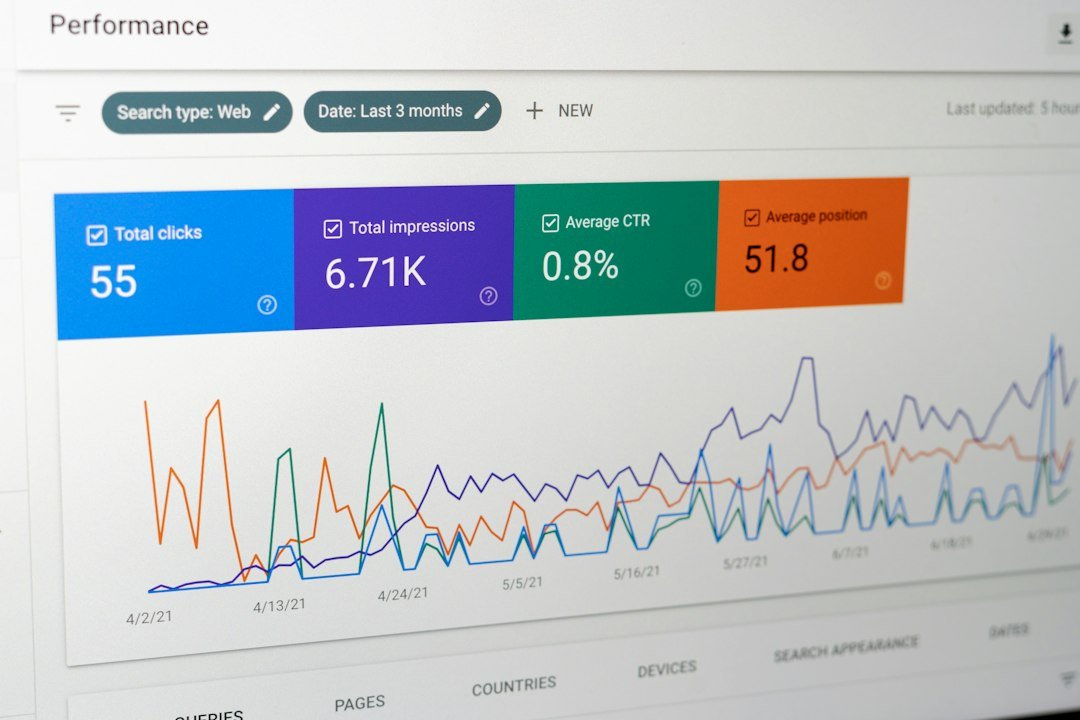
    Google Search Console performance chart on a screen, used to compare traffic before and after the November 2026 core update

    Trade outlets reported the start of this update within about 20 minutes. Few of them turned it into a plan for each stage of the rollout. This post does that: it takes Google’s own guidance and sets it on a dated calendar, then adds a 10-minute triage you can run in Search Console once the rollout ends. We do not claim to know what the update targets, because Google has not said, and the figures below come from the sources listed above, not from client data. Our services cover technical SEO, on-page SEO, content strategy, AEO and GEO, which is why the AEO and GEO angle gets its own section.

    What Google confirmed about the November 2026 core update

    Google confirmed five things, and everything else in circulation is commentary.

    Item What is confirmed Source
    1. Start Nov 10, 2026 at 10:06 a.m. PT (1:07 p.m. ET); that is Nov 11 at 2:06 a.m. in Manila and Singapore Google Search Status Dashboard, as reported by SEJ, SEL and SER
    2. Scope Global, all languages Dashboard, as quoted by SEJ
    3. Duration May take up to 2 weeks, so the latest finish is Nov 24 by PPC Land’s calculation Dashboard; PPC Land
    4. Purpose A regular update designed to better surface relevant, satisfying content from all types of sites Dashboard and Search Central LinkedIn post, as quoted by SEJ and SER
    5. New guidance None specific to this update; no Search Central blog post; core updates page showed a Dec 10, 2025 revision date SEJ and SEL

    SEJ is Search Engine Journal, SEL is Search Engine Land, SER is Search Engine Roundtable. Time conversion to Manila and Singapore is our calculation.

    Rollout calendar: when to look and when to wait

    Google’s core updates guidance says to confirm the rollout has finished, wait at least a full week, then compare a week of Search Console data with the week before the rollout began. Applied to this update, the dates fall like this. The calendar is our calculation from Google’s guidance and the dashboard dates.

    Step Date Rule
    Baseline week Nov 3 to Nov 9 The week before the start, which SEJ also suggests. Export it now, before the numbers get mixed up with the rollout.
    Rollout start Nov 10 Dashboard timestamp 10:06 a.m. PT.
    Rollout in progress Nov 10 until finished Rankings may move during the rollout (SEJ). Watch, do not diagnose.
    Latest finish in Google’s window Nov 24 Two weeks from the start (PPC Land).
    Thanksgiving, Black Friday, Cyber Monday Nov 26, Nov 27, Nov 30 A full-length rollout runs through most of the pre-holiday shopping period (PPC Land).
    Earliest comparison if it ends Nov 24 About Dec 1 PPC Land’s reading of the wait-a-week guidance, which lands after Cyber Monday.

    If Google finishes early, move every row after the finish up by the same number of days. If it runs past Nov 24, wait for the dashboard to show an end date.

    How this update compares with the earlier 2026 updates

    This is the third core update of 2026 and the eighth ranking update on the dashboard this year, and it arrives after the longest gap of 2026.

    Update Dates Length Note
    March 2026 core Mar 27 to Apr 8 12 days 4 hours Released three days after a spam update
    May 2026 core May 21 to Jun 2 11 days 21 hours Previous core update
    September 2026 spam Sep 24 to Oct 8 13 days 16 hours A spam update, not a core update
    November 2026 core Nov 10 to Nov 24 at the latest Up to 14 days 173 days after May (PPC Land count)

    Sources: SEJ and PPC Land. Across the 23 core updates on Google’s list, the median rollout was 14 days and the longest was 45 days in March 2024 (SER). Google’s two-week window equals that median.

    The March update shows the scale that is possible. SE Ranking found 79.5% of top-three URLs changed position after March 2026, versus 66.8% after December 2025, and 24.1% of top-ten pages fell out of the top 100, versus 14.7% (as reported by PPC Land; we have not read the SE Ranking study itself). That is a reason to expect movement, not a forecast for this update.

    What Google has not said

    Google has not said what this update changes, which ranking systems it touches, whether it affects Discover or AI features, or whether it will finish inside two weeks (PPC Land). Anyone who tells you today which content type wins or loses is guessing. The only pattern we found is secondhand: after March 2026, an analysis of Sistrix data reported the heaviest losses for aggregators, directories and comparison sites. That pattern may not repeat.

    The 10-minute drop triage: run it after the rollout ends

    Google separates small drops from large ones, and so does this test. Google’s own examples are a move from position 2 to 4 (small) and from position 4 to 29 (large). The page-count thresholds below are GCL rules of thumb built on those two examples, not published benchmarks.

    1. Export your top 20 pages by clicks from the Search Console Performance report for the baseline week (Nov 3 to Nov 9) and for the first full week after the rollout ends.
    2. Compare average position page by page. Count the pages that fell more than 10 positions, which we treat as large, and the pages that fell 1 to 3 positions, which we treat as small.
    3. If fewer than 3 of the 20 pages had a large drop, treat it as a page problem, not a site problem. Review those pages and leave the rest alone, since Google advises against changing content that already performs well.
    4. If 3 or more of the 20 had a large drop, or the fall is sustained across the site, run Google’s whole-site self-assessment and ask someone outside your team to answer the same questions.
    5. Split the data by search type (Web, Images, Video, News) before deciding anything, because Google says to analyze them separately.
    6. Rule out non-update causes with Google’s traffic drop debugging guide: technical errors, security issues, spam actions, seasonality and site moves. Retail and gift queries shift every November, so check Google Trends too.

    What to do this week, and what to leave alone

    Most of the useful work during a rollout is record keeping, because the comparison only works if the baseline is clean.

    Area Do this week Hold until the rollout ends
    Data Export the Nov 3 to Nov 9 baseline for pages, queries, devices and countries Any before-and-after comparison
    Content Keep publishing as planned and fix factual errors Rewrites of pages that still rank
    Site changes Log every change dated Nov 1 or later so you can separate your own changes from the update URL changes and migrations, which Google notes cause fluctuation on their own
    Reporting Tell managers and clients a rollout is in progress and that a read comes in December Explanations for ranking drops

    Why rank trackers may mislead you during this rollout

    Two rank-tracking vendors reported bad data in their own systems this autumn. DemandSphere said about 11% of its daily rank checks returned spurious results after blocking intensified around September 11, and Nozzle put poisoned results pages at 8.0%. Neither fully disclosed its method and Google has not commented, so early winner and loser charts may carry wider error margins than they did in March or May (PPC Land). Treat trackers as a prompt to look, and let Search Console clicks and impressions decide.

    What the core update means for AEO and GEO

    A core update changes how Google ranks pages in Search; it does not arrive with a separate AI rulebook. Google’s AI features documentation (updated Dec 10, 2025) says no special optimization is needed for AI Overviews or AI Mode, and it says those appearances are counted in the Search Console Performance report under Web. So a traffic change after this update can include AI feature impressions, and the first diagnostic step is the same as above. That is why we treat SEO, AEO and GEO as one connected system: in our view, pages that are clear, original and well structured serve all three. For the wider picture, see our SEO vs AEO vs GEO comparison and our guide to AI visibility tracking tools.

    Our view: do less, and measure better

    We disagree with two reflexes. The first is the day-one rewrite: Google’s own guidance says to avoid changing content that is already performing well after a small drop, and it says no change is guaranteed to bring a result. The second is the recovery promise. Google’s debugging guide says some changes can take effect in days while others can take several months, so anyone quoting a recovery date on day one is selling certainty that does not exist. Our rule is to freeze, record, wait and then compare.

    When this update probably does not need your attention

    If your clicks, impressions and positions stay within normal weekly variation after the rollout ends, there is nothing to fix. Google says most sites do not need to worry about core updates and may not even realize one happened. Spend the time on the content and technical work you already had planned.

    Frequently Asked Questions

    When did Google’s November 2026 core update start?

    Google started the November 2026 core update on Nov 10, 2026 at 10:06 a.m. Pacific, which is 1:07 p.m. Eastern. The Search Status Dashboard says it applies globally, in all languages, and may take up to two weeks. That puts the latest finish at Nov 24, by PPC Land’s count.

    How long will the November 2026 core update take to roll out?

    Google says up to two weeks. Past rollouts vary: the March 2026 update took 12 days and 4 hours, and the May 2026 update took 11 days and 21 hours. Across 23 listed core updates the median was 14 days, and the longest, in March 2024, took 45 days.

    What should I do if my traffic drops after the update?

    Wait until the rollout finishes, then wait a full week before comparing Search Console data with the week before it began. Google says a small drop, such as position 2 to 4, needs no drastic action. A large drop, such as position 4 to 29, calls for a deeper whole-site assessment.

    Did Google say what the November 2026 core update changes?

    No. Google calls it a regular update designed to better surface relevant, satisfying content from all types of sites, and it has not named specific systems or content types. It has also not said whether Discover or AI features are affected, so any claim about winners and losers today is speculation.

    Does the core update affect AI Overviews and AI Mode?

    Google has not said whether this update touches AI features. Its AI features documentation says no special optimization is needed for AI Overviews or AI Mode, and that those appearances count in Search Console under Web. So check your Web performance data first, then segment by page.

    If you want a team that reads core updates as part of one SEO, AEO and GEO plan, start with our services and see how it fits at GCL Marketing.

  • 7 Link Building Tactics That Still Work in 2026 (and 6 to Avoid)

    7 Link Building Tactics That Still Work in 2026 (and 6 to Avoid)

    7 Link Building Tactics That Still Work in 2026 (and 6 to Avoid)

    Quick Answer

    Short answer: The link building tactics that still work in 2026 earn links a real editor placed for a reason: original data, expert commentary, podcast features, broken-link replacement, unlinked-mention reclaiming, vetted associations and competitor link gaps. Paid links without rel=sponsored, networks, reciprocal swaps and bulk submissions break Google’s spam policies.

    Last updated: November 2026

    Close-up of a metal chain, representing the links a business earns or avoids buying in a 2026 link building plan

    Most lists of link building tactics tell you what to do and stop there. This one gives each tactic a go or no-go test you can run in about 10 minutes, then prices the paid options from BuzzStream data so you can see what a month of budget buys. We do not sell link building ourselves; our services cover technical SEO, on-page SEO, content strategy, AEO and GEO. That means we have no link package to push, and it is why every rule below cites a source or says it is our judgment.

    Link building tactics at a glance

    Seven tactics earn links from editors and communities, and six common shortcuts put a site at risk under Google’s link spam policy.

    Tactic Verdict in 2026 Risk under Google policy Cost signal in sources read
    1. Reclaim unlinked mentions Works Low Not published; mostly staff time
    2. Broken-link and resource-page replacement Works Low Not published; outreach time
    3. Competitor link-gap targeting Works as a prospecting method Low Tool subscription; not published
    4. Vetted associations and local directories Works, selectively Low if vetted; high in bulk Not published; membership fees vary
    5. Podcast and interview features Works Low Not published; staff time
    6. Expert commentary and digital PR Works Low Digital PR $1,250 to $1,500 per link, $5,000 to $10,000 per campaign (BuzzStream)
    7. Original data studies Works, slowest start Low Study cost not published by a named source
    Avoid: paid links without rel=sponsored, networks, link swaps, bulk directories, automated links, thin guest posts Do not use High Cheap to buy, costly to unwind

    Cost figures come from BuzzStream’s link building pricing guide, last updated Oct 20, 2026. Where no named source publishes a price, we say so rather than guess.

    7 link building tactics that still work in 2026

    These seven are ordered by how soon you can start, easiest first; that order is our judgment, not a ranking from data. Every go or no-go threshold below is a GCL rule of thumb, not an industry benchmark.

    1. Reclaim unlinked brand mentions

    Fuel Web Marketing lists this tactic but does not say how to know whether it is worth your time.

    10-minute test: Search Google for your brand name excluding your own domain, then open the top 20 results from the past year. Go if 5 or more live pages name you without a link. No-go if fewer than 5; spend the time elsewhere.

    Why it works: A page that already names you is the warmest outreach target you have, so the ask is small: add the link.

    How to run it: Send a two-line note that names the page, the sentence that mentions you and the exact URL you would like linked. Do not ask for exact-match anchor text.

    2. Replace broken links on relevant resource pages

    The tactic works only when a page of yours genuinely fits the dead link.

    10-minute test: Pick the 3 best resource pages in your topic and run a broken link check with any crawler or browser extension. Go if you find at least 2 dead external links across the 3 pages and you own a page that answers the same question. No-go if you would have to write a new page just to pitch.

    Why it works: The editor gets a fix for a real problem, which is a better reason to link than a request for a favor.

    How to run it: Name the dead URL, show your replacement and explain in one sentence why it covers the same ground. Skip pages that look abandoned.

    3. Target the competitor link gap

    Link-intersection analysis is a way to find prospects, not a way to earn links on its own.

    10-minute test: List two competitors, since Link-Assistant recommends comparing at least two, and export the domains that link to both but not to you. Go if at least 10 domains appear and 3 of them are editorial sites rather than directories. No-go if the overlap is only directories and tool listings.

    Why it works: A site that already links to two businesses like yours has shown it will link to businesses like yours.

    How to run it: Sort the overlap by relevance first and authority second, then pitch the page that fits, not your homepage.

    4. Join vetted associations and local directories

    Selective listings still work; bulk submissions do not.

    10-minute test: List five associations, chambers or industry directories you qualify for. Go for each one that vets members or rejects some applicants and lists real businesses in your area or niche. No-go for any directory that accepts anyone who pays. Google Business Profile is the one listing Link-Assistant calls essential.

    Why it works: Google’s spam policy names low-quality directory and bookmark links as link spam, so the filter is quality, not the format.

    How to run it: Claim the five that pass, keep your business details identical across them and stop there.

    5. Appear on podcasts and in interviews

    Show notes are a link you can request, but only some shows publish them.

    10-minute test: Open the last three episodes of 10 shows in your niche. Go if at least 3 shows link to the guest in the notes. No-go if most shows publish audio only.

    Why it works: Fuel Web Marketing does not list podcasts, while Over The Top SEO and Mavlers both do; the part they skip is checking which shows actually link.

    How to run it: Pitch one specific topic you can speak to with your own numbers, and ask for the link in your guest bio, not as a condition.

    6. Give expert commentary and run small digital PR

    Reactive commentary is the cheapest form of digital PR because it needs no campaign.

    10-minute test: Write down three claims you can back with your own data or experience that a journalist could not get from a competitor. Go if you can write all three. No-go if your answers repeat what the top 10 results already say.

    Why it works: Editors link to a source that adds something to the story. See our link building vs digital PR comparison for the cost math.

    How to run it: Respond to queries in your niche within hours, give one quotable sentence and a number, and link to the page that holds the data. BuzzStream puts a typical digital PR campaign at 6 to 7 unique linking root domains.

    7. Publish an original data study

    A study is the slowest tactic to start and the one that keeps earning.

    10-minute test: Open the top 10 results for the topic you want to own. Go if at least 3 of them cite a statistic more than two years old that you could replace with fresher data. No-go if the topic has no number anyone needs.

    Why it works: Fresh numbers give writers a reason to cite you. Ahrefs’ 1,000,000-keyword study still finds referring domains positively correlated with top-20 rankings, so a study that earns referring domains is not wasted effort.

    How to run it: Survey or analyze a small, specific population, publish the method and the raw table, and offer the data to the three journalists or bloggers who cover that niche.

    6 link building tactics to avoid in 2026

    Six tactics sit on Google’s published list of link spam, and the safe substitute for each is already one of the seven above.

    Tactic to avoid What Google’s policy says (updated Aug 28, 2026) Safer substitute
    1. Buying links without rel=sponsored or rel=nofollow Paying for links or posts to rank is link spam; paid links are acceptable only when qualified Tactic 6 or 7, or label the placement rel=sponsored
    2. Private blog networks and large-scale guest posting with optimized anchors Large-scale article marketing or guest posting campaigns that pass ranking credit are listed as link spam Tactic 5 with one relevant show or site
    3. Reciprocal link exchanges and partner pages built only to cross-link Excessive link exchanges are listed Tactic 3 with a genuine partner mention
    4. Mass directory and bookmark submissions Links from low-quality directory or bookmark sites are listed Tactic 4, five vetted listings
    5. Automated links, widget links and repeated footer links Automated services and links repeated across footers or templates are listed Tactic 1 or 2, done by hand
    6. Thin pages published only to earn a link Content created mainly to manipulate linking signals is listed Tactic 7, one real study

    Source: Google Search Central spam policies, updated 2026-08-28. Rows are our paraphrase of the policy’s link spam list.

    One conflict deserves a flag. Several top results recommend guest posts, yet BuzzStream’s data prices them: $295 on average direct from the site and $461 through a vendor. Google’s policy counts paying for posts as buying links, so a paid guest post needs rel=sponsored. Google’s outbound link guidance says links qualified that way generally are not followed, so you would be buying exposure, not rankings.

    Do links still matter? What the studies actually say

    Links still correlate with rankings, but the correlations are modest and the studies measure different things, which is why articles quote them so differently.

    Source What it measured Result Caveat
    Ahrefs, Links Matter Less But Still Matter (Jan 2025, modified Aug 12, 2026) Spearman correlation with top-20 rankings, 1,000,000 US keywords Referring domains 0.255; backlinks 0.248; Domain Rating 0.131; about 0.33 for local queries Correlation, not causation; author calls these weak
    Semrush 2025 ranking factors, as cited by BuzzStream 16,298 keywords Link metrics 0.18; traffic metrics 0.33 and 0.28 Secondhand figures; study date not stated
    Ahrefs, 75,000 brands (published May 26, 2025, modified Apr 27, 2026) Correlation with brand mentions in AI Overviews Branded web mentions 0.664; Domain Rating 0.326; referring domains 0.295; backlinks 0.218 Only brands with DR over 40 and already in AI Overviews; Ahrefs sells the tools used
    Over The Top SEO (Apr 17, 2026) Says sites with under 200 referring domains beat sites with 2,000 or more in 73% of comparisons 73% Source is an unnamed internal analysis; we do not use it as evidence

    The three named studies measure different outcomes: a rank position, a traffic correlation and AI Overview mentions. Figures are Spearman coefficients where stated.

    What a $3,000 month buys: a hypothetical worked example

    At BuzzStream’s average prices, $3,000 buys between 2 and 16 paid links depending on the method, and the cheaper methods are the ones most often rejected on quality.

    Method (BuzzStream average) Math Links per $3,000 Pass rate on BuzzStream’s quality standard
    Link insertion, $179 3,000 / 179 = 16.8 16 About 2%, so about 50 offers screened per pass
    Guest post direct from site, $295 3,000 / 295 = 10.2 10 1.37%, so about 73 sites screened per pass
    Guest post via vendor, $461 3,000 / 461 = 6.5 6 1.37%, same pool
    Quality dofollow link, about $1,500 3,000 / 1,500 = 2 2 Not stated
    Digital PR, $1,250 to $1,500 per link 3,000 / 1,500 to 1,250 = 2 to 2.4 2 Campaigns start around $5,000

    Hypothetical, not client results. Prices and pass rates come from BuzzStream’s analysis of 62,916 insertion sites and 257,267 guest post sites (updated Oct 20, 2026). Paid links need rel=sponsored under Google’s policy. For agency pricing, see how much SEO costs in 2026.

    Over The Top SEO quotes $150 to $500 per acquired referring domain and BuzzStream’s vendor average is about $500, so the lower end looks like a best case and the unsourced range is not a safe planning figure.

    The 10-minute link audit: pass or fail

    Take the last 10 links you acquired or bought and check four things on each; a link passes only if it clears all four.

    1. Editorial: a person chose to place it, and the page does not say write for us or sponsored without a matching rel attribute.
    2. Relevant: the page is about your topic or your customer’s problem.
    3. Disclosed: if money or product changed hands, the link carries rel=sponsored or rel=nofollow.
    4. Alive: a site: search for the page URL shows it is indexed.

    Score it: 8 to 10 passing links is healthy, 5 to 7 means review the vendor, and under 5 means stop buying until you know why. These bands are a GCL rule of thumb, not a published benchmark.

    Which tactic to pick, by situation

    Choose by your constraint, because budget, time and risk tolerance point to different tactics.

    Choose this if Start with Skip for now
    You have almost no budget and a few brand mentions Tactics 1, 2 and 5 Anything paid
    You have a real data point nobody else publishes Tactics 7 and 6 Directories
    You run a local service business Tactic 4 and Google Business Profile, then 1 Bulk guest posts
    You have $3,000 a month and no staff time A vetted agency doing 6 and 3, with written rel disclosure Link packages sold by count
    Your site has indexing, speed or content problems Fix those first All paid link buying

    Our view: links are not dead, and mentions do not replace them

    We disagree with two common stories. The first says links are dead, yet Ahrefs still finds referring domains correlate with top-20 rankings at 0.255 across a million keywords. The second says brand mentions have replaced links, but the 0.664 mention figure covers only brands already appearing in AI Overviews, and Ahrefs states that none of its coefficients is strong. Google’s AI features documentation, which we cite in our AI visibility tools guide, asks for no special optimization. So build the mentions and the links the same way: by being worth citing.

    When not to build links yet

    Skip link building when the page you would point links to cannot convert or be indexed, because earned links to a weak page are wasted. Mavlers also warns against scaling links before fixing major technical, UX or content issues. Our single published case study covers technical, AEO and GEO work rather than links, so we can only say this is our practice, not a documented result. Start with the best SEO agencies hub if you want help choosing a provider, or our best link building agencies list for firms that sell links.

    FAQs about link building tactics

    Do backlinks still help rankings in 2026?

    Yes, modestly. Ahrefs found referring domains correlated 0.255 with top-20 rankings across 1,000,000 keywords, which it calls weak but still positive. Correlation is not proof of cause, so treat links as one input among many and prioritize pages that deserve to rank.

    Is buying links against Google’s rules?

    Buying links to influence rankings is listed as link spam in Google’s policy. Paid or sponsored links are acceptable when qualified with rel=sponsored or rel=nofollow. Google says qualified links generally are not followed, so a correctly labelled purchase is closer to advertising than to a ranking tactic.

    Are guest posts still worth it?

    Only in small, relevant, disclosed doses. Google lists large-scale guest posting with optimized anchor text as link spam. BuzzStream prices guest posts at $295 on average direct and $461 through vendors, which usually means a paid placement that needs rel=sponsored.

    How many links do I need each month?

    No source we read publishes a safe number, and we would not trust one. Aim for a steady pace of relevant links you could defend to an editor. Use the 10-minute audit: if 8 of your last 10 links pass, your pace is fine.

    Do brand mentions replace backlinks for AI search?

    Not on the evidence we read. Ahrefs found branded web mentions correlated 0.664 with AI Overview brand mentions versus 0.218 for backlinks, but only among brands already appearing there, and the author says correlation does not prove cause. Build both through useful, citable work.

    If you want a team that treats links as one part of a connected SEO, AEO and GEO plan, start with our services and see how it fits at GCL Marketing.

  • Best SaaS SEO Agencies in the United States (2026)

    Best SaaS SEO Agencies in the United States (2026)

    Best SaaS SEO Agencies in the United States (2026)

    Quick Answer

    Short answer: The best SaaS SEO agency is the one that names SaaS as a focus, shows SaaS results with numbers and states price and terms before you book a call. On those five public checks, SimpleTiger and TripleDart scored highest among eight US agencies we checked in November 2026. The ranking is editorial opinion, not paid placement.

    Last updated: November 2026

    Software analytics dashboard with performance charts on a laptop, representing how SaaS companies judge SEO agencies by trials and pipeline

    Most SaaS SEO roundups are written by an agency that ranks itself first. We read four of them for this post, and all four did. This list scores agencies on what each one publishes on its own site, so you can check every cell yourself. We are an SEO, AEO and GEO agency too, which is why the method is spelled out. Our own services are listed on the site, and we explain below why we are not on the list.

    How we picked these agencies

    We scored each agency on five public yes or no checks, read from its own website between November 9 and 10, 2026, and ranked by total score with ties in alphabetical order. This is editorial opinion from public information as of that date. It is not paid placement, and no agency paid or was asked to be listed.

    1. A. SaaS named. The agency’s own site names SaaS as a focus or an industry it serves.
    2. B. SaaS result with numbers. The site shows at least one SaaS client result with a figure. We do not verify client-reported results.
    3. C. Price on the page. A dollar starting price for SEO is stated on the pages we read.
    4. D. Term stated. The pages read state a contract length or say month-to-month.
    5. E. AI search service. The site lists AEO, GEO or AI search work.

    We call this the SaaS Disclosure Scorecard. It measures disclosure, not quality, because quality cannot be read from a website. Clutch ratings are shown but not scored. GCL Marketing is not listed because our services page does not mention SaaS and our single case study is a home services marketing agency, not a software company. Left out after checking: Omniscient Digital (its site blocks automated reads), Directive (the homepage we read did not name SaaS or AI search), Scalerrs (its domain redirects to a for-sale page) and Skale (we could not locate its site). The broader field is covered in our best SEO agencies hub.

    Best SaaS SEO agencies at a glance

    Two agencies scored 4 of 5, three scored 3 and three scored 2, using only what each firm publishes.

    Rank Agency Score Best for Price on pages read
    1 SimpleTiger 4 of 5 B2B SaaS wanting month-to-month terms and AI search reporting Not published on pages read
    2 TripleDart 4 of 5 Series A to growth-stage B2B SaaS From $5,000 a month (SEO and AEO, per its FAQ)
    3 Grow and Convert 3 of 5 Bottom-of-funnel content plus AI citation work Not published
    4 Siege Media 3 of 5 Content and digital PR led programs Not published
    5 Ten Speed 3 of 5 Product-led SaaS focused on trials and ARR Not published
    6 Kalungi 2 of 5 Early-stage SaaS needing a full marketing function Not published
    7 Searchbloom 2 of 5 Buyers who want a published starting price (not SaaS-specific) SEO from $3,000 a month
    8 Single Grain 2 of 5 SEO combined with paid media and CRO Not published

    Scores from each agency’s own pages, read Nov 9 to 10, 2026. Results on those pages are client-reported.

    1. SimpleTiger (4 of 5)

    Best for: B2B SaaS and AI companies, from seed stage to enterprise, that want no long-term contract.

    What they do: SEO, AEO and GEO, link building, digital PR, paid search, Webflow design and pipeline reporting. Location: Sarasota, Florida.

    Proof from their own site: Invoca is shown at $3 million in revenue in under 10 months with a 41 to 1 ROI over 10 months, and Gelato at 75,000 new ranking keywords in 12 months with a 3 to 1 ROI in year one. The site gives no method for these figures.

    Limitation: The pages we read show no prices, and the site says cost depends on scope. Its separate pricing page was not read.

    Pricing: Not published on pages read. Clutch SaaS SEO list (updated Nov 9, 2026): 4.9 from 34 reviews, $5,000+ minimum project, $200 to $300 hourly rate. It says month to month with no long-term contract.

    2. TripleDart (4 of 5)

    Best for: Series A to growth-stage B2B SaaS with budget for a $5,000 monthly retainer.

    What they do: SEO, content, AEO and GEO run through its own agentic tooling, plus paid media and revenue operations. Location: Plano, Texas, with an office in Bangalore.

    Proof from their own site: Glean organic clicks up 275%, Airbase pipeline from $300,000 to $900,000 a quarter and Signeasy LLM sessions up 3,650%. All are self-reported.

    Limitation: The pages we read state no contract length or cancellation terms, and the site lists team members in India as well as the US.

    Pricing: Standalone SEO and AEO starts at $5,000 a month, per its FAQ.

    3. Grow and Convert (3 of 5)

    Best for: SaaS teams that want bottom-of-funnel content and AI citation work together.

    What they do: Content, SEO, AI search, link building, AI citation outreach and paid search. Its Traqer.ai visibility tracker is included free for every client, per its site. Location: The site does not state a headquarters and describes a fully remote team across the US and Europe.

    Proof from their own site: Smartlook is shown at 600+ new monthly signups from advanced users, Rainforest QA at top three rankings for 25+ high-intent keywords and Levelai in AI answers for 100+ prompts.

    Limitation: The homepage does not name a headquarters, and the results lack baselines and dates.

    Pricing: Not published.

    4. Siege Media (3 of 5)

    Best for: Brands that want content, research and digital PR driving search and AI visibility.

    What they do: GEO, SEO consulting, content, digital PR, affiliate partnerships, Reddit marketing and research reports. Location: Offices in Austin, New York, Chicago and San Francisco.

    Proof from their own site: Zendesk is shown at 98% LLM visibility and a $731,924 traffic value increase, and Zapier at a $6.1 million traffic value increase with 126 pieces in the top 10.

    Limitation: SaaS is one of eight industries it lists, and traffic value is a modelled estimate, not signups or pipeline. Its Clutch listing is labelled Sponsored.

    Pricing: Not published. Clutch SaaS SEO list (Nov 9, 2026): 4.9 from 48 reviews, $5,000+ minimum project.

    5. Ten Speed (3 of 5)

    Best for: Product-led SaaS companies that judge SEO by organic trials and ARR.

    What they do: Organic growth strategy, content, SEO, AEO, digital PR, comparison pages and original research. Location: Describes itself as US-based and does not name a city.

    Proof from their own site: One case study is shown: Visible with organic traffic up 800%, organic trials up 110% and $1 million in organic ARR. The company also claims $50 million+ organic ARR for clients.

    Limitation: Only one case study was visible on the page we read, and the company-wide figures have no named sources.

    Pricing: Not published.

    6. Kalungi (2 of 5)

    Best for: Early-stage SaaS, from pre-product-market-fit to about $10 million ARR, that needs a whole marketing function.

    What they do: CMO-as-a-service, ABM, RevOps and HubSpot work, paid media, branding, and content and SEO. Location: Kirkland, Washington.

    Proof from their own site: CPGvision is shown at $4.7 million in pipeline and 533% SEO growth, and One Click Contractor at a 164% rise in organic MQLs.

    Limitation: SEO is one service inside a broader marketing engagement, and the page read did not mention AI search work.

    Pricing: Not published. It mentions pay-for-performance options without stating their terms.

    7. Searchbloom (2 of 5)

    Best for: Buyers who want a stated starting price and a broad SEO and AI search catalog, with no SaaS specialism needed.

    What they do: AEO and GEO, local, national, e-commerce and enterprise SEO, link building, PPC and analytics. Location: South Jordan, Utah.

    Proof from their own site: The homepage case studies are home services, law and e-commerce clients. We found no SaaS result on the page read.

    Limitation: The homepage does not claim a SaaS focus, so it scores 0 on checks A and B. A heading says no lengthy contracts, but no term is stated.

    Pricing: SEO starts at $3,000 a month and PPC management at $2,000 a month, per its homepage.

    8. Single Grain (2 of 5)

    Best for: SaaS teams that want SEO, paid media and conversion work from one vendor.

    What they do: AEO and GEO, SEO including programmatic and A/B testing, paid media, CRO and content marketing. SaaS is its first listed industry. Location: The homepage read does not state a headquarters.

    Proof from their own site: The case studies on the page are not SaaS clients, for example LS Building Products with 400+ AI citations. Its 500+ companies claim is unverified.

    Limitation: No SaaS-specific result appeared on the page read, and no contract terms are stated.

    Pricing: Not published.

    SaaS SEO agency criteria matrix

    The matrix shows every scored cell as Yes, No or Not published, taken from each agency’s own pages.

    Agency SaaS named SaaS result with numbers Price on page Term stated AI search service Clutch SaaS list
    SimpleTiger Yes Yes Not published Yes (month to month) Yes 4.9 (34)
    TripleDart Yes Yes Yes ($5,000+) Not published Yes Not in listings read
    Grow and Convert Yes Yes Not published Not published Yes Not in listings read
    Siege Media Yes Yes Not published Not published Yes 4.9 (48), Sponsored
    Ten Speed Yes Yes Not published Not published Yes Not in listings read
    Kalungi Yes Yes Not published Not published No Not in listings read
    Searchbloom No No Yes ($3,000+) Not published Yes Not in listings read
    Single Grain Yes No Not published Not published Yes Not in listings read

    Clutch figures from the SaaS SEO list updated Nov 9, 2026; we read the first 29 of its listings, so Not in listings read means not seen, not absent. Clutch may earn fees for some placements.

    Why SaaS SEO prices and roundups disagree

    Prices disagree because sources mix averages, most common fees, starting prices and unsourced ranges, and four of four roundups we read rank their own publisher first.

    Source (date) What it says Why it differs
    Ahrefs (Aug 15, 2024) Most common agency retainer $501 to $1,000 a month, agency average $3,209 (439 providers) All industries, 2024, before AI search budgets; most common is not average
    A SaaS roundup by Searchbloom (updated Sep 29, 2026) $3,000 to $6,000 early stage, $6,000 to $15,000 established; under $2,000 a warning sign Publisher ranks itself first at 48 of 50 and sells SEO
    A SaaS roundup by TripleDart (updated Oct 27, 2026) Agencies from $1,350 to $50,000 a month, own price from $5,000 Prices unsourced; publisher ranks itself first, says its list is in no particular order yet numbers it
    Clutch SaaS SEO list (Nov 9, 2026) Minimum projects from $1,000+ to $50,000+ among 29 listings A minimum project is not a monthly retainer

    Two other roundups read (NEWMEDIA.COM and Fuel Online) also place their own publisher first. Only SimpleTiger, Single Grain and Omniscient Digital appeared on all four lists.

    Which SaaS SEO agency to choose, by situation

    Choose by your stage, budget and what you must be able to verify, not by who tops a roundup.

    Choose this agency if Pick
    You want no long-term contract and AI search reporting SimpleTiger
    You are Series A or later and can fund $5,000 a month TripleDart
    You need comparison and alternatives content plus an AI tracker included Grow and Convert
    Your plan leans on research, content and digital PR Siege Media
    Your product is self-serve and you track organic trials Ten Speed
    You are pre-$10M ARR and need the whole marketing function Kalungi
    You want a stated starting price and a broad SEO team Searchbloom
    You want SEO, paid media and CRO from one vendor Single Grain

    What a SaaS SEO retainer must earn: a worked example

    A $5,000 monthly retainer needs about four new customers in six months to break even on first-year gross profit, under the hypothetical assumptions below. This is a labelled hypothetical, not a client result or a benchmark.

    Assume a $12,000 annual contract and a 70% gross margin, so $8,400 of first-year gross profit per customer. Assume 15% of trials become paying customers and 2% of organic visits become trials. Churn is ignored to keep the math visible.

    Fee scenario Term Total fees Customers to break even Trials needed Organic visits needed
    Ahrefs agency average $3,209 a month for 6 $19,254 3 20 1,000
    TripleDart published start $5,000 a month for 6 $30,000 4 27 1,350
    TripleDart published start $5,000 a month for 12 $60,000 8 54 2,700
    Mid-range established SaaS (hypothetical) $10,000 a month for 12 $120,000 15 100 5,000

    Math: total fees divided by $8,400, rounded up; trials = customers divided by 0.15; visits = trials divided by 0.02. Ahrefs data from its pricing study; other figures are assumptions.

    The point is the shape, not the numbers. Ahrefs found only 1.74% of newly published pages reached the top 10 within a year (6.11% in a filtered sample), per its time to rank study. A plan built on blog volume can burn six months of fees before one buyer page ranks.

    The 10-minute SaaS buyer page test

    Run this before you pay anyone: in 10 minutes you can see whether your site has the pages that turn search into trials. Pass and fail thresholds are our rule of thumb, not an industry standard.

    1. Page types (5 minutes). In Search Console, open Performance, then Pages, and filter the URL for each of: /vs/ or /compare, /alternatives, /integrations, /use-cases, /pricing. Count the types that got clicks in the last 3 months. 4 or 5 types is a pass, 2 or 3 is a gap, 0 or 1 means fix the site before hiring.
    2. AI answers (5 minutes). Ask one AI assistant 10 buyer questions such as best tools for your category and use case. Count the answers that name your brand. 0 of 10 means you need a baseline; G2 reports that 82% of software buyers sourced recommendations from an AI chatbot in the last 24 months (1,000+ buyers, July 22, 2026).

    If you fail step 1, ask every agency which of those page types it would build first and in what order. Our AI visibility tools guide covers tracking the second step.

    What GCL Marketing thinks, and when not to hire a SaaS agency

    We disagree with buying SaaS SEO as a blog volume program, because buyer pages convert and Google says AI features need no special optimization beyond normal SEO. We also distrust traffic value as a success metric, since it is modelled and does not count signups.

    Do not hire a SaaS SEO agency yet if Why
    You cannot attribute signups to a source Nobody can prove the retainer worked
    The product is not yet selling to strangers Search shows demand you do not yet have
    Budget is under about $3,000 a month Published starting prices in this list begin at $3,000
    Your site has none of the five buyer page types Fix the site first, as the test above shows

    Red flags and 10 questions to ask any SaaS SEO agency

    Six red flags: a guaranteed ranking, a result shown without a baseline or date, only traffic value and no signups, a list that ranks the publisher first without a method, no named person doing the work, and refusal to put scope and term in writing.

    1. Which SaaS clients can I speak to, and which results are yours versus the client’s team?
    2. Which five buyer page types will you build first, and why that order?
    3. How do you attribute trials and pipeline to organic search?
    4. What is the contract term and the notice period?
    5. Who writes, who reviews and who has access to my accounts?
    6. What do you report on AI search, and from which tool?
    7. What would make you tell me to stop spending?
    8. What does the first 90 days deliver, in named units?
    9. Which of your published case study figures have a baseline and a date?
    10. What are the full monthly fee and all extras?

    More buying questions are in our 12 questions guide, and pricing models are compared in retainer vs project vs pay-for-performance and how much SEO costs.

    Frequently asked questions

    How much does a SaaS SEO agency cost?

    Published signals disagree. TripleDart states SEO and AEO from $5,000 a month and Searchbloom states SEO from $3,000, while Ahrefs found the most common agency retainer was $501 to $1,000 in 2024. Most agencies listed here publish no price, so ask for a written scope and total before comparing.

    How long does SaaS SEO take to work?

    Plan on six months or more. Ahrefs found only 1.74% of new pages reached the top 10 within a year, and one agency estimates signups and pipeline take six to twelve months. Pages that target buyer searches usually move sooner than general blog posts, but nobody can promise a date.

    Should I hire a SaaS specialist or a general SEO agency?

    Hire a specialist if it can show SaaS results with baselines, since trials, comparison pages and integrations behave differently from lead forms. A general agency can work if its plan covers those buyer page types. Use the scorecard checks to compare either option on the same terms.

    Do SaaS companies need AEO and GEO as well as SEO?

    Yes in practice, as buyers now ask AI tools for software recommendations. G2 reports 82% of buyers sourced recommendations from an AI chatbot in two years. Google says AI features need no special optimization beyond normal SEO, so judge any AEO or GEO proposal by its measurement.

    Is this ranking paid placement?

    No. No agency paid to be listed or knew about this list. We scored public pages on five yes or no checks as of November 2026 and ranked by total score. The ranking is editorial opinion, and agencies can ask us to correct outdated information through our contact page.

    If you are a listed agency and something here is outdated, please contact us at our contact page and we will correct it. To see how we apply the same evidence-first approach to SEO, AEO and GEO, visit us at GCL Marketing, or read our case study and the wider best AEO and GEO agencies list and e-commerce SEO agencies list.

  • White-Label SEO vs Hiring an SEO Agency Directly: Which Is Better for Your Business?

    White-Label SEO vs Hiring an SEO Agency Directly: Which Is Better for Your Business?

    White-Label SEO vs Hiring an SEO Agency Directly: Which Is Better for Your Business?

    Quick Answer

    Short answer: Buy white-label SEO only when you know it is white-label. Quality depends less on the label than on who touches your site, who owns your accounts and what the monthly fee buys in named units. Hire an agency directly when strategy or access is at stake. Accept a reseller when delivery is disclosed and verifiable.

    Last updated: November 2026

    Two people shaking hands over a wooden table, representing a business owner choosing between a direct SEO agency and a white-label reseller

    This comparison is written for the person signing the contract, not the agency owner. Every top result we read advises agencies on whether to resell or hire staff. If you are the client, the question is different: who will actually do the work you pay for? We sell our own work through our services, so we have a stake. That is why every figure below carries its source and every assumption is labelled.

    White-label SEO vs hiring directly at a glance

    A direct agency does the work under its own name and contract, while a white-label arrangement means the firm you hired hands some or all of the work to a hidden partner.

    Criteria Hire an agency directly Hire a firm that resells white-label
    Who you contract with The team doing or managing the work A middleman who buys delivery from a provider you may never meet
    Price signals from sources read Ahrefs: most common agency retainer $500 to $1,000 a month, average $3,209 (439 providers, updated Aug 15, 2024) Retail price is not published. Wholesale tiers an agency pays: $300 to $500, $600 to $1,000, $1,200 to $3,000+ a month (Wildnet, Feb 2026, unsourced)
    Speed to start Depends on the agency’s capacity Often faster, since the provider has capacity ready
    Your control and access You can speak to the person who sets strategy Strategy may pass through an account manager to a partner
    Accountability One party answers for results Two parties, and the contract may not say who answers
    Best for Strategy-heavy work, sensitive sites, e-commerce or SaaS with complex builds Routine, repeatable tasks such as citations, content refreshes or link orders, when disclosed

    Price figures are from the named sources and are not quotes. Wholesale tiers describe what agencies pay providers, not what a business pays an agency.

    What the top results say, and what they leave out for buyers

    The three top results for this query agree that white-label scales faster and costs less than hiring staff, that quality control is the main risk, and that a hybrid model usually wins.

    All three speak to agency owners and sell white-label or fulfillment services themselves. Clicks Geek (published May 11, 2026) gives no sourced cost figures. DashClicks (July 16, 2026) names no price and cites unnamed surveys for hiring difficulty. Wildnet (published Feb 24, 2026, modified Sept 22, 2026) cites no source for any salary or cost figure. None tells a buyer how to find out whether the firm they are about to hire resells, which is the gap this post fills. The one agency that argues against reselling, Break The Web (March 2023), says many full-service agencies may not disclose outsourcing, but offers no data for it.

    Why the markup numbers disagree, and what that means for you

    The published markup advice conflicts because each source models a different agency, and the only independent statement is that no reliable benchmark exists.

    Source What it says Stated evidence Why it may differ
    Wildnet pricing page (Feb 2, 2026, modified Sept 22, 2026) Charge clients 2x to 3x wholesale; the FAQ says 100% to 300% markup None cited for tiers or markup The two statements imply 2x to 4x; vendor selling wholesale
    DesignRush (Aug 26, 2026) A $900 package marked up 100% to $1,800 leaves a 15% contribution margin ($275) Author’s illustrative model using a $1,525 loaded cost per account Counts agency delivery time, tools and rework; says no reliable independent benchmark exists
    Wildnet staffing article (modified Sept 22, 2026) White-label reaches break-even with 40% to 50% fewer clients None cited No baseline client count given
    Ahrefs pricing study (updated Aug 15, 2024) Most common agency retainer $500 to $1,000; agency average $3,209 439 providers surveyed Average assumes the top of each range; most common and average differ by over $2,000

    Synthesis by GCL Marketing. The gap between wholesale and retail is not all profit: in DesignRush’s model, an agency charging $2,000 against a $1,525 loaded cost keeps $475, about 24%.

    The practical meaning: a high markup alone is not proof of a bad deal, and a low retainer is not proof of a good one. What you can verify is what the fee buys in named units each month.

    The Delivery Chain Test: six questions you can ask in 10 minutes

    The Delivery Chain Test tells you within 10 minutes whether the firm you are hiring does the work itself, discloses a partner, or hides one. Email these six questions to every shortlisted firm and score each answer from 0 to 2.

    # Question to send Score 2 (pass) Score 0 (fail)
    1 Who will log into my website and CMS, and who employs them? Named roles and employer stated “Our team” with no names or employer
    2 Who writes the content and builds the links each month? Employees, or a named subcontractor with a disclosed role “Our trusted partners” and nothing more
    3 Will the person who sets my strategy join the monthly call? Yes, named Only an account manager joins
    4 Does your contract allow subcontracting, and do I get notice? (DesignRush notes many agreements are silent on this.) Subcontracting allowed only with written notice Clause missing, and no answer offered
    5 Will Search Console, Google Business Profile and analytics sit in my name? All in my name, with you added as a user Held in the agency’s account
    6 What are the monthly deliverables in numbers (pages, links, fixes)? A written list of units per month A report with no unit counts

    Scoring rule is a GCL Marketing rule of thumb, not an industry standard. 10 to 12: proceed. 7 to 9: proceed only if the firm fixes the failed items in writing. 6 or fewer: walk away or ask for a direct provider.

    Question 5 matters most. Google’s Business Profile rules, as summarized by DesignRush, require that the client keep ownership or co-ownership of the profile. Google’s own guidance says you are ultimately responsible for the actions of any firm you hire, and advises granting only read access to Search Console during an audit (Google Search Central, updated June 5, 2026).

    Worked example: where a $2,000 monthly fee goes (hypothetical)

    In this hypothetical, a $2,000 monthly quote from a reseller funds a wholesale package of roughly $667 to $1,000 a month, plus account management, tools and margin.

    Assumptions, all labelled: the agency follows the 2x to 3x rule Wildnet describes, so $2,000 retail implies $1,000 (2x) or $667 (3x) wholesale. Over 12 months that is $24,000 retail against $8,000 to $12,000 wholesale, a gap of $12,000 to $16,000. Wildnet’s Standard tier ($600 to $1,000) lists technical audits, 4+ blogs, manual outreach and competitor analysis, so that is the scale of delivery the wholesale part buys. The gap pays for account management, reporting and risk, and in DesignRush’s model the agency keeps only around $475 a month of it.

    A second hypothetical shows why units matter. The HOTH’s published reseller price for a Platinum Link is $375 per link (May 19, 2026). If a $2,000 retainer promised 4 links a month bought at that price, wholesale would be $1,500, leaving $500 for everything else. This is an illustration of the question to ask, not a claim that any agency does this. Ask for the unit list, and ask what is included beyond links.

    Choose X if: direct agency vs white-label

    Your situation Choose Reason
    Strategy decisions matter more than volume (site migration, new category, complex build) Direct agency The person who decides must talk to you
    Your site holds customer data or has custom code Direct agency Fewer hands with access
    You need routine tasks done cheaply (citations, content refreshes, link orders) and can check units White-label, disclosed Wholesale unit prices are lower
    You are an agency or consultant short of capacity, not a business owner White-label, as a reseller The top results are written for you
    The firm cannot answer Questions 1 to 3 of the test Neither; pick another firm Unknown chain of delivery

    GCL view: the label is not the problem, secrecy is

    We disagree with two common positions. First, that white-label always means a worse deal: a disclosed partner with named units can be fine. Second, that it is always cheaper for the buyer: you pay a markup on top of the provider’s price, so any saving depends on the reseller passing it on. What we oppose is hidden delivery, since you cannot judge what you cannot see. Our services page lists technical SEO, on-page SEO, content strategy, AEO and GEO, and does not describe a white-label or reseller program. Our single published example is on case studies and is self-reported.

    When not to go direct, and when not to accept white-label

    Going direct is the wrong move when your need is a small, repeatable task that a specialist provider does cheaply, since a full-service retainer may cost far more than the work requires.

    Accepting white-label is the wrong move when the firm will not name who does the work, when the contract is silent on subcontracting, or when your accounts would sit in someone else’s name. Walk away in those cases, whatever the price. Also be wary of any firm that guarantees rankings, which Google lists as a red flag.

    Scenario recommendations and when to use both

    Most buyers end up with a hybrid: a direct relationship for strategy and a disclosed provider for repeatable tasks.

    Business Suggested approach
    Local service business with a small budget Direct freelancer or small agency for strategy; disclosed white-label for citations or content refreshes
    E-commerce store Direct agency for catalog and technical work; disclosed provider for link or content volume
    SaaS company Direct agency for the page and content strategy; avoid hidden delivery on anything that touches the product site

    For pricing models, see SEO retainer vs project vs pay-for-performance. For who to hire, see SEO agency vs freelancer vs in-house and our 12 questions to ask before you sign. Our roundup of SEO agencies lists firms by what they publish.

    Frequently asked questions

    Is white-label SEO bad for the business that hires the agency?

    Not by itself. The risk is hidden delivery. If the firm names its partner, lists monthly units and keeps your accounts in your name, a white-label arrangement can work. If it cannot answer who logs into your site, treat that as a warning sign regardless of price.

    How do I know if my SEO agency is outsourcing my work?

    Ask who logs into your site, who writes content and who builds links, and what the contract says about subcontracting. Vague answers such as “our partners” without names, reports with no unit counts, or no strategy call with the decision maker are signs. Our six-question Delivery Chain Test scores this.

    Is white-label SEO cheaper than hiring an agency directly?

    Usually not for you. The reseller pays a wholesale price and adds a markup, which sources describe as 2x to 3x or 100% to 300%. The cost comparisons we read are written for agencies avoiding payroll, not for clients. You may still save on routine tasks if the work is disclosed and bought at unit prices.

    Should my agency disclose that it uses a white-label partner?

    Yes, in our view. The Google pages we read do not address subcontracting, but DesignRush notes contracts can restrict it without written consent. Require written notice in your agreement. Without it, you cannot assess quality, access or who is accountable for mistakes made on your site.

    Who should own my Search Console and Google Business Profile?

    You should. Google’s Business Profile rules, as summarized by DesignRush, require client ownership or co-ownership of the profile, and Google advises read-only Search Console access during audits. Add the agency as a user so you can remove access if the relationship ends.

    If you want a second opinion on a proposal, or want to see how a direct engagement works, you can see how it fits at GCL Marketing.

  • 8 SEO Mistakes That Cost Local Service Businesses Leads, Ranked by Dollar Cost

    8 SEO Mistakes That Cost Local Service Businesses Leads, Ranked by Dollar Cost

    8 SEO Mistakes That Cost Local Service Businesses Leads, Ranked by Dollar Cost

    Quick Answer

    Short answer: For local service businesses, the costliest SEO mistakes are usually missing service pages and slow lead response, not messy citations. In a hypothetical 40-lead business, those two leaks cost about $1,275 a month in gross profit. This post ranks eight mistakes by dollar cost and gives a 10-minute pass or fail test for each.

    Last updated: November 2026

    White and black desk phone on an office desk, representing local service leads that go unanswered

    This list is for owners of plumbing, HVAC, roofing, electrical, cleaning and similar local service businesses who already pay for SEO, or are about to, and want to know where leads actually disappear. Our services cover technical SEO, on-page SEO, content strategy, AEO and GEO. We do not sell call handling or a dedicated local SEO package, so this list is about finding leaks, not selling you a fix.

    The three pages that rank highest for this topic (BlueTone Media, Logic Inbound and MoreBusiness) agree on a familiar list: keep your name, address and phone number consistent, claim and fill out your Google Business Profile, build citations, target local keywords, collect reviews, and check your mobile site. None of them puts a dollar figure on any mistake, and the 7-mistake page leans on a 2018 trust statistic as reported. Here we rank by cost instead.

    What do the top local SEO mistake lists miss?

    They list mistakes but never rank them by cost, so a store of 40 leads a month cannot tell which fix pays first.

    Source (read Nov 2026) Mistakes Listed first Sourced statistics Gap
    BlueTone Media 6 NAP consistency None No dollar amounts, no timelines
    Logic Inbound 7 NAP consistency About 14, some dated (one is from 2018) Result claims unsourced, ranking weights not explained
    MoreBusiness 6 Claiming the Google Business Profile None stated Says mistakes cost leads but never sizes the loss

    Our reading of each page on November 8, 2026. Counts and first items are as listed on the page.

    Our approach differs in three ways: a ranked ledger with the math shown, a pass or fail test you can run in 10 minutes for each mistake, and an explicit view on what to fix last. The common baseline above is at most a quarter of this post.

    How we ranked the eight mistakes

    We ranked the first six by the monthly gross profit a hypothetical business loses to each one, then placed two risks that do not fit a monthly figure after them.

    Every number in the ledger below is a hypothetical assumption for illustration, not a client result and not an industry average. Replace the assumptions with yours. The formula is the point: leads lost per month, times your close rate, times gross profit per job.

    Assumption (hypothetical) Value
    Leads a month from Google (calls, forms, profile messages) 40
    Close rate on a lead 25%
    Gross profit per job $500
    Value of one lead (25% x $500) $125

    Hypothetical baseline. At these values the business earns 40 x $125 = $5,000 of gross profit a month from search leads.

    The Lead Leak Ledger: eight mistakes ranked by dollar cost

    In this hypothetical, six ongoing leaks add up to about 19 lost leads and $2,400 a month, but real businesses rarely have all six at once.

    Rank Mistake Hypothetical math Leads lost a month Gross profit lost a month
    1 No dedicated page per service 3 services without a page x 2 leads each 6.0 $750
    2 Slow or unmeasured lead response 40 leads x 35% answered late x 30% walk away 4.2 $525
    3 Wrong primary Google Business Profile category Assumed 3 map leads a month never arrive 3.0 $375
    4 Review recency stall 40 leads x 6% who skip a profile with old reviews 2.4 $300
    5 Near-duplicate city pages Assumed 2 leads from consolidating into real pages 2.0 $250
    6 Slow mobile contact path 40 leads x 4% who give up before contacting 1.6 $200
    7 Business profile guideline violation 20 map leads a month x 3 of 4 weeks suspended 14 (one-time event) $1,750 once
    8 Starting with citation cleanup One month delay fixing leaks 1 and 2 10.2 (once) $1,275 once

    All figures are hypothetical. Ranks 1 to 6 are ongoing monthly leaks totalling 19.2 leads and $2,400. Ranks 7 and 8 are one-time costs shown separately. Every lead is valued at $125.

    The order depends on your business. A shop with a page for every service and a call-handling service ranks very differently, which is why each item below has a test you can run on your own site.

    1. No dedicated page for each service

    Not giving each service its own page is the most expensive mistake in the hypothetical, because a search for one service has nothing specific to land on.

    Why it happens: Owners list every service on one Services page or lean on the homepage, so a search for drain cleaning or furnace repair finds a general page that never answers it.

    10-minute test: List your three most profitable services. For each, search Google for that service plus your city, then check whether your site has a URL with that service in the H1. Open Search Console, go to Performance, filter queries by the service name and look at which page gets the impressions. Pass: each of the three has its own indexed page and gets impressions. Fail: any one is missing or the homepage takes the impressions.

    Fix: Write one page per revenue-driving service with the job steps, price range or what affects price, photos of real jobs, service area and a direct call button. Do not copy the same text across services.

    Evidence: Whitespark’s 2026 local ranking factors survey of 47 experts (published November 6, 2025) ranks a dedicated page for each service first for local organic results (score 210) and 24th for the map pack (score 132). Source. Our ledger values it at 6 leads a month using an assumption, not a measured result.

    2. Slow or unmeasured lead response

    A lead who calls or submits a form and waits hours often hires the next company, so response time is the second most expensive leak and the cheapest to fix.

    Why it happens: Owners are on a job site, forms email an inbox nobody watches, and missed calls go to voicemail that customers do not leave messages on. Most owners never measure response time, so nobody notices.

    10-minute test: Submit your own contact form at 7 pm on a weekday, then call the main number from a phone the business does not own. Write down the minutes until a human replies. Pass: a reply or text-back inside 15 minutes in business hours, and an automatic text or email inside 1 minute after hours with a callback time. Fail: over 60 minutes, voicemail only, or no confirmation.

    Fix: Set up an instant text-back or auto-reply, route form alerts to a phone, set a 15-minute internal target, and track the time to first reply for a month.

    Evidence: The 2011 Harvard Business Review article The Short Life of Online Sales Leads by Oldroyd, McElheran and Elkington argued that most firms respond too slowly to online inquiries. A 2026 Visionary Marketing study of 28,400 B2B leads (its own client panel, so not a random sample) reports a median first touch of 3 hours 48 minutes in its local services group and 15.8% of leads meeting a one-hour response target. That page uses different baselines for its multipliers in different sections, so we do not rely on them. Our 35% and 30% are assumptions.

    3. Wrong primary Google Business Profile category

    Choosing the wrong primary category can keep your business out of the map results for the service that earns the most, which makes it the third largest leak here.

    Why it happens: Owners pick a broad or first-found category such as Contractor, or the category that describes the founding service, not today’s most profitable one.

    10-minute test: Search Google Maps for your top service plus near me from three points inside your service area. Note the category label shown under each of the top three businesses. Pass: your primary category matches your highest-margin service and at least two of the top three competitors use the same one. Fail: it differs from both.

    Fix: Change the primary category to the one that fits your most profitable service, keep a small set of accurate secondary categories, and add services under each. Do not stuff categories that do not describe the business.

    Evidence: Whitespark’s survey ranks the primary Google Business Profile category as the number one local pack factor (score 227, across 187 factors), ahead of proximity (225). Source. Franchise and corporate-managed profiles may not let you change it.

    4. Review recency stall

    Having many reviews matters less than having recent ones, and a profile whose newest review is months old loses clicks to a competitor with fresh reviews.

    Why it happens: Review requests happen in a burst after a campaign, then stop. Owners also forget to reply, so the profile looks idle.

    10-minute test: Open your profile and sort reviews by newest. Pass: at least 2 new reviews with text in the last 30 days, the latest within 14 days, and replies on the last 5. Fail: nothing in 30 days. This threshold is a GCL rule of thumb, not a Google figure.

    Fix: Ask for the review the day the job closes, using a short link sent by text, not a monthly batch. Reply to every review in your own words within two days.

    Evidence: In Whitespark’s survey, recency of reviews ranks 11th (score 164) and a sustained influx of reviews over time ranks 14th (score 154) for the local pack. Source. The 6% in our ledger is an assumption.

    5. Near-duplicate city pages

    Dozens of city pages that only swap the town name rarely rank, and they can put the whole site at risk.

    Why it happens: Someone copies one service page 20 times, replaces the city name and publishes, hoping each page ranks for its town.

    10-minute test: Open three city pages. Copy a full sentence from the middle of one and search it in quotes with the site: operator for your domain. Pass: fewer than a third of the sentences repeat and each page has something only that area has (jobs, photos, crew, permits, local landmarks). Fail: only the city name changes.

    Fix: Merge thin pages into a few real area pages, or make each one genuinely different with job photos, reviews from that area and local details. Keep the service page as the main target.

    Evidence: Google’s spam policies, last updated August 28, 2026, define doorway abuse as pages created to rank for similar queries, and list pages aimed at particular cities that send visitors to the same place. Google Search Central. The 2 leads in our ledger are an assumption.

    6. Slow mobile contact path

    If a caller on a phone cannot reach you in two taps, some of them leave before contacting you.

    Why it happens: Sites are designed on a desktop, with the phone number as plain text, a banner that covers the button, or a form with ten required fields.

    10-minute test: On your own phone, tap a Google result for your top service and try to call or send a request. Count the taps and the seconds. Pass: a tap-to-call number visible without scrolling, a form of five fields or fewer, and contact in under 30 seconds. Fail: you have to pinch, scroll, or retype your number. These thresholds are GCL rules of thumb.

    Fix: Add a sticky call button, shorten the form, remove covering pop-ups on mobile and put the service area and hours near the button.

    Evidence: Whitespark ranks the number of clicks to call from a Google Business Profile 57th among local pack factors (score 102), so it is a weak ranking factor. The case for fixing the path is conversion, which is our judgment, not Whitespark’s finding. Source. The 4% in our ledger is an assumption.

    7. A Google Business Profile guideline violation

    A suspended profile can wipe out map leads for weeks, and the breaking rules are easy to miss.

    Why it happens: Owners add keywords to the business name, list a virtual office or mailbox as an address, or show a home address when they travel to customers.

    10-minute test: Read your profile against Google’s guidelines. Pass: the name is the real-world name used on your signage and website, the address is a real staffed location or hidden for a service-area business, and there is one profile per location. Fail: any keyword in the name, a mailbox address, or a duplicate profile.

    Fix: Fix the name and address to match the guidelines before Google flags them, hide the address if you travel to customers, and remove duplicate profiles.

    Evidence: Google’s guidelines say service-area businesses should hide their street address, bar mailboxes and unstaffed virtual offices, and say the name should match the real-world name. Google Business Profile Help. The 14 lost leads (20 a month for 3 weeks) is a hypothetical event cost.

    8. Starting with citation and NAP cleanup

    Spending the first month on directory cleanup delays the leaks above, which cost about $1,275 for that month in the hypothetical.

    Why it happens: Every competing list puts name, address and phone consistency first, so agencies and owners start there because it is easy to explain and easy to bill.

    10-minute test: Check one thing in two minutes: does the name, address and phone on your website footer match your Google Business Profile exactly? Pass: yes, and leaks 1 and 2 pass their tests. Fail: only the footer needs fixing now, and the bigger directory cleanup waits.

    Fix: Fix the footer to match the profile now. Delay a full directory cleanup until your service pages, response time and category pass.

    Evidence: In Whitespark’s survey, matching your site’s NAP to your profile ranks 15th (score 153), consistency of citations on primary search engines 28th (score 124) and on key sites 63rd (score 101). Source. Citations still matter, but they rank below the primary category, a page for each service and reviews in that survey.

    Which leak to fix first, by symptom

    Choose the fix that matches the symptom you see in Search Console, your phone log and your profile.

    If you see this Fix this first Why
    Calls and forms arrive but few turn into jobs Slow or unmeasured lead response (2) The lead exists, so the cost is after the click
    One service gets calls, the others get none No dedicated page per service (1) Only the page you built is found for that service
    You rank for the brand name but not for the service plus near me Primary category (3), then service page (1) Map and organic visibility for the service is missing
    Rankings are fine but clicks and calls fell Review recency (4) and mobile contact path (6) Searchers see you but choose a competitor
    Hundreds of near-identical location pages City pages (5) Thin pages dilute the site and can attract spam action
    Your profile vanished or was flagged Guideline violation (7) Visibility is gone until it is reinstated

    Symptoms are GCL diagnostic rules of thumb, not Google guidance.

    Our view: fix what happens after the ranking before you polish the ranking signals

    We disagree with the common advice to start with NAP and citations, because the three lists we read lead with them and the survey data ranks them below the factors that bring a lead to your page and then turn it into a job.

    Whitespark’s expert survey is opinion data, not Google’s own weights, and it can shift year to year. So we use it as a guide to order, not as proof of causation. Our single published case study, for a home services marketing agency on our case studies page, is self-reported and does not prove that any of these eight fixes alone drives results.

    To compare how agencies handle this work, see our best SEO agencies in the United States hub, our best local SEO agencies list and our guide to the signs you need an SEO agency. If you are choosing between local and national work, read local SEO vs national SEO. The 12 questions in our agency questions guide help you check whether a proposal covers the leaks above.

    When not to use this ledger

    The ledger is a poor guide if your numbers are too small, your visibility is missing, or you do not control the profile.

    Situation Why the ledger misleads Do this instead
    Fewer than 10 leads a month One lead moves the math by 10% Fix the pass or fail tests for pages and response, skip the dollar ranking
    No impressions in Search Console for your services Leaks 2, 4 and 6 only matter once people find you Fix pages (1), category (3) and indexing first
    Franchise or corporate-run profile You cannot change category or name Ask corporate to fix 3 and 7, and work on pages and response
    Paid ads bring most of your leads Organic leaks are hidden behind ad spend Run the response test (2) and mobile test (6) first, they apply to ads too

    FAQ

    What is the most common SEO mistake for local service businesses?

    In the lists we read, name, address and phone inconsistency is mentioned most, but it is not the costliest. We rank missing service pages and slow lead response higher because they sit closer to a booked job. Run the 10-minute tests for each before choosing a first fix.

    How long does it take to fix these mistakes?

    Response time, the category and the mobile contact path can often be fixed in days. Service pages and review recency usually take weeks to show effect, and ranking changes take longer. We have not found a credible universal timeline, so track leads monthly and judge each fix by its own test.

    Do citations still matter for local SEO?

    Yes, but they rank lower than other factors in Whitespark’s 2026 survey. Matching your website to your profile is cheap and worth doing now. A large directory cleanup can wait until your service pages, response time and primary category pass their tests.

    Can I fix these myself or do I need an agency?

    Most owners can run all eight tests and fix response, the category, reviews and the mobile contact path alone. Service pages and city page consolidation need writing and technical care. Use an agency when you have no time or want measurement, and check proposals against the ledger.

    How do I know if my SEO is producing leads?

    Count calls, forms and profile messages separately each month, and note how many were answered within 15 minutes. Compare them with Search Console clicks to your service pages. If clicks rise but leads do not, start with the response and mobile contact tests.

    Run the response test tonight, then the service page test tomorrow, and put your own numbers into the ledger. To see how we handle technical, on-page and AI search work together, visit us at GCL Marketing.

  • Best E-commerce SEO Agencies in the United States (2026)

    Best E-commerce SEO Agencies in the United States (2026)

    Best E-commerce SEO Agencies in the United States (2026)

    Quick Answer

    Short answer: The best e-commerce SEO agencies for most US stores are Inflow, Searchbloom and SmartSites, which each published prices, e-commerce results and named platforms. OuterBox and WebFX follow. We ranked eight agencies on a 5-point disclosure scorecard from their own sites, as of November 2026. Rankings are editorial opinion.

    Last updated: November 2026

    Keyboard key with a shopping cart icon and the word Buy, representing e-commerce SEO that drives orders

    This list is for store owners and marketing leads who need to shortlist an e-commerce SEO agency and compare proposals. Product catalogs create problems that ordinary SEO does not, such as filter URLs, thin product copy and product data, so the evidence an agency publishes matters more than its tagline. Our services cover technical SEO, on-page SEO, content strategy, AEO and GEO, but we are not an e-commerce specialist, so we do not list ourselves. This is one of a series that extends our Best SEO Agencies in the United States hub.

    How we picked these agencies

    We scored each agency on five yes or no questions, using only what its own website said when we read it on November 7, 2026.

    1. A. Named service page: a dedicated e-commerce SEO page that lists specific services.
    2. B. E-commerce price signal: a price or range for e-commerce SEO on the agency’s own site.
    3. C. E-commerce result with numbers: at least one store result with figures such as revenue, traffic or indexation.
    4. D. Term stated: contract length or a no-long-term-contract statement.
    5. E. Platforms named: specific store platforms such as Shopify, WooCommerce, BigCommerce or Magento.

    One point per yes, five maximum; ties are listed alphabetically. This is editorial opinion based on public information as of November 2026, not paid placement, and no agency paid or asked to be included. Results quoted below are reported by the agencies themselves and we did not audit them. We name each agency in plain text and do not link to their sites. Clutch figures come from the Clutch e-commerce SEO list (updated November 6, 2026). Clutch labelled one entry, Searchbloom, as Sponsored on that page.

    GCL Marketing is not listed. Our case studies page has one study, for a home services marketing agency, and none for an online store, so our own evidence would score poorly on question C. Victorious was left out because its e-commerce page could not be read in this session. Siege Media was left out because its site does not name an e-commerce SEO service.

    E-commerce SEO agencies at a glance

    Inflow, Searchbloom and SmartSites scored highest at 4 out of 5, and none of the eight scored 5.

    Rank Agency Score (A to E) Best for E-commerce price signal Clutch rating
    1 Inflow 4 (A, B, C, E) Platform-agnostic content and technical programs $3,000 to $5,000 a month (FAQ) Not in list portion read
    2 Searchbloom 4 (A, B, C, E) Stores wanting published budget tiers $2,000 to $10,000+ a month by store size 4.9 from 102 reviews (Sponsored)
    3 SmartSites 4 (A, B, C, E) Hourly-based plan and Merchant Center fixes From $2,600 a month 4.9 from 370 reviews
    4 OuterBox 3 (A, C, E) Large catalogs on many platforms Pricing not published 5.0 from 93 reviews
    5 WebFX 3 (A, B, D) Stores wanting a package grid Bronze $1,675 a month after $6,600 start 4.9 from 454 reviews
    6 Ignite Visibility 2 (C, D) SEO alongside paid and marketplaces $2,000 to $50,000+ across all channels Not in list portion read
    7 SEO Brand 2 (A, C) Multi-city US presence Pricing not published 4.9 from 109 reviews
    8 Coalition Technologies 1 (C) SEO paired with store development Pricing not published Not in list portion read

    Clutch ratings as of November 2026. Prices are quoted from each agency’s own page, read November 7, 2026, and may change.

    Why the top three roundups disagree

    The three roundups ranking highest for this topic share only five agencies, so a shortlist built from one of them is partly a product of who wrote it.

    Stryde lists 14 agencies and states no ranking method. Searchbloom scores ten agencies out of 50 and places itself first, and its page says so. Fuel Online lists 15 and also ranks itself first. Only Searchbloom, Inflow, OuterBox, Victorious and Coalition Technologies appear in all three, and none of the three publishes a price for any agency on its list apart from Searchbloom’s general ranges. Our scorecard differs because every point is something you can check on the agency’s own page in a few minutes.

    1. Inflow

    Inflow is best for stores that want a platform-agnostic program built on technical and content work, with a budget range stated up front.

    What they do: Technical SEO (audits, crawl budget, site speed, structured data, internal linking), content strategy and optimization, link building and digital PR, e-commerce migrations, content audits and GA4 setup.

    Proof from their own site: Its page reports a 126% organic traffic increase for Simms Fishing and a 118% organic revenue increase for an unnamed client (agency-reported).

    Limitation: It states no contract length or cancellation terms, and says services under $3,000 a month typically cannot deliver the results it describes.

    Pricing: Its FAQ says effective SEO generally costs $3,000 to $5,000 a month, with custom estimates on request.

    2. Searchbloom

    Searchbloom is best for stores that want budget tiers by store size and coverage of several platforms.

    What they do: Order-focused keyword research, technical work, unique product and category copy, template-level on-page changes, link outreach that excludes directories, AI search visibility work, and Shopify, WooCommerce, BigCommerce, Magento and custom builds.

    Proof from their own site: It reports a Shopify beauty retailer with organic revenue up 111.7% and organic transactions up 90.8%, and a BigCommerce baby gear retailer with organic traffic up 43% in four months (client names not given, agency-reported).

    Limitation: Its own comparison guide places Searchbloom first and acknowledges that bias, and Clutch labelled it Sponsored on the list we read. Contract terms are not stated.

    Pricing: Smaller store, about $2,000 to $4,000 a month; established store, about $4,000 to $10,000; crowded category, $10,000+. It calls quotes under roughly $1,000 a month a red flag.

    3. SmartSites

    SmartSites is best for stores that want a published starting price tied to hours, plus help with Google Merchant Center feeds.

    What they do: Category and product keyword research, titles and product schema, faceted navigation and canonical rules, buying guides, Merchant Center feed fixes, review schema, AI search optimization, link building and monthly reporting.

    Proof from their own site: It reports Sullivan Hardware at +2,415% revenue from SEO and The Light Walk Shoes at +1,767% revenue (agency-reported, baselines not shown).

    Limitation: Contract length and minimum commitment are not published.

    Pricing: Plans start at $2,600 a month for 40 hours at $65 an hour.

    4. OuterBox

    OuterBox is best for large catalogs on Shopify, Magento, WooCommerce, BigCommerce or less common platforms.

    What they do: Custom strategy, technical SEO, category and product page SEO, Core Web Vitals, internal linking, content and digital PR, conversion rate optimization and AI search optimization.

    Proof from their own site: It reports CORSA Performance with a 366% organic revenue lift, JEGS with a 38% organic traffic lift after six months, and Warehouse Lighting with a 105% organic revenue lift (agency-reported).

    Limitation: Pricing is not published (the page says it depends on catalog size, platform and competition) and contract terms are not stated.

    Pricing: Pricing not published. Clutch lists $1,000+ minimum projects and $150 to $199 an hour.

    5. WebFX

    WebFX is best for stores that want a fixed package grid they can compare line by line.

    What they do: Bronze, Silver, Gold and Enterprise packages covering up to 200, 250 or 300 keyphrases, technical analysis, product image optimization, product copywriting, UX or CRO assets, competitor reports and a customer review strategy.

    Proof from their own site: The page we read shows survey data rather than an e-commerce client result, so we scored question C as no.

    Limitation: The page shows a starting price of $2,500 a month that differs from the Bronze monthly figure, and two different update dates, so confirm current terms directly. Ongoing monthly optimization carries a one-year commitment.

    Pricing: Bronze $6,600 for the first two months then $1,675 a month; Silver $8,300 to $8,800 then $2,775; Gold $9,600 to $10,400 then $3,575.

    6. Ignite Visibility

    Ignite Visibility is best for brands that want SEO run alongside paid media, email and marketplace work.

    What they do: Its e-commerce page describes SEO strategy without listing deliverables, and names Local SEO, AI SEO, Enterprise SEO and Digital PR as related services, plus Amazon and Walmart marketplace work.

    Proof from their own site: It reports an online retailer where 80% of category pages were missing from Google’s index, with pages indexed up 130% over four months (agency-reported).

    Limitation: No SEO-specific price or deliverables list is published on that page.

    Pricing: It says most e-commerce engagements run $2,000 to $50,000+ a month across all channels, and states it does not bind clients to long-term contracts.

    7. SEO Brand

    SEO Brand is best for brands that want an agency with offices in several US cities.

    What they do: Buying-intent keyword research, technical SEO, product and category content, link building through partnerships and digital PR, and Google Analytics and Search Console reporting.

    Proof from their own site: It reports Uniden with average monthly revenue up 435% after a year of remarketing (not SEO alone) and CG Mobile with e-commerce revenue up 10,215% (no period given, agency-reported).

    Limitation: The page we read did not fill in its pricing and platform answers, and states no contract terms.

    Pricing: Pricing not published; it says exact pricing follows a free site audit.

    8. Coalition Technologies

    Coalition Technologies is best for brands that want SEO paired with e-commerce web development.

    What they do: The page we read describes SEO, web design and conversion optimization, and says its team holds development certification on several e-commerce platforms.

    Proof from their own site: It reports one unnamed Magento client with non-brand traffic up about 40% over three months (agency-reported).

    Limitation: We read a blog post rather than a dedicated service page, so services, platforms, pricing and terms were not confirmed.

    Pricing: Pricing not published.

    Criteria matrix

    Every cell below comes from the agency’s own page, and Not published means the page we read did not say.

    Agency Dedicated e-com page Price Result with numbers Term stated Platforms named AI search service
    Inflow Yes Yes Yes Not published Yes Not published
    Searchbloom Yes Yes Yes Not published Yes Yes
    SmartSites Yes Yes Yes Not published Yes Yes
    OuterBox Yes Not published Yes Not published Yes Yes
    WebFX Yes Yes No Yes Not published Yes
    Ignite Visibility No Not published Yes Yes No Yes
    SEO Brand Yes Not published Yes Not published Not published Not published
    Coalition Technologies No Not published Yes Not published Not published Not published

    Read November 7, 2026. Ignite Visibility names Amazon and Walmart marketplaces but not store platforms. The AI search column is not scored.

    What the published prices mean in orders

    A retainer pays for itself only if it brings more extra orders than its break-even number, and that number moves a lot with your margin.

    This is a hypothetical example, not a client result. Assume an average order of $90. At a 40% gross margin each order earns $36, and at 25% it earns $22.50. The break-even column shows the extra orders, beyond what you would get anyway, needed to cover the fee.

    Published price signal Cost Break-even at 40% margin Break-even at 25% margin
    SmartSites published entry plan $2,600 a month 73 orders a month 116 orders a month
    Inflow low end of its stated range $3,000 a month 84 orders a month 134 orders a month
    WebFX Bronze (2 months at $6,600, then 10 months at $1,675) $23,350 over 12 months 649 orders over 12 months, about 55 a month 1038 orders over 12 months, about 87 a month

    Math: cost divided by gross profit per order, rounded up. WebFX Bronze: $6,600 plus 10 months at $1,675 equals $23,350. Prices are as published November 7, 2026.

    If your store sells 400 orders a month, the $2,600 plan needs about 18% more orders at a 40% margin and about 29% more at 25%, so a store that cannot plausibly grow that much is a poor fit even for a good agency. That check costs nothing and few proposals include it. For a wider view, read how much SEO costs in 2026 and our retainer vs project comparison.

    Which e-commerce SEO agency to choose, by situation

    Pick by the problem you can prove, not by the longest client list.

    Choose this if Shortlist Why
    You want a price you can budget before a call SmartSites, Searchbloom, Inflow, WebFX Each published a figure or range on its own page
    You want to compare packages line by line WebFX Only one with a fixed package grid and stated keyphrase limits
    Your catalog runs on a less common platform OuterBox Longest platform list on the page read
    You also run Amazon or Walmart ads Ignite Visibility Names marketplace work next to SEO
    You want to avoid long lock-ins Ignite Visibility, then ask the others in writing It states no long-term contracts; most others do not publish terms
    You need a store rebuild alongside SEO Coalition Technologies, OuterBox Both describe development work on e-commerce platforms

    The 10-minute catalog test

    Run this test on your own store before any sales call, because it shows which problem you are actually paying to fix.

    Check How to run it Pass
    1. Filter URLs Open a category, apply two filters, and view the URL and its canonical tag. Google says filtered URLs can be limited by robots.txt or pointed to a simpler canonical. The filtered URL is blocked or its canonical points to the main category
    2. Product data Test three product pages in Google’s Rich Results Test for Product markup with price and availability. 3 of 3 pages valid
    3. Copy Paste one sentence of a product description in quotation marks into Google. Only your page returns
    4. Indexing In Search Console, open Pages and compare product URLs not indexed with product URLs submitted. Under 10% not indexed (our rule of thumb)

    Based on Google Search Central guidance on faceted navigation and product structured data (both updated December 2025). The 10% threshold is a GCL rule of thumb, not a Google figure.

    Read the guidance directly: Google on faceted navigation and Google on product structured data. Fail two or more checks and you have a technical problem that a fix project can address before any retainer. Pass all four and you probably need content and links, which is where retainers help.

    Our view, and when not to hire an agency

    We disagree with picking an e-commerce agency by the size of its percentage results, because percentages with no baseline cannot be compared.

    A store that grows from 10 orders to 100 shows +900%, while one that grows from 1,000 to 1,300 shows +30% and earns far more. Ask for the baseline and the dollars. You may also not need an agency if you have fewer than a few hundred product pages, your margin is thin, or your main bottleneck is conversion rather than traffic, and our services start with a free visibility audit so you can see the gaps first. Google’s own guidance on whether you need an SEO is a useful starting point. When AI search matters to you, see our AEO and GEO agency list.

    Red flags and 10 questions to ask

    The clearest red flag is a proposal that promises a ranking or revenue number without seeing your catalog.

    1. A guaranteed number one ranking or fixed revenue, which Google says no one can promise.
    2. A quote far below the ranges above, which several agencies call a red flag.
    3. Case studies with percentages but no baseline, period or platform.
    4. No named person who will do the work on your catalog.
    5. No access for you to Search Console and analytics.
    6. A first term longer than you can verify results in.

    Then ask these before you sign:

    1. Which of my filter and parameter URLs will you block or canonicalize, and why?
    2. How will you measure organic revenue, not only traffic?
    3. What baseline will you use, and who owns the analytics accounts?
    4. Who writes product and category copy, and how many pages a month?
    5. What does the first 90 days contain?
    6. How do you handle out-of-stock and discontinued products?
    7. What happens to links and content if we leave?
    8. What contract length and exit terms apply?
    9. How do you track visibility in AI answers, and what does it cost?
    10. Which two clients on my platform can I speak with?

    Our 12 questions to ask an SEO agency gives a scoring key for the answers. If you work at a listed agency and see outdated information, please contact us at /contact/ and we will correct it.

    FAQ

    What is the best e-commerce SEO agency in the United States?

    There is no single best agency. In our November 2026 scorecard, Inflow, Searchbloom and SmartSites scored highest because each published prices, platforms and store results. Your best fit depends on catalog size, platform and budget, so test two or three agencies against the 10-minute catalog test above.

    How much does e-commerce SEO cost in 2026?

    Published figures we read range from SmartSites at $2,600 a month and Searchbloom at about $2,000 to $4,000 for smaller stores, up to $10,000 or more for crowded categories. Inflow says $3,000 to $5,000 a month. Prices vary with catalog size, platform and competition, so confirm in writing.

    How long does e-commerce SEO take to work?

    SmartSites says meaningful organic traffic and sales usually take about three to five months, with some clients seeing results around 60 days. Treat that as one agency’s claim. Ask any agency for leading indicators such as indexed product pages and category rankings you can check monthly before revenue moves.

    Should I choose a Shopify specialist or a general e-commerce SEO agency?

    Choose a platform specialist if your store runs a less common platform or needs template changes, since SEO fixes often live in theme code. Otherwise a general agency with named platforms and examples can do. Ask for a result on your platform and a developer contact.

    Can I trust best e-commerce SEO agency lists?

    Treat them with care. Two of the three roundups we compared place their publisher first, and one states no method. Look for a stated scoring method, a date, disclosed conflicts and claims you can verify on each agency’s own site. This list shows its scorecard so you can check every point.

    Run the 10-minute catalog test this week, work out your own break-even orders from the table above, and shortlist two agencies to question. To see how we handle technical, on-page and AI search work together, visit us at GCL Marketing.

  • SEO Retainer vs Project-Based SEO vs Pay-for-Performance: What You Need in 2026

    SEO Retainer vs Project-Based SEO vs Pay-for-Performance: What You Need in 2026

    SEO Retainer vs Project-Based SEO vs Pay-for-Performance: What You Need in 2026

    Quick Answer

    Short answer: Buy a monthly retainer when SEO is an ongoing channel, a project when the work has a finish line, and pure pay-for-performance rarely. For most businesses the better path is a project first, then a smaller retainer, with any bonus tied to leads you can count yourself.

    Last updated: November 2026

    Pen and contract ready for signature, representing choosing how to pay for SEO

    This comparison is for owners who have an SEO proposal on the table and need to decide how to pay for the work, not only whether to buy it. We deliver this kind of work through our services, so we have a stake in the answer. That is why we show the math and every assumption behind it.

    The three models side by side

    A retainer pays for continuous work, a project pays for a defined deliverable, and pay-for-performance pays only when an agreed result occurs.

    Criteria Monthly retainer Project-based Pay-for-performance
    Price signals from sources read $1,500 to $5,000 a month (SEO.com); average agency $3,209 a month (Ahrefs) $1,000 to $30,000 per project (SEO.com); average agency $9,507.84 (Ahrefs) No range from SEO.com, WebFX or Ahrefs; one vendor page says entry pricing starts around $650 to $950 a month (Victorious)
    Speed to first result Same search clock as the others Fast for fixes, slow for rankings Same clock, but you pay nothing until the trigger
    Your control High: you can redirect work monthly Highest: scope is fixed in writing Lowest: the agency picks keywords and tactics
    Main risk Paying through the months before results Gains fade when upkeep stops Short-term tactics aimed at the metric
    Best for Ongoing channel, no in-house SEO Audit, migration, one-time cleanup A lead or revenue bonus on top of a base fee

    Prices come from the sources linked in the next section; the speed, control and risk rows are GCL Marketing judgment.

    The payment model does not change how long search takes. Ahrefs found that 6.11% of a filtered set of new pages reached the top 10 within a year (1.74% of a random set), and Victorious puts good SEO at four to 12 months to establish. What the model changes is who carries the cost while you wait.

    Why the quoted prices disagree

    Published SEO prices disagree because each source samples different providers, uses a different statistic and has a different publish date.

    Source (date) Retainer Project Hourly Pay-for-performance
    Ahrefs, 439 providers (updated Aug 15, 2024) Most common $501 to $1,000 (20.4%); agency average $3,209 Most common $2,501 to $5,000 (21.2%); agency average $9,507.84 Most common $75 to $100; overall average $111 Not covered
    SEO.com (Oct 29, 2026) $1,500 to $5,000 $1,000 to $30,000 $75 to $200 Not covered
    Stan Ventures (Jan 23, 2024) $1,000 to $5,000 or more Flat fee, no figure $50 to $200 No range; advises caution
    WebFX (Oct 20, 2026) Cites Ahrefs: $501 to $1,000 most common No range No range No range; advises against
    Victorious (Aug 18, 2026) Not stated Not stated Not stated Entry pricing starts around $650 to $950 a month

    Sources: Ahrefs, SEO.com, Stan Ventures, WebFX, Victorious. All read November 6, 2026.

    Three things explain the gaps. First, Ahrefs reports both a most common band ($501 to $1,000) and an agency average ($3,209), and its averages assume each provider charges the top of its range, so the average runs higher than the typical bill. Second, Ahrefs labels its per-project averages as monthly figures, which looks like a labelling error, so we treat them as per project. Third, the Stan Ventures page is from January 2024 and is written by an agency that sells SEO. Compare a quote only with a figure for the same provider type: freelancer figures sit far below agency figures in the Ahrefs data.

    The Work-Shape Test: pick the model from the work, not the price

    The Work-Shape Test is a GCL Marketing rule of thumb, not an industry standard, and it picks a payment model from four yes or no questions about your work.

    Question 10-minute check If yes
    Q1. Is the job bounded? Can you write the finish line in one sentence, such as a migration, an audit or fixing 40 product pages? Project fits
    Q2. Does the result decay without upkeep? In Search Console, open Performance and compare the last 3 months with the same 3 months a year earlier. List your top 10 pages by clicks. If 4 or more lost 20% or more of their clicks, the work decays (GCL rule of thumb). Retainer fits
    Q3. Can you count the outcome without the agency? Do leads or orders land in your CRM, call tracking or store with a source label, and can you export the last 6 months? A performance component is possible
    Q4. Is your baseline big enough to measure? Do you have at least 30 organic leads or orders a month for the past 3 months? Smaller counts swing too much for a bonus (GCL rule of thumb). A bonus is safe to attach
    Your answers Model to ask for
    Q1 yes, Q2 no Project
    Q1 yes, Q2 yes Project first, then a retainer
    Q1 no, Q2 yes Retainer
    Q1 no, Q2 no Do not buy a plan yet; first narrow the job. Our signs you need an SEO agency can help
    Retainer chosen, Q3 yes and Q4 yes Retainer plus a bonus tied to leads or revenue
    Q3 no or Q4 no No performance component

    Break-even math: what each model costs before the first lead

    A retainer needs the most leads to break even, a project needs the fewest, and pay-for-performance moves the early cash risk to the agency.

    Hypothetical example, not a client result. Assume each qualified lead is worth $150 in gross profit, the first 3 months produce no leads, and leads start in month 4. Retainer cost is the Ahrefs agency average of $3,209 a month. Project cost is the Ahrefs agency per-project average, rounded to $9,508. The $60 fee per qualified lead is our assumption, because no source we read publishes a benchmark.

    Model Paid in first 3 months Leads to break even over 12 months Leads a month needed in months 4 to 12
    Retainer ($3,209 a month) $9,627 257 ($38,508 divided by $150) 29
    Project ($9,508 once) $9,508, all upfront 64 ($9,508 divided by $150), then you carry upkeep About 7
    Pay-for-performance ($60 a lead) $0 if there is no base fee None: each lead nets $90 after the fee Any number, but ask what the agency must earn to stay interested

    Formula: break-even leads = total fee divided by gross profit per lead. At $1,500 gross profit per lead instead, the retainer needs 26 leads and the project 7.

    Read the table with two cautions. A retainer also buys content and links that keep working, and a project buys fixes that last only if someone maintains them. And an agency will not accept $60 a lead if producing a lead costs it more, so real pay-for-performance deals usually carry a base fee or a narrow keyword list. Victorious notes that pay-on-results pricing starts around $650 to $950 a month, so ask whether a base fee exists before you count the cash risk as zero.

    Where pay-for-performance breaks, and the one version we would sign

    Pay-for-performance breaks when the metric can be gamed, delayed or disputed, and it works best when the metric is a lead or sale you can count yourself.

    Metric the fee is tied to Who controls it Main risk GCL verdict
    Rankings for a keyword list Agency picks the list Easy or zero-volume keywords; personalized results mean a tracker may not match what searchers see Avoid
    Organic traffic Agency Traffic from low-intent pages Weak
    AI citations A tracker Results vary run to run; see our AI visibility tracker comparison Avoid as the only metric
    Qualified leads or calls You, if tracked in your own system Loose lead definitions invite junk form fills Acceptable with a written definition
    Closed revenue You Slow, and depends on your own sales team Good for a bonus, not a base

    Risks drawn from WebFX and Victorious; verdicts are GCL Marketing opinion.

    Google is blunt about the ceiling. Its guidance on hiring an SEO says no one can guarantee a number one ranking, and Search Engine Roundtable reported that Google told readers to hire someone else if an SEO promises first place. A fee tied to rankings invites exactly that promise.

    Our view. We would sign a base retainer with a bonus on qualified leads above an agreed baseline, never a pure per-ranking deal. The base pays for quality work in the months before results exist, which a pure results deal cannot do. Victorious describes the same hybrid, a base retainer plus a bonus for growth above a baseline. We also disagree with the common advice that a longer contract is how you save money. Stan Ventures suggests 6 or 12 months for savings, but a long lock-in moves the risk to you while the search clock is still running. Ask for a first term of about 90 days with a written exit, and see our 12 questions to ask before you sign for the exit math.

    Choose a retainer, a project or pay-for-performance if…

    Choose the model whose conditions you already meet, and treat the hybrid as the default when two models both fit.

    Choose If Skip it if
    Monthly retainer Q2 is yes, you have nobody to publish content, and you can fund at least 6 months at the quoted fee without needing proof sooner You cannot approve content or changes within a week
    Project Q1 is yes, someone in-house can maintain the result, and the job is a migration, audit or template fix Competitors publish weekly and nobody owns upkeep
    Pay-for-performance Q3 and Q4 are both yes, the metric is a qualified lead or closed revenue, and the fee sits on top of a base Your baseline is under 30 leads a month or attribution is unclear
    Project, then retainer Q1 and Q2 are both yes You need a single fixed bill for the year
    Retainer plus bonus Q3 and Q4 are yes and you want the agency invested in leads You would dispute what counts as a lead

    Scenario picks for three business types

    The right model depends less on company size than on how fast you can measure a lead.

    Local service business with about 15 leads a month. Q4 fails, so skip the bonus. Buy a project to fix service pages and lead tracking, then a small retainer. SEO.com puts local SEO at $500 to $2,500 a month, and our local vs national SEO comparison shows how to size it.

    E-commerce store with a migration coming. Q1 is yes, so start with a project to protect rankings through the move. Orders are counted in your own store, so a retainer with a revenue bonus becomes safe afterward. Our technical and on-page SEO services cover the project half.

    SaaS company with a long sales cycle. Q3 often fails because a signup and a closed deal are months apart. Use a retainer, track demo requests as the leading metric, and avoid pure pay-for-performance.

    Use both when Q1 and Q2 are yes: project first, retainer after. We publish one case study, a self-reported result for a home services marketing agency, on our case studies page, so treat it as an example of what is documented, not a promise. Whatever model you pick, ask any agency for the same level of detail, and compare firms in our best SEO agencies list.

    A 10-minute proposal check before you sign any of the three

    Check five items in the proposal itself, and walk away if three or fewer are present.

    1. Deliverables with counts, such as pages, links, audits or hours, not just the word optimization.
    2. One named success metric and the system where it is measured.
    3. An exit clause with a notice period. Our rule of thumb is a first term of about 90 days.
    4. You own Search Console, Analytics, Business Profile and site access from day one.
    5. No guarantee of a number one ranking, which Google says to treat as a reason to hire someone else.

    All five present: reasonable to sign. Four: ask for the missing item in writing. Three or fewer: walk away. For a pay-for-performance offer, also require a written definition of a qualified lead, your right to see every lead counted, and a ban on tactics that break Google spam policies.

    When not to choose each model

    Each model fails in a predictable situation, and naming it before you sign is cheaper than discovering it in month five.

    Model Do not choose it when Why
    Retainer You cannot review or publish work within a week You pay for output that sits in a queue
    Project Nobody will maintain the result Gains fade as competitors and results change
    Pay-for-performance Your baseline is under 30 leads a month, or your sales cycle is longer than 90 days and unattributed The metric is too noisy to settle fairly

    FAQ

    Is a monthly SEO retainer better than a project?

    Neither is better in general. A retainer suits SEO as an ongoing channel where content, links and fixes must continue, while a project suits a bounded job such as an audit or migration. If both describe your situation, start with a project, then move to a smaller retainer.

    How much does an SEO retainer cost compared with a project in 2026?

    SEO.com lists retainers at $1,500 to $5,000 a month and projects at $1,000 to $30,000. Ahrefs found $501 to $1,000 a month most common, with an agency average of $3,209. Compare only with the same provider type, and confirm what each price includes.

    Is pay-for-performance SEO legitimate?

    It can be, but the risks are real. WebFX and Victorious both warn about short-term tactics, and Google says no one can guarantee a number one ranking. Prefer a base fee plus a bonus tied to qualified leads you can count yourself, with a written lead definition.

    Can I switch from a project to a retainer later?

    Yes, and it is often the best sequence. Use the project to fix tracking, templates and technical problems, then hire a smaller retainer for content and ongoing work. Ask the agency up front whether project fees credit toward a later retainer, and get the answer in writing.

    How long should an SEO contract be?

    Google does not address contract length. Our rule of thumb is a first term of about 90 days with a written exit, then renewal once you have seen the reports. Remember good SEO can take four to 12 months, so judge progress by leading indicators.

    Run the four Work-Shape questions this week, work out your own break-even leads with the formula above, and ask any proposal the five-point check. If you want to see how we handle technical, on-page and AI search work together, visit us at GCL Marketing.

Schedule time with us