Short answer: Google began rolling out the November 2026 core update on Nov 10 at 10:06 a.m. PT, worldwide and in all languages, and says it may take up to two weeks. Google has not said what changed. Do not rewrite pages mid-rollout: save a baseline now and judge results only after the rollout ends.
Last updated: November 11, 2026
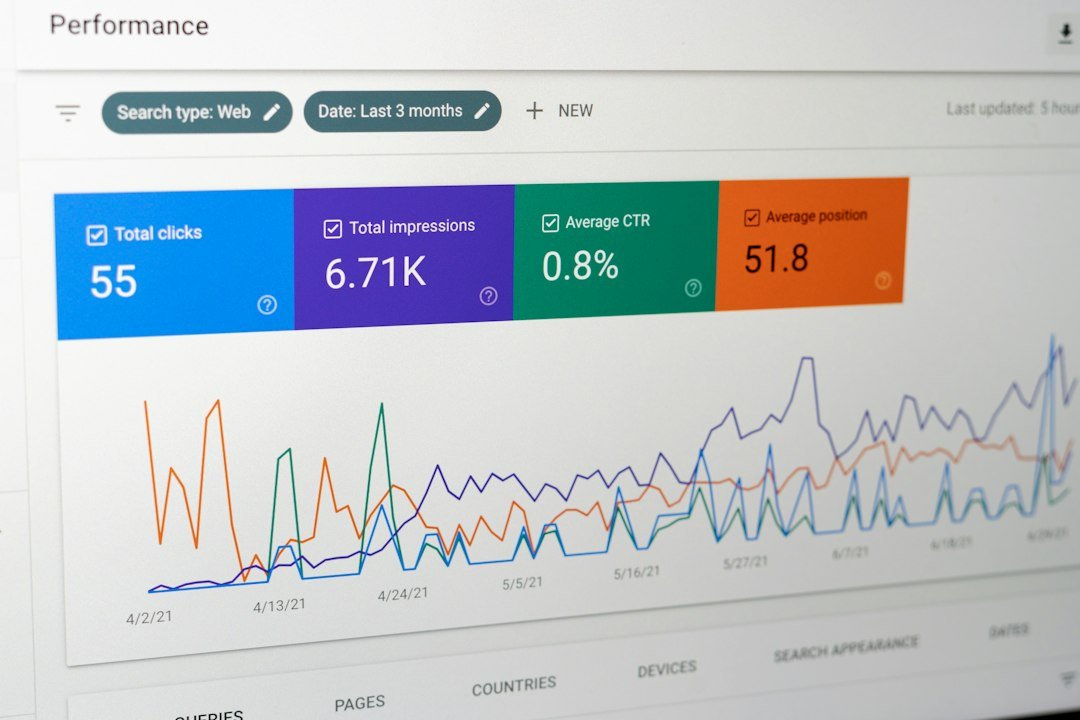
Trade outlets reported the start of this update within about 20 minutes. Few of them turned it into a plan for each stage of the rollout. This post does that: it takes Google’s own guidance and sets it on a dated calendar, then adds a 10-minute triage you can run in Search Console once the rollout ends. We do not claim to know what the update targets, because Google has not said, and the figures below come from the sources listed above, not from client data. Our services cover technical SEO, on-page SEO, content strategy, AEO and GEO, which is why the AEO and GEO angle gets its own section.
What Google confirmed about the November 2026 core update
Google confirmed five things, and everything else in circulation is commentary.
| Item | What is confirmed | Source |
|---|---|---|
| 1. Start | Nov 10, 2026 at 10:06 a.m. PT (1:07 p.m. ET); that is Nov 11 at 2:06 a.m. in Manila and Singapore | Google Search Status Dashboard, as reported by SEJ, SEL and SER |
| 2. Scope | Global, all languages | Dashboard, as quoted by SEJ |
| 3. Duration | May take up to 2 weeks, so the latest finish is Nov 24 by PPC Land’s calculation | Dashboard; PPC Land |
| 4. Purpose | A regular update designed to better surface relevant, satisfying content from all types of sites | Dashboard and Search Central LinkedIn post, as quoted by SEJ and SER |
| 5. New guidance | None specific to this update; no Search Central blog post; core updates page showed a Dec 10, 2025 revision date | SEJ and SEL |
SEJ is Search Engine Journal, SEL is Search Engine Land, SER is Search Engine Roundtable. Time conversion to Manila and Singapore is our calculation.
Rollout calendar: when to look and when to wait
Google’s core updates guidance says to confirm the rollout has finished, wait at least a full week, then compare a week of Search Console data with the week before the rollout began. Applied to this update, the dates fall like this. The calendar is our calculation from Google’s guidance and the dashboard dates.
| Step | Date | Rule |
|---|---|---|
| Baseline week | Nov 3 to Nov 9 | The week before the start, which SEJ also suggests. Export it now, before the numbers get mixed up with the rollout. |
| Rollout start | Nov 10 | Dashboard timestamp 10:06 a.m. PT. |
| Rollout in progress | Nov 10 until finished | Rankings may move during the rollout (SEJ). Watch, do not diagnose. |
| Latest finish in Google’s window | Nov 24 | Two weeks from the start (PPC Land). |
| Thanksgiving, Black Friday, Cyber Monday | Nov 26, Nov 27, Nov 30 | A full-length rollout runs through most of the pre-holiday shopping period (PPC Land). |
| Earliest comparison if it ends Nov 24 | About Dec 1 | PPC Land’s reading of the wait-a-week guidance, which lands after Cyber Monday. |
If Google finishes early, move every row after the finish up by the same number of days. If it runs past Nov 24, wait for the dashboard to show an end date.
How this update compares with the earlier 2026 updates
This is the third core update of 2026 and the eighth ranking update on the dashboard this year, and it arrives after the longest gap of 2026.
| Update | Dates | Length | Note |
|---|---|---|---|
| March 2026 core | Mar 27 to Apr 8 | 12 days 4 hours | Released three days after a spam update |
| May 2026 core | May 21 to Jun 2 | 11 days 21 hours | Previous core update |
| September 2026 spam | Sep 24 to Oct 8 | 13 days 16 hours | A spam update, not a core update |
| November 2026 core | Nov 10 to Nov 24 at the latest | Up to 14 days | 173 days after May (PPC Land count) |
Sources: SEJ and PPC Land. Across the 23 core updates on Google’s list, the median rollout was 14 days and the longest was 45 days in March 2024 (SER). Google’s two-week window equals that median.
The March update shows the scale that is possible. SE Ranking found 79.5% of top-three URLs changed position after March 2026, versus 66.8% after December 2025, and 24.1% of top-ten pages fell out of the top 100, versus 14.7% (as reported by PPC Land; we have not read the SE Ranking study itself). That is a reason to expect movement, not a forecast for this update.
What Google has not said
Google has not said what this update changes, which ranking systems it touches, whether it affects Discover or AI features, or whether it will finish inside two weeks (PPC Land). Anyone who tells you today which content type wins or loses is guessing. The only pattern we found is secondhand: after March 2026, an analysis of Sistrix data reported the heaviest losses for aggregators, directories and comparison sites. That pattern may not repeat.
The 10-minute drop triage: run it after the rollout ends
Google separates small drops from large ones, and so does this test. Google’s own examples are a move from position 2 to 4 (small) and from position 4 to 29 (large). The page-count thresholds below are GCL rules of thumb built on those two examples, not published benchmarks.
- Export your top 20 pages by clicks from the Search Console Performance report for the baseline week (Nov 3 to Nov 9) and for the first full week after the rollout ends.
- Compare average position page by page. Count the pages that fell more than 10 positions, which we treat as large, and the pages that fell 1 to 3 positions, which we treat as small.
- If fewer than 3 of the 20 pages had a large drop, treat it as a page problem, not a site problem. Review those pages and leave the rest alone, since Google advises against changing content that already performs well.
- If 3 or more of the 20 had a large drop, or the fall is sustained across the site, run Google’s whole-site self-assessment and ask someone outside your team to answer the same questions.
- Split the data by search type (Web, Images, Video, News) before deciding anything, because Google says to analyze them separately.
- Rule out non-update causes with Google’s traffic drop debugging guide: technical errors, security issues, spam actions, seasonality and site moves. Retail and gift queries shift every November, so check Google Trends too.
What to do this week, and what to leave alone
Most of the useful work during a rollout is record keeping, because the comparison only works if the baseline is clean.
| Area | Do this week | Hold until the rollout ends |
|---|---|---|
| Data | Export the Nov 3 to Nov 9 baseline for pages, queries, devices and countries | Any before-and-after comparison |
| Content | Keep publishing as planned and fix factual errors | Rewrites of pages that still rank |
| Site changes | Log every change dated Nov 1 or later so you can separate your own changes from the update | URL changes and migrations, which Google notes cause fluctuation on their own |
| Reporting | Tell managers and clients a rollout is in progress and that a read comes in December | Explanations for ranking drops |
Why rank trackers may mislead you during this rollout
Two rank-tracking vendors reported bad data in their own systems this autumn. DemandSphere said about 11% of its daily rank checks returned spurious results after blocking intensified around September 11, and Nozzle put poisoned results pages at 8.0%. Neither fully disclosed its method and Google has not commented, so early winner and loser charts may carry wider error margins than they did in March or May (PPC Land). Treat trackers as a prompt to look, and let Search Console clicks and impressions decide.
What the core update means for AEO and GEO
A core update changes how Google ranks pages in Search; it does not arrive with a separate AI rulebook. Google’s AI features documentation (updated Dec 10, 2025) says no special optimization is needed for AI Overviews or AI Mode, and it says those appearances are counted in the Search Console Performance report under Web. So a traffic change after this update can include AI feature impressions, and the first diagnostic step is the same as above. That is why we treat SEO, AEO and GEO as one connected system: in our view, pages that are clear, original and well structured serve all three. For the wider picture, see our SEO vs AEO vs GEO comparison and our guide to AI visibility tracking tools.
Our view: do less, and measure better
We disagree with two reflexes. The first is the day-one rewrite: Google’s own guidance says to avoid changing content that is already performing well after a small drop, and it says no change is guaranteed to bring a result. The second is the recovery promise. Google’s debugging guide says some changes can take effect in days while others can take several months, so anyone quoting a recovery date on day one is selling certainty that does not exist. Our rule is to freeze, record, wait and then compare.
When this update probably does not need your attention
If your clicks, impressions and positions stay within normal weekly variation after the rollout ends, there is nothing to fix. Google says most sites do not need to worry about core updates and may not even realize one happened. Spend the time on the content and technical work you already had planned.
Frequently Asked Questions
When did Google’s November 2026 core update start?
Google started the November 2026 core update on Nov 10, 2026 at 10:06 a.m. Pacific, which is 1:07 p.m. Eastern. The Search Status Dashboard says it applies globally, in all languages, and may take up to two weeks. That puts the latest finish at Nov 24, by PPC Land’s count.
How long will the November 2026 core update take to roll out?
Google says up to two weeks. Past rollouts vary: the March 2026 update took 12 days and 4 hours, and the May 2026 update took 11 days and 21 hours. Across 23 listed core updates the median was 14 days, and the longest, in March 2024, took 45 days.
What should I do if my traffic drops after the update?
Wait until the rollout finishes, then wait a full week before comparing Search Console data with the week before it began. Google says a small drop, such as position 2 to 4, needs no drastic action. A large drop, such as position 4 to 29, calls for a deeper whole-site assessment.
Did Google say what the November 2026 core update changes?
No. Google calls it a regular update designed to better surface relevant, satisfying content from all types of sites, and it has not named specific systems or content types. It has also not said whether Discover or AI features are affected, so any claim about winners and losers today is speculation.
Does the core update affect AI Overviews and AI Mode?
Google has not said whether this update touches AI features. Its AI features documentation says no special optimization is needed for AI Overviews or AI Mode, and that those appearances count in Search Console under Web. So check your Web performance data first, then segment by page.
If you want a team that reads core updates as part of one SEO, AEO and GEO plan, start with our services and see how it fits at GCL Marketing.